 Yuri Chekalin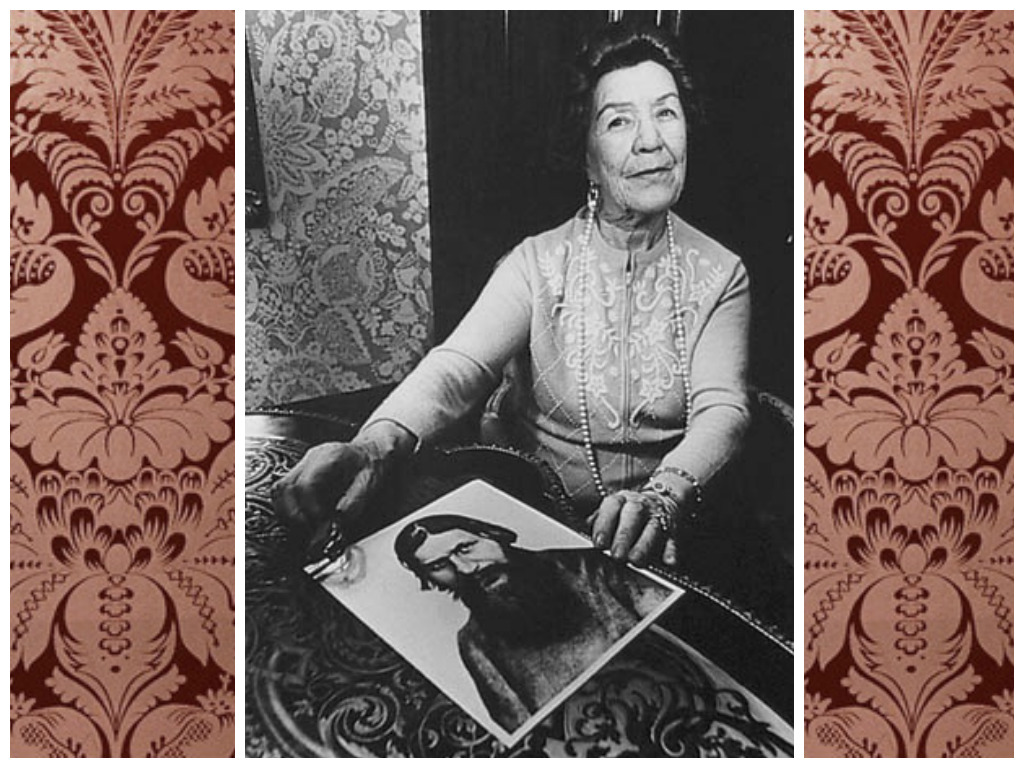
The story of Grigori Rasputin has long existed somewhere between history and legend.
Hundreds of books have been written about him, countless myths have grown around his name, and “Rasputin” itself has become almost a byword.
Far less is known, however, about the lives of his children. Yet the story of his eldest daughter, Maria, is extraordinary in its own right.
Born a peasant girl in the Siberian village of Pokrovskoye, she found herself in the society of imperial St. Petersburg; survived her father’s murder, revolution, and exile; worked as a cabaret dancer and a circus animal trainer; and eventually became a riveter at an American defense plant.
She lived for almost six decades after her father’s death, passing through worlds that could scarcely have been more different from one another.
The Rasputin Family
Grigori and Praskovia Rasputin had seven children. Only three survived to adulthood: a son, Dmitri, and two daughters, Maria and Varvara. The others died in infancy.
Maria was born in 1898 in Pokrovskoye, a village in the Tobolsk Governorate of Siberia. At home, she was affectionately called Marochka. She was one of the two daughters whom Rasputin later brought to St. Petersburg.
The move transformed her life.
In Pokrovskoye, Maria had belonged to an ordinary peasant family.
St. Petersburg at the beginning of the twentieth century was an entirely different universe—the capital of an empire, home to the imperial court, the aristocracy, the bureaucracy, and the intellectual elite.
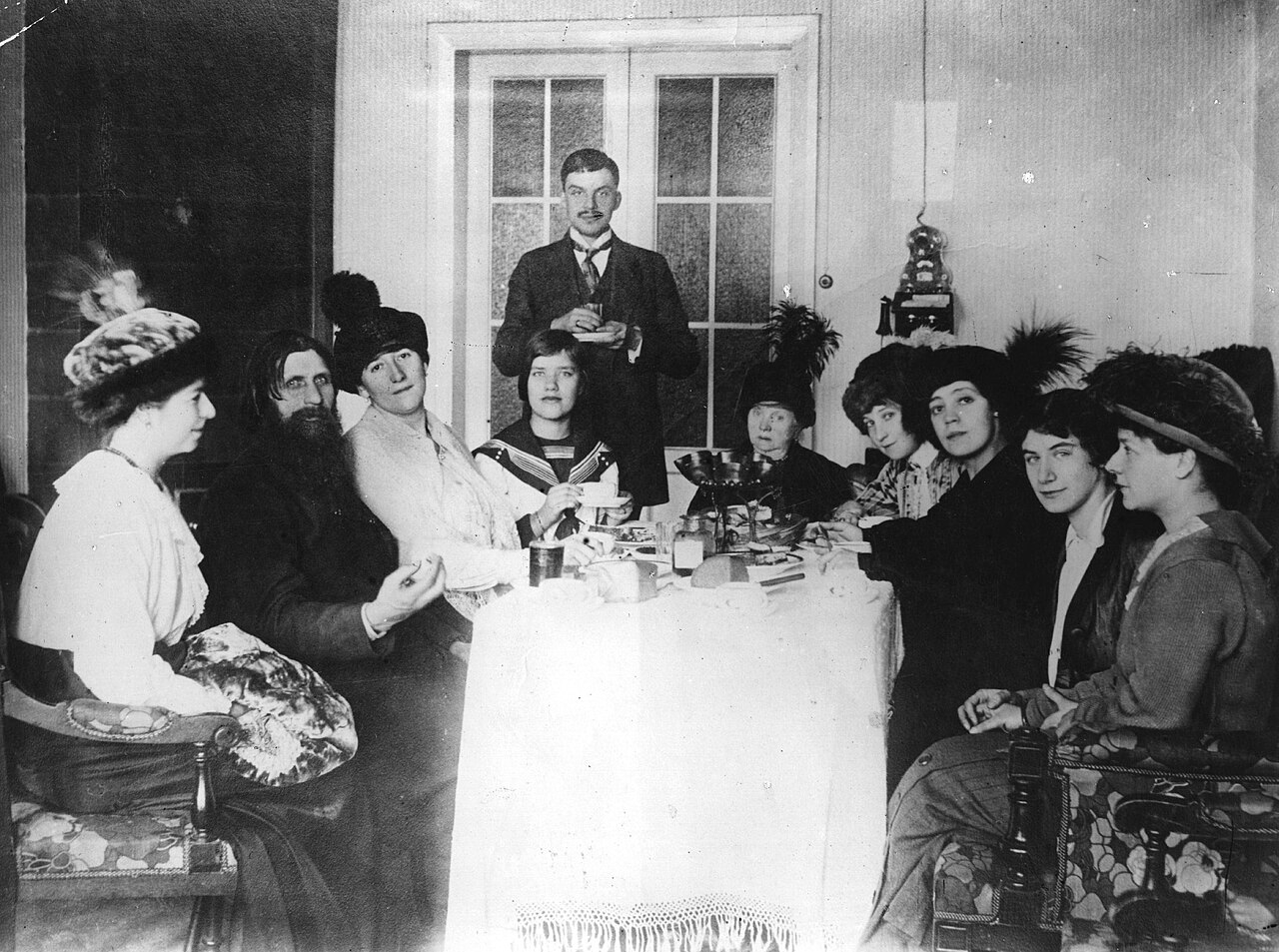
Rasputin wanted his daughters to receive an education and arranged for them to study in St. Petersburg. They lived at their school but regularly visited their father at his apartment on Gorokhovaya Street. Gradually, Maria became accustomed to urban life and gained her first understanding of a world that had previously been entirely foreign to her.
Her introduction to her father’s circle was especially significant. Whatever one thinks of Rasputin—and opinions of him have always varied sharply among both contemporaries and historians—by the end of his life he was a man who moved among members of the highest circles of the Russian Empire. His daughters inevitably found themselves on the margins of that remarkable and unfamiliar world.
The Night That Changed Everything
In December 1916, Maria was eighteen years old.
On the night of December 16–17, Rasputin left for the palace of Prince Felix Yusupov. There he was murdered by members of a conspiracy that included Yusupov, Grand Duke Dmitri Pavlovich, Vladimir Purishkevich, and others.
For the Rasputin family, the first hours after his disappearance were filled with uncertainty. Maria and Varvara reported their father’s disappearance, and an investigation began.
Soon afterward, one of Rasputin’s galoshes was found near the Bolshoy Petrovsky Bridge. His daughters identified it as belonging to their father. His body was later recovered from the Malaya Nevka River.
This episode is particularly important because Maria would later become one of the few people who had known Rasputin intimately and left behind her own recollections of him. Those recollections, however, must be read critically. She was emotionally attached to her father and deeply committed to defending his memory. Her books are valuable as the testimony of someone who knew Rasputin closely, but they cannot be treated as an impartial biography.
Revolution and Marriage
A few months after the fall of the monarchy, Maria married Boris Nikolaevich Soloviev. Their wedding took place on October 5, 1917.
Soloviev was connected with people who discussed the possibility of rescuing Nicholas II and his family after the Revolution. Yet it would be misleading to portray him simply as a heroic figure attempting to save the imperial family. His role in these plans was considerably more complicated, and his later activities raise serious questions.
After the Revolution, the Solovievs left Russia. Their path into exile was long and difficult. They traveled through Siberia and Vladivostok before eventually finding themselves in Asia and Europe. The family lived in several places, including Berlin and Paris.
Maria gave birth to two daughters.
But exile soon revealed a side of life she could never have imagined in St. Petersburg. In Russia, she had been the daughter of a famous man known personally to the imperial family. In Europe, her name was no longer enough to provide a living.
In 1926, Boris Soloviev died of tuberculosis. Maria was left a widow with two young children.
She had to earn her own living.
From Cabaret to Circus
Maria began working as a cabaret dancer. For a woman who had grown up in Rasputin’s household and had known something of the upper circles of St. Petersburg society, this represented a dramatic fall in social status. But it was also the beginning of an entirely new and independent life.
Soon, her life took another unexpected turn.
Maria joined the circus and began performing with dangerous animals. By the mid-1930s, she was associated with the Hagenbeck-Wallace Circus and appeared as a lion trainer.
Here, it is particularly important to separate fact from later legend. Stories claiming that an impresario challenged her to “enter a cage with lions,” and that she did so after making the sign of the cross, make for an effective anecdote—but the documentary basis for such tales is uncertain.
What is well established, however, is that she worked with wild animals.
For the circus, the Rasputin name was itself a source of publicity. Posters emphasized the performer’s origins, turning her family history into part of her stage persona. She was not merely a woman performing with animals. She was the daughter of the infamous Rasputin.
In 1935, her life nearly came to an end once again when she was seriously injured by a bear while working with animals. After that, Maria left the circus.
One of the most exotic chapters of her remarkable life had come to an end.
America and War
After her circus career, Maria remained in the United States.
When the Second World War began, American industry expanded at an extraordinary pace. Millions of men entered the armed forces, and women were called upon to take jobs that had previously been considered almost exclusively male occupations.
Maria was among them.
She worked as a riveter at a defense facility in the Miami area, contributing to the construction of military vessels.
For a former schoolgirl of St. Petersburg, an émigré, and a circus performer, this was yet another astonishing turn of fate.
Her life was full of such transitions: from a peasant home in Siberia to an apartment on Gorokhovaya Street in St. Petersburg; from proximity to the imperial court to revolutionary exile; from European cabarets to a circus cage; and from the circus to the American wartime industrial machine.
Each time, Maria seemed to begin her life almost entirely anew.
A Second Marriage and an American Life
In 1940, Maria married Grigori Bernadsky, a Russian émigré. The marriage did not last and eventually ended in divorce.
In 1946, she became an American citizen.
By then, almost nothing remained of the world into which she had been born. The Russian Empire had disappeared. Her father had been dead for three decades. Most of the people who had once surrounded him had either died or scattered into exile. Maria herself had become an American citizen.
She continued to work and support herself. At various times, she was employed as a nanny and a nurse’s aide and taught Russian.
But the past never entirely released its hold on her.
To the American public, she remained above all Maria Rasputin—the daughter of a man whom the Western press had transformed into one of the most mysterious and sensational figures in Russian history.
Maria as the Keeper of Rasputin’s Memory
Eventually, Maria became an author in her own right, writing books about her father.
In 1929, she published The Real Rasputin. Other memoirs followed, including Rasputin, My Father and The Man Behind the Myth.
For her, writing was not simply a literary occupation. She was attempting to construct her own image of a man whom Western culture had long surrounded with stories of debauchery, mysticism, madness, and political manipulation.
Maria rejected that image.
She saw him first and foremost as her father.
This is precisely why her testimony is both exceptionally valuable and in need of careful interpretation. She remembered details of family life that never appeared in official documents. Yet her emotional closeness to Rasputin inevitably shaped her judgment of events.
Historians must therefore read her memoirs not merely as a source of information about Rasputin, but also as evidence of how Rasputin’s daughter herself understood her father—and how she sought to preserve his memory.
The Final Years
Maria lived a long life—nearly eight decades.
She survived the Russian Empire, the First World War, the Revolution, the Civil War, exile, the Great Depression, the Second World War, and postwar America.
She was the daughter of a Siberian peasant who became one of the most famous men in imperial Russia; a witness to the final months of his life; an émigré; a dancer; a circus performer and animal trainer; a worker in America’s wartime defense industry; and, finally, a writer.
Maria Rasputin died in Los Angeles on September 27, 1977, at the age of seventy-nine.
She had outlived her father by more than sixty years.
And perhaps that is the central paradox of her biography.
Rasputin entered history as a man whose life ended violently in the winter darkness of Petrograd in December 1916. Maria, by contrast, spent much of the rest of her life seemingly trying to escape the history into which she had been born.
She changed countries, professions, and social identities. Yet one name followed her everywhere: Rasputin.
To some, it was a curse. To others, a source of publicity. To still others, a historical sensation.
But to Maria herself, it was above all the name of her father.
And that is why the story of Maria Rasputin is more than the biography of the daughter of a famous Russian mystic. It is the story of a woman who had to live her own life after history had already made her surname famous.
 Sergey Stankevich
 Kamil Askerkhanov