 Sergey Stankevich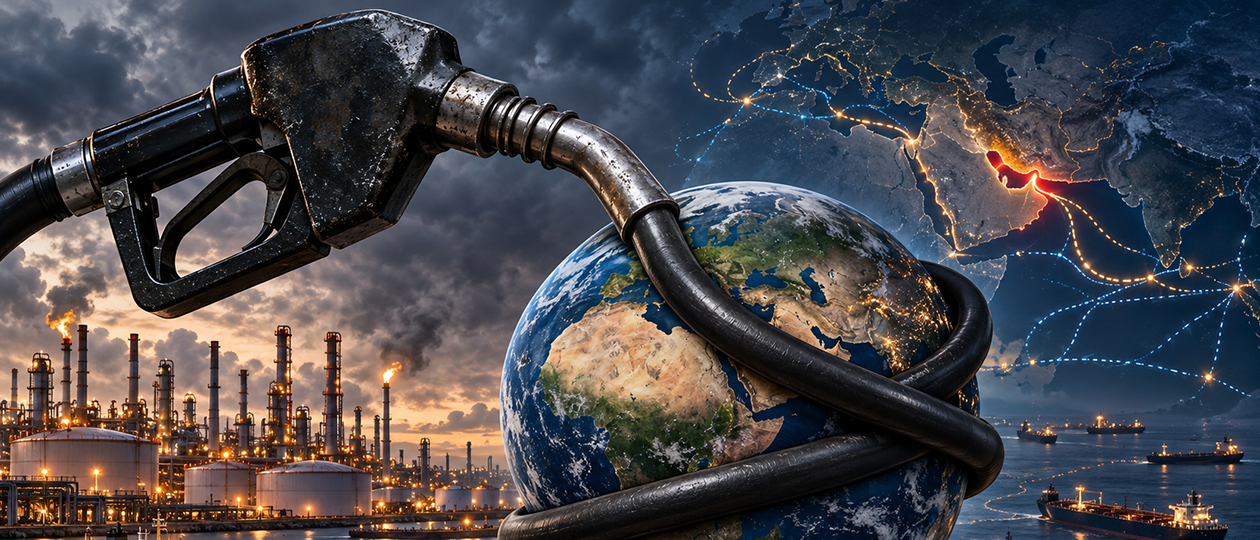
How a fuel shortage has entangled geopolitics, energy markets and America’s midterm elections
Thousands of social-media commentators who were discussing America, Iran or Ukraine only yesterday have abruptly discovered a new obsession: the global diesel crisis. As usual, a torrent of ill-informed commentary threatens to drown out the few surviving voices of reason.
Let us take a closer look before they disappear beneath the waves.
Before the full-scale war in Ukraine began in 2022, Russia produced roughly twice as much diesel as it needed domestically. In 2021, its exports of the fuel approached 50 million metric tons.
Then came years of war, sanctions and mounting pressure on Russia’s refining industry. By early 2026, Russian diesel exports were running at an annual rate of roughly 40 million metric tons. Even so, Russia had accounted for 9.5% of global diesel exports in 2025.
Only the United States exported more, with a 15.4% share of the world market. Together, America and Russia supplied almost a quarter of the diesel traded internationally. That is considerable leverage for just two countries.
Other major exporters included Saudi Arabia, with 8.3% of the market, India with 6.9%, South Korea with 6.8% and Kuwait with 3.5%. India and South Korea, despite their considerable refining industries, rely heavily on imported crude.
Now the war with Iran, the disruption of shipping through the Strait of Hormuz and damage to Middle Eastern energy infrastructure have thrown many of these supply chains into disarray. The consequences extend far beyond the Persian Gulf.
When Russia imposed sweeping restrictions on diesel exports in July 2026, the decision dealt another blow to importing countries already struggling with the economic shock of the Hormuz crisis. Diesel prices surged as buyers scrambled for alternative supplies.
Since the summer, Washington has increasingly pressed Ukraine to halt strikes on Russian oil refineries.
The logic is clear enough, even if the politics are uncomfortable.
The Trump administration is hardly eager to acknowledge how its own military campaign against Iran has contributed to the crisis. Restoring Russian diesel supplies offers a politically convenient alternative. But that requires sanctions relief, fewer disruptions to Russian refineries and Moscow’s willingness to release fuel onto world markets.
Kyiv sees matters differently. Ukrainian officials argue that Russian energy infrastructure is part of Moscow’s war-making capacity and warn that renewed diesel revenues could help finance the war. The result is an awkward collision between Washington’s energy priorities and its policy toward Russia.
On October 9th, President Donald Trump announced an agreement with Vladimir Putin to bring Russian diesel back onto international markets. The initial commitment included more than 300,000 metric tons of fuel, followed by another 500,000 tons in November and 1 million tons thereafter. A further 3 million tons would depend on the condition of Russian refineries.
Financial markets reacted immediately.
November ultra-low-sulfur diesel futures on NYMEX fell by about 4.6% on October 9th, as traders priced in the prospect of additional supply.
Yet relief in the futures market has not translated into much comfort at the pump. American diesel prices remain around $6.20 per gallon, or roughly 3.8 liters. Retail prices respond not just to political announcements but also to international fuel costs, inventories, distribution expenses and the time it takes additional supplies to reach buyers.
Diesel is an internationally traded commodity. Russia alone cannot reverse the price surge, however substantial its historical role in exports. Bringing prices down requires more fuel to reach the market, and quickly.
That puts the International Energy Agency in the spotlight. At its October 15th Governing Board meeting, the IEA is expected to examine ways to accelerate releases from emergency fuel reserves, with particular emphasis on diesel.
The agency has already coordinated an extensive release of emergency oil stocks. Its member countries still hold more than 200 million barrels of publicly controlled emergency diesel inventories. But the crucial questions are how much can be released, how quickly, and where the fuel can be delivered. A reserve that remains in storage cannot lower a trucker’s fuel bill.
The Group of Seven is applying pressure as well. Its members have publicly committed to accelerating a substantial release of diesel supplies within a 20-day period. A sufficiently rapid influx could unsettle wholesale traders, encourage inventory sales and take some of the heat out of prices. A slow trickle, by contrast, would accomplish considerably less.
There is another complication.
Washington has also had to reassure the market that it will not restrict American diesel exports. Such a ban might sound attractive to motorists facing punishing prices, but removing supplies from a globally interconnected market could make the wider shortage worse—and ultimately rebound on America itself.
All this leaves Trump racing against the calendar.
If he can persuade Ukraine to suspend attacks on Russian refineries; if Russia delivers the promised diesel; if the IEA accelerates emergency stock releases; and if the G7’s commitments translate into substantial supplies reaching the market, the White House may be able to point to lower diesel prices before the November 3rd midterm elections.
That is a great many moving parts. Russia’s damaged refineries cannot be repaired by presidential decree, emergency inventories are finite, and markets have an unfortunate habit of disappointing politicians who expect them to obey a timetable.
Still, the political calculation is obvious.
If it all works, Trump may have a result to show voters.
Big IF.
 Yuri Chekalin
 Kamil Askerkhanov
 Kirill Benediktov