 Dmitri Drobnitsky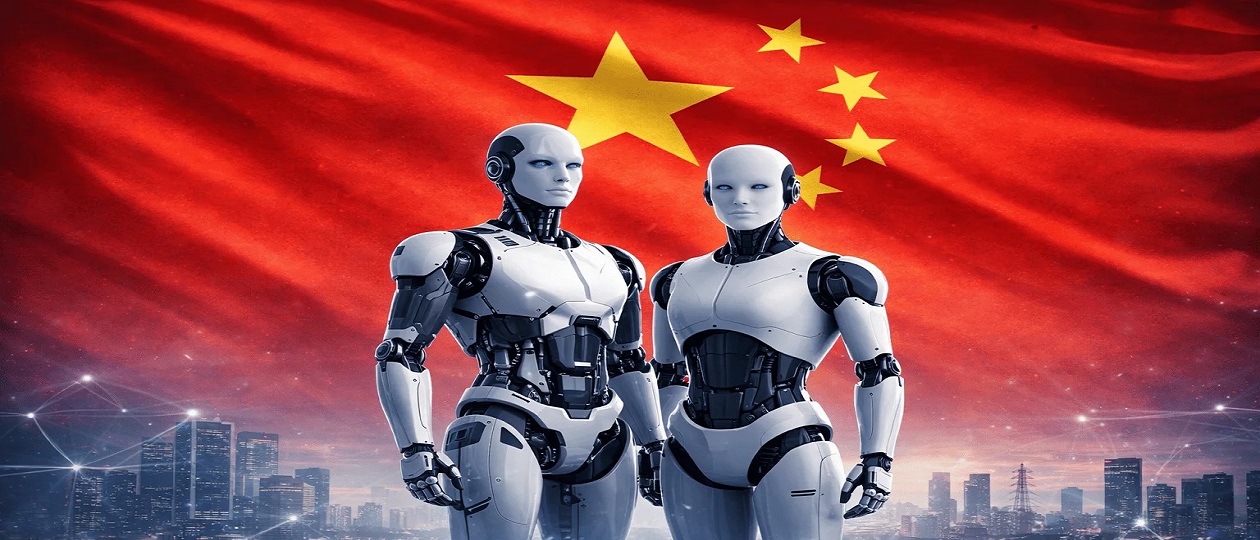
Trump family firm partners with Chinese AI model provider as Washington presses allies to choose sides.
A company partly owned by members of President Trump’s family is doing business with a Hong Kong-based provider of Chinese artificial intelligence models — even as the Trump administration prepares to urge dozens of countries to choose between the United States and China in the emerging AI rivalry.
Chinese Artificial Intelligence Models
World Liberty Financial, 38 percent owned by members of the Trump family, is working with WorldClaw, a Hong Kong-based company founded earlier this year that provides customers with access to a range of artificial intelligence models developed by Chinese companies.
Some of those companies and their technologies have been identified by the U.S. government as posing potential national security risks.
WorldClaw accepts World Liberty tokens as payment. That means members of the Trump family can benefit financially from the use of those tokens and, ultimately, from WorldClaw’s business.
The Chinese AI models available through WorldClaw are, for the most part, legal for use in the United States.
They are not formally included on the U.S. government’s list of AI systems developed in cooperation with, or specifically for, the Chinese government.
Nor is WorldClaw unusual in offering access to Chinese AI models. A number of American and other Western companies commercially distribute Chinese models that are not subject to U.S. restrictions, alongside models developed in the United States.
The Political Contradiction is Harder to Overlook
Trump has repeatedly portrayed Chinese AI models as a potential threat to U.S. national security.
At the same time, according to Reuters, the White House is preparing a letter to 35 countries urging them to choose a side in what the administration describes as an emerging “AI arms race” between Washington and Beijing.
The intended recipients are countries that signed the AI Opportunity Statement, an agreement promoting cooperation on AI models, semiconductors and critical minerals.
The declaration grew out of Washington’s Pax Silica initiative, which is intended to strengthen supply chains for artificial intelligence systems, semiconductors and critical minerals.
Beijing, meanwhile, has been pursuing its own international strategy. In July, Chinese President Xi Jinping announced the creation of a “World Organization for Cooperation on Artificial Intelligence,” promoting Chinese technology as an alternative to U.S. influence in advanced technologies, including semiconductors and AI.
There is an intriguing detail.
So far, only one country — Kazakhstan — has joined both initiatives. That overlap appears to have alarmed Washington and helped prompt the White House to prepare its letter to the countries that signed the U.S.-backed declaration.
According to Reuters, which obtained a draft of the document, the letter warns: “Being part of everything means being part of nothing. Signing the Pax Silica Declaration is not simply membership in an organization, but a commitment … This cannot be reconciled with membership in duplicative organizations whose expectations conflict with our own.”
China is not mentioned by name in the draft, Reuters reported.
The broader trend is clear enough. The digital world is likely to fragment as geopolitical competition hardens, with technological ecosystems divided by increasingly difficult borders. How expensive, prolonged and conflict-ridden that process will become remains uncertain.
What is less abstract is the business model emerging alongside it.
As Washington builds technological barriers between the United States and China, members of the Trump family appear to be positioned to profit from commerce taking place across some of those very boundaries.
The contradiction is not necessarily illegal. It is, however, difficult to miss.
 Paul Sadchikov
 Alexander Rimov
 Kirill Benediktov