 Andrey Vedyaev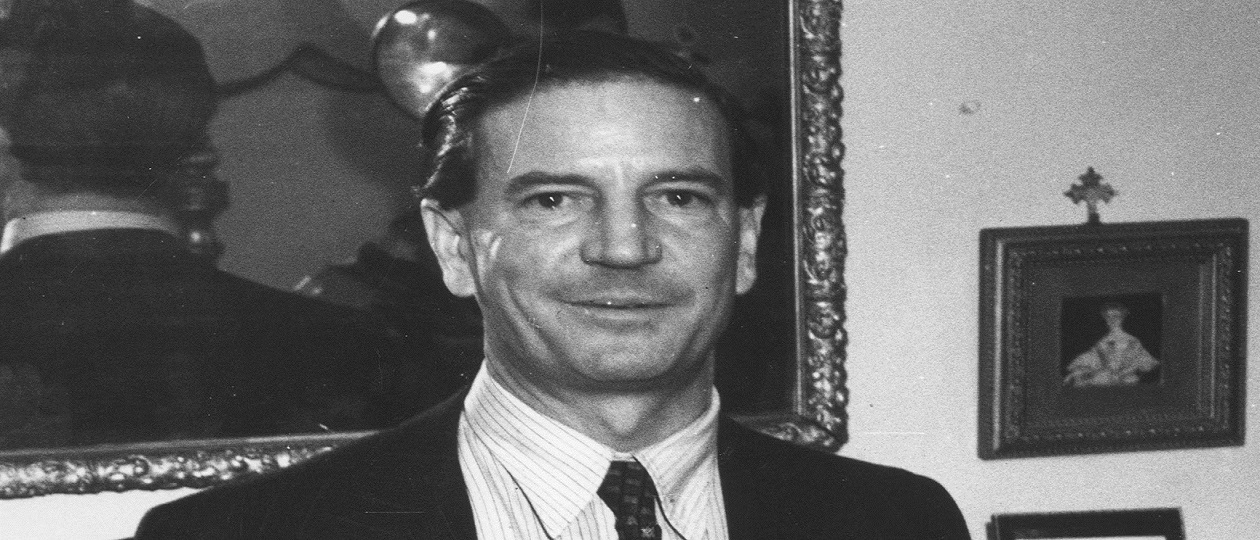
A scion of an old English family, an urbane aristocrat, and a committed communist, Kim Philby secured a permanent place in the history of intelligence not merely as a member of the legendary Cambridge spy ring, whose work provided Moscow with a remarkable stream of British and Allied secrets, but as perhaps the most accomplished double agent of the twentieth century. Acting for Soviet intelligence, he built an extraordinary career inside Britain’s Secret Intelligence Service, or SIS—better known as MI6—and at one point came close to reaching its highest ranks.
Harold Adrian Russell “Kim” Philby was born on January 1, 1912, in British India. His father, St John Philby, served in the British colonial administration in Punjab and had already demonstrated an exceptional gift for Oriental languages while studying at Trinity College, Cambridge.
St John Philby
In October 1915, at the height of the First World War, St John was assigned the task of securing the cooperation of Emir Ibn Saud, ruler of central Arabia, in Britain’s struggle against the Ottoman Empire. In November 1921, he was appointed to a British intelligence post in Mandatory Palestine, where his circle included T. E. Lawrence—Lawrence of Arabia—and, according to later accounts, the American diplomat and intelligence figure Allen Dulles.
Ibn Saud understood perfectly well that Philby represented British interests, but the two men nevertheless developed a close relationship. From 1925 onward, Philby served as an adviser to the emir. In the summer of 1930 he converted to Islam, taking the name Abdullah. Two years later, on September 23, 1932, Ibn Saud united his Arabian territories and became the first king of Saudi Arabia.
In 1938, vast oil reserves were discovered in the kingdom, transforming the political and economic fortunes of the Saudi monarchy. When Abdullah—St John Philby—returned to Saudi Arabia in 1945, Ibn Saud received him generously, reportedly presenting him with 4,000 Saudi riyals and a young woman named Rosie, with whom Philby later had four sons.
St John died of a heart attack in Beirut. Kim buried his father in a Muslim cemetery there. The inscription on the gravestone described him as “the greatest explorer of Arabia.”
Kim had loved his father deeply. Before he was old enough for school, he had lived with him among Bedouins in the Arabian desert. Decades later, in his Moscow apartment on Kutuzovsky Prospekt, he kept a portrait of St John dressed in white Arab robes.
A Cambridge Communist Activist
In 1928, following the family tradition, Kim entered Trinity College, Cambridge. There he developed an interest in Marxism and met Guy Burgess, another young man who would eventually become one of the most notorious figures in British intelligence history.
After graduating, Philby traveled to Austria in 1933. The country was moving toward the authoritarian regime of Chancellor Engelbert Dollfuss, whose political system bore important similarities to Italian fascism. Philby became involved in helping Austrian antifascists through International Red Aid, known by its Russian acronym MOPR. He worked as a courier between Vienna and Prague, taking advantage of a British passport that opened doors and borders with an ease few political activists could enjoy.
In Vienna he met Litzi Friedmann, an Austrian communist activist. They married and, in April 1934, moved to London.
Soviet Intelligence
Through an acquaintance, Edith Tudor-Hart, an Austrian-born communist living in Britain, Litzi entered the orbit of Arnold Deutsch. Deutsch, also Austrian by birth, had visited Moscow in 1928 and joined the Soviet Communist Party in 1931. On the recommendation of the Comintern, he was recruited into Soviet foreign intelligence.
After clandestine work in Paris, Deutsch arrived in London in 1934 under the cover of postgraduate study in psychology at the University of London. His assignment was unusual and ambitious. Rather than recruit primarily among existing officials, he was to identify promising young men at Oxford, Cambridge, and London universities—institutions that supplied much of the future governing class of the British Empire—and cultivate them before they entered public service.
Litzi suggested her husband.
Edith Tudor-Hart used her contacts in the Austrian underground to help establish Philby’s bona fides and eventually told him that a man wished to meet him—someone, she implied, who might profoundly shape his future.
Philby agreed without hesitation.
The meeting took place on July 1, 1934. Tudor-Hart spent several hours moving around London with him before finally leading him to a bench in Regent’s Park. There she introduced him to a man who called himself “Otto,” then disappeared from Philby’s life.
The stranger did not.
Deutsch spoke with Philby at length in German. Then he gave him an unexpected instruction: Philby should abandon any idea of formally joining the Communist Party.
Deutsch had something very different in mind.
Philby’s appearance, education, social background, and connections made him an ideal representative of the British establishment. Rather than become a public revolutionary, he could become part of the system itself.
Philby immediately understood the implication: he was being asked to penetrate the secret institutions of the United Kingdom.
During their conversations, Deutsch repeatedly emphasized security. Years later, Philby acknowledged how deeply those lessons had affected him. He became, as he put it, almost obsessed with security and clandestine discipline. “To a large extent,” he later reflected, “that was why I survived.”
Philby recommended his friend Guy Burgess to Deutsch, although he warned his Soviet handler about Burgess’s impulsiveness. In the same period, Donald Maclean, the son of a former British cabinet minister, was also recruited. Soviet intelligence gave him the codename “Homer.”
Anthony Blunt, John Cairncross, and other figures would eventually enter the same broad Soviet intelligence network. Victor Rothschild has also figured prominently in later accounts of the Cambridge milieu, although the precise nature of some of these relationships has remained a matter of historical controversy.
For men such as Philby and Burgess, successful penetration of the British establishment required a visible break with their youthful radicalism. They began to distance themselves ostentatiously from Marxism and associated themselves with respectable right-wing circles. Philby joined the Anglo-German Fellowship, a British organization that favored closer relations with Nazi Germany.
The transformation also required personal sacrifices. Philby separated from Litzi.
When civil war erupted in Spain, Moscow needed someone capable of operating among the Nationalists. Philby’s father helped him obtain the necessary visa, and in February 1937 he traveled to Spain as a journalist.
His next step was carefully calculated: a return to London and a search for a more prestigious newspaper affiliation.
On his father’s advice, he sent an article based on his Spanish experience to Geoffrey Dawson, editor of The Times and himself associated with the Anglo-German Fellowship. The article was published. Later in 1937, Philby returned to Spain—this time as a correspondent for The Times.
Franco’s supporters treated him as a trusted and increasingly important foreign journalist. Twice he narrowly escaped death during attacks on Nationalist headquarters. On March 2, 1938, Generalissimo Francisco Franco personally awarded him the Cross of Military Merit.
The irony was almost perfect: an agent working for Soviet intelligence had earned a decoration from the man who had become one of European communism’s most celebrated enemies.
Meanwhile, Guy Burgess had found his way into British intelligence. In November 1938, he was introduced to Major Lawrence Grand, head of Section D, the SIS branch responsible for sabotage and covert operations. Burgess became the first of the Cambridge group to work directly for the British secret service.
It was through Burgess’s recommendation that Kim Philby followed.
“In the summer of 1940, shortly after the fall of France,” Philby later wrote, intelligence ceased to be a romantic fantasy and became his profession.
Burgess’s own SIS career proved brief. In September 1940 he was dismissed after a drunk-driving incident.
Philby’s career went in the opposite direction.
Within a year, he had risen to become deputy head of Section V, which handled foreign counterintelligence. By 1944, he had been placed in charge of Section IX, responsible for operations against the Soviet Union and international communism.
Few appointments in the history of intelligence have produced greater irony.
The man charged with defending Britain against Soviet espionage was himself one of Moscow’s most valuable agents.
The risks were enormous. From his position inside SIS, Philby was able to pass information about Western intelligence operations directed against the Soviet Union. Moscow could identify networks, anticipate missions, and neutralize agents who were dispatched behind the Iron Curtain.
Many of these operatives came from émigré communities in the Caucasus, Ukraine, and the Baltic states—men who had retreated westward with German forces during the Second World War and were later recruited for clandestine operations against the USSR. Philby would later emphasize that, to his knowledge, none of the agents involved were British.
On January 1, 1946, Philby was appointed an Officer of the Order of the British Empire. The following year, according to Soviet accounts, he received the Order of the Red Banner.
At the same time, his private life was changing. He finally divorced Litzi and married Aileen Furse. They already had three children before the wedding; a fourth soon followed, and a fifth was born in 1950.
Professionally, Philby was approaching the summit of British intelligence.
There was serious speculation that he might one day become “C”—the traditional designation for the head of SIS.
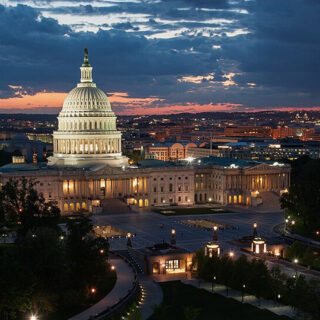
His appointment as Britain’s principal intelligence liaison with the newly created Central Intelligence Agency in Washington reflected the degree of trust placed in him. Officially, he served as first secretary at the British Embassy. In practice, he stood at the center of the Anglo-American intelligence relationship at the opening of the Cold War.
His home on Nebraska Avenue became a gathering place for Washington’s intelligence elite.
Among the men in his orbit were James Jesus Angleton, Walter Bedell Smith, Allen Dulles, Frank Wisner, William King Harvey, and FBI counterintelligence specialist Robert Lamphere.
The atmosphere was informal, intimate, and astonishingly indiscreet.
As one CIA officer later observed, intelligence officials talked constantly among themselves about operational matters. Philby knew things, the officer concluded, “that he had no business knowing.”
Donald Maclean had by then also reached the height of his career.
By 1948, he was first secretary at the British Embassy in Washington and served as secretary to the Combined Policy Committee dealing with atomic energy. For Moscow, he became an exceptionally important source on Anglo-American nuclear policy.
Guy Burgess arrived in Washington in July 1950 as a second secretary at the embassy. He moved into Philby’s house—and promptly began testing the patience of everyone around him.
Aileen Philby resented his presence. American officials were irritated by what they saw as Burgess’s natural arrogance and his almost theatrical contempt for American conventions, manners, and social hierarchies.
Yet far more dangerous developments were unfolding elsewhere.
In 1946, Meredith Gardner, a brilliant American cryptanalyst working on what became known as the VENONA project, began reading portions of wartime Soviet intelligence traffic sent by the NKVD station in New York.
The decrypts pointed toward a Soviet source inside the British Embassy in Washington.
The source appeared to travel to New York roughly twice a week to meet a Soviet contact.
To Philby, the implications were unmistakable.
The man was Maclean.
Eventually Gardner and his colleagues identified the Soviet codename connected with the suspect: “Homer.”
Maclean had to be warned—and quickly.
By then he was no longer in Washington. He had returned to London and occupied a senior post in the Foreign Office as head of the American Department.
In early May 1951, Burgess deliberately accumulated a series of traffic offenses in Virginia. After three speeding incidents and an altercation with a police officer, he was sent back to London following complaints that reached the governor of Virginia.
On Friday evening, May 25, Burgess arrived at Maclean’s home and suggested that they go out for a drink.
Maclean kissed his wife, Melinda, went upstairs, and embraced his children.
There was no dramatic farewell.
It looked like nothing more than an ordinary Friday evening: two tired English gentlemen going out together.
Then Burgess and Maclean drove at extraordinary speed toward the coast.
They reached the port just in time to board a ship leaving for France for the weekend. On Saturday, with the roads relatively empty, they continued by taxi to Paris and then crossed into Switzerland. Tickets were arranged for Stockholm, with a stop in Prague.
By Sunday, they had effectively vanished behind the Iron Curtain.
Their ultimate destination was Moscow.
For Philby, the first emotion was relief. Maclean had escaped.
Then came disbelief—and fear.
Burgess had not been supposed to defect.
According to the plan, he was merely to escort Maclean as far as Switzerland and return to Britain. He faced no immediate danger himself.
Instead, he had gone with Maclean.
That decision transformed Philby’s position overnight.
Because of Philby’s well-known friendship with Burgess—and because Burgess had been living in his Washington home—suspicion inevitably fell on him.
Years later in Moscow, Philby repeatedly lamented Burgess’s decision. Had Guy returned as promised, Philby believed, he might have continued working inside British intelligence for years.
MI5 interrogated Philby extensively, attempting to establish whether he had conspired with Burgess and Maclean.
In July 1951, his career inside SIS appeared to be over.
He left the service.
But Philby was not finished.
By 1955, the British government concluded that it lacked sufficient evidence to prosecute him. In October of that year, Foreign Secretary Harold Macmillan told the House of Commons that there was no evidence that Philby had betrayed his country.
In August 1956, Philby returned to intelligence work in a more discreet capacity and moved to Beirut, where he worked under journalistic cover and maintained links with SIS.
He settled into the large house once occupied by his father.
After Aileen’s death in 1957, Philby married an American, Eleanor Brewer.
For several years, the arrangement appeared stable.
Then came the defection of Anatoly Golitsyn.
On December 15, 1961, Golitsyn, a KGB officer serving abroad, defected to the West. His debriefings revived Western suspicions that a high-level Soviet penetration agent remained within British intelligence.
Dick White, then head of SIS, dispatched one of Philby’s old friends and colleagues, Nicholas Elliott, to Beirut.
Elliott confronted him.
The proposition, as later reconstructed, was extraordinary. Philby was encouraged to confess, identify the Soviet agents known to him, and cooperate fully. In return, he might avoid prosecution.
What happened next became one of the most humiliating episodes in the history of British intelligence.
On the evening of January 23, 1963, a storm swept across Beirut.
A thin, middle-aged Englishman calmly closed the door of his apartment on a hill above the city, descended five flights of stairs, and stepped out onto the dark Rue Kantari.
After satisfying himself that he was not being followed, he made his way quickly through rain-soaked streets toward the port.
A Soviet freighter was waiting.
Once Philby was aboard, the ship weighed anchor and moved into the stormy Mediterranean. It was bound for Odessa.
A red flag flew at the stern.
Kim Philby had escaped.
Eleanor later joined him in Moscow.
But the marriage soon came apart.
She discovered that Philby was having an affair with Melinda Maclean, Donald Maclean’s wife. Donald, during this period, was drinking heavily and could become aggressive.
Eleanor eventually left the Soviet Union. She died in California in 1968.
Melinda divorced Donald, but her relationship with Philby lasted only about three years. She too eventually returned to the United States.
In 1971, Philby married Rufina Ivanovna Pukhova, a Soviet woman who had worked with him as a translator.
She would later recall that the first years of their life together were difficult.
“The first two years were hard,” she said. “What does an alcoholic husband normally do in such circumstances? Every time he promises: never again, not another drop. Of course, I tried to reason with him—when he was sober, naturally. I would say, ‘Why are you destroying yourself like this? Why?’
“He would sit there with his head lowered, saying nothing.
“Then one day, completely unexpectedly, he said: ‘I have to make a choice. I’m afraid of losing you. It won’t happen again.’”
There were other glimpses of the aging Philby in the Soviet Union.
Nikolai Orlov, an officer of the KGB administration in the Volgograd region, later recalled a visit Philby made to the city.
“It was terribly hot,” Orlov remembered, “but Philby was wearing a formal English suit. He came ashore with his wife, Rufina Ivanovna, and his adult son from his first marriage. I had a great many questions for him, but I wasn’t sure whether it would be appropriate to ask them.
“As it turned out, Kim had already made inquiries about me.”
Philby knew that Orlov had entered regimental reconnaissance at the age of sixteen with the 13th Guards Division and had crossed the front line dozens of times.
The hosts suggested a visit to Volgograd’s memorial to Soviet security troops killed in the Battle of Stalingrad.
Philby immediately asked the driver to go to a market and buy a large basket of roses.
Orlov was deeply moved by what followed.
As Philby laid the flowers at the memorial, he quietly said something in English.
“Perhaps it was a prayer,” Orlov recalled. “I don’t know. But when he raised his head, he had the look of a man who had lost someone close to him.”
Philby knew that the security troops who fought at Stalingrad had suffered devastating losses.
He shook the hands of his hosts and said quietly, with his characteristic slight stammer, that they had done well to build the memorial.
Then he lit a Prima, one of the cheapest Soviet cigarettes.
Orlov was astonished. Here was one of the most famous intelligence officers of his generation smoking an inexpensive Russian cigarette.
Philby noticed his reaction.
“I don’t want to stand out among Soviet people,” he told him. “Essentially, I am one of you.”
Whether taken as conviction, self-fashioning, or a little of both, the remark captured something essential about Philby’s final identity.
He had not defected to Moscow for money.
According to Soviet accounts and Philby’s own statements, he never treated his work as a commercial transaction. He believed himself to be serving an idea—and for much of his life remained convinced that communism represented the future.
The information that passed through his hands was extraordinary in both quantity and sensitivity. Western agents intended for operations inside the Soviet Union frequently came to his attention. Philby possessed a formidable memory and retained details of appearance, habits, backgrounds, and vulnerabilities.
For Soviet counterintelligence, this made him an almost uniquely valuable asset.
For Britain, it made him a catastrophe.
Kim Philby died in Moscow on May 11, 1988.
He was buried at Kuntsevo Cemetery.
His historical legacy remains inseparable from the great ideological struggle of the twentieth century. To the British establishment, he became the embodiment of betrayal: a man admitted to the most secret chambers of the state who methodically served its principal adversary. In the Soviet Union—and, later, in official Russian intelligence culture—he was remembered very differently: as an intelligence officer who had chosen his allegiance early, maintained it under extraordinary pressure, and devoted his life to it.
Those competing memories are unlikely ever to be reconciled.
But on one point there is little disagreement.
Few spies penetrated an adversary’s institutions so deeply. Fewer still rose so high, remained undetected for so long, and influenced the clandestine struggle between states on such a scale.
More than three decades after his death, Russian intelligence officers still visit his grave at Kuntsevo Cemetery in Moscow and leave flowers for a man who, together with his Cambridge contemporaries, helped alter the secret history of the twentieth century.
 Dmitri Drobnitsky
 Yuri Chekalin
 Sergey Stankevich