 Andrey Vedyaev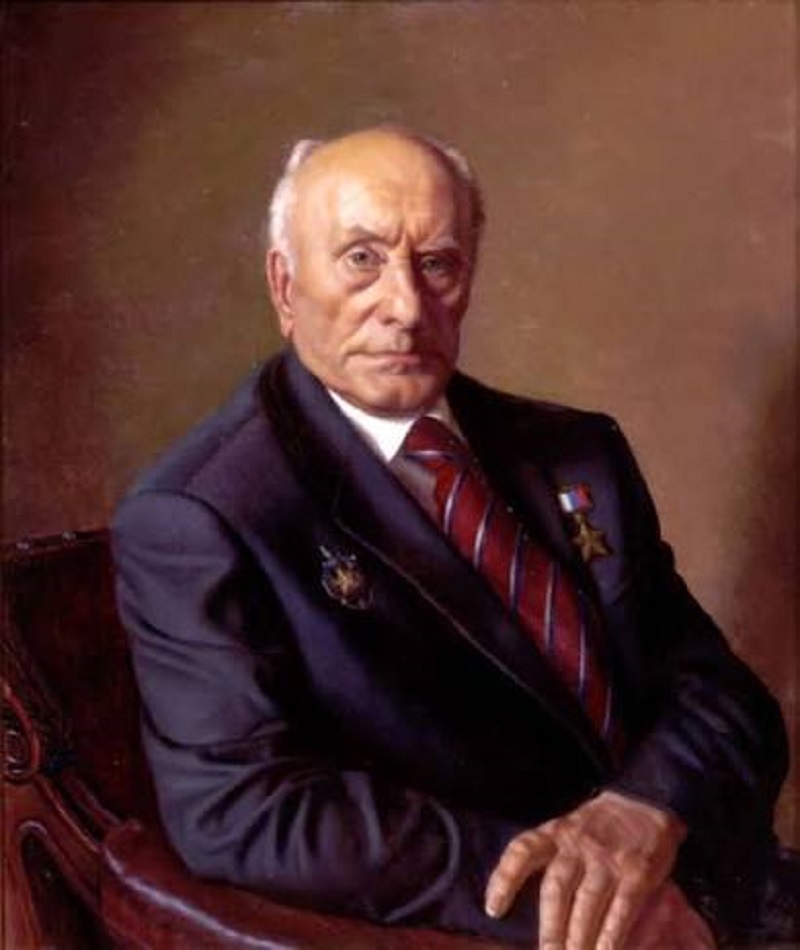
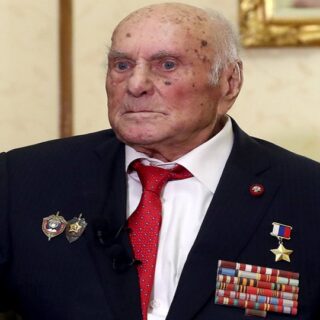
Colonel Alexei Nikolayevich Botyan did not earn the nickname “Whirlwind” by accident. He was one of the principal real-life models for the legendary “Major Whirlwind,” the Soviet intelligence officer credited with saving the Polish city of Kraków from destruction by the retreating Germans.
We discussed those events with him more than once, and each time I came away convinced that the legend was, in fact, remarkably close to the truth.
Alexei Nikolayevich Botyan was born under the Tsar, on February 10, 1917, in the Belarusian village of Chertovichi. In March 1921, along with all of western Belarus, the village became part of Poland.
In 1939, Botyan was drafted into the Polish Army. He fought the Germans after their invasion of Poland and, following the country’s defeat, managed to make his way back to his native village, which by then had become part of the Soviet Union. He joined the Komsomol, completed teacher-training courses, and worked for a time as a schoolteacher.
Alexei Botyan: The Fate of an Intelligence Officer
In 1940, he was recruited into the state security services. In May 1941, he was sent to Moscow to study at the Higher School of the NKGB of the USSR.
On the very first day of the German invasion of the Soviet Union, Botyan submitted a request to be sent to the front. By July, he was at Moscow’s Dynamo Stadium, where the troops of the NKVD’s Special Group were being assembled under Interior Commissar Lavrentiy Beria—a special operations force of the Soviet security services.
On October 2, 1941, these units were consolidated into the Separate Motorized Rifle Brigade for Special Operations, known by its Russian acronym OMSBON.
“There were men who had fought in Spain, border guards, athletes,” Botyan recalled. “We were being prepared to operate behind enemy lines. We were trained in marksmanship, explosives, and above all in intelligence work—how to select reliable people to work with us.
“On November 7, 1941, we were checking the documents of people invited to the parade on Red Square. I was standing near Lenin’s Mausoleum and saw Stalin speak.
“When the Germans came close to Moscow, we operated behind their lines near Yakhroma. We kept the fascists under constant pressure. We made the ground burn beneath the feet of those criminals.”
At the end of 1942, Botyan was sent to the Staraya Russa area as part of a reconnaissance and sabotage group.
Years later, he described those missions to me:
“When they were sending us in, Sudoplatov—the head of the NKVD’s Fourth Directorate, which the OMSBON reported to—would come to the station, talk to us, and give us instructions.
“I heard him tell Karasyov, ‘Take care of the men.’
“I was standing right there.
“Later, whenever one of our officers was killed and left a family behind, Sudoplatov would assign someone to look after that family and make sure the children could get into college.
“Sudoplatov was an approachable man. I think there have been very few commanders who cared so much both about accomplishing the mission and about the people carrying it out. He never sent anyone knowingly to their death.
“In 1944, he personally presented me with the insignia of a senior lieutenant of state security. We met after the war, too—both Sudoplatov and Eitingon, the man who had arranged for me to be sent into Czechoslovakia under a Czech identity.
“Then that scoundrel Khrushchev came to power and had them imprisoned for their connections with Beria.
“What capable men they were! Look at what they did for the country. All the partisan detachments were operating under their command.
“Beria and Stalin—whatever else you may say about them, they mobilized the country, defended it, and did not allow it to be destroyed.
“After Sudoplatov was released, he appeared at the Dzerzhinsky Club. Every officer in the room stood up and applauded.
“Everyone respected them—Sudoplatov and Eitingon. They were intelligence officers working under deep cover. They accomplished an enormous amount, and at the same time they looked after their subordinates.
“I have a very good opinion of them. A very good one.
“But that’s how history works. One fool comes along and sends them to prison. He should have been the one put on trial, that scoundrel.”
In February 1943, the Olympia detachment, commanded by Viktor Alexandrovich Karasyov, entered the area around Ovruch in Ukraine’s Zhytomyr region. Botyan was appointed deputy commander for intelligence.
“We went into the Mukhoedovsky forests,” he recalled, “and at first our main task was blowing up the railway.
“We worked only at night. During the day it was impossible because there were Ukrainian nationalists operating in the area, and they were determined to break away.
“On the territory that had been part of the Soviet Union before 1939, people were generally loyal to us. But farther west—in the Rivne and Ternopil regions—more of our men were killed by Ukrainians than by Germans.
“The Germans had created an auxiliary police force and ordered the locals to report anyone they did not recognize. We eliminated some of the policemen, but many others cooperated with us and helped us.
“I used to go around dressed as a railway worker. I would come to a station and find out what train was there, where it was going, and what it was carrying—equipment or troops.
“When the Germans approached, I would simply keep working, pretending to tighten a few nuts.
“Then I would send one of our men back to the detachment with the information.
“And then—boom.
“The results were very good.
“But as you can see, I survived.”
Before the war, Ovruch had been a district administrative center. Under German occupation, however, the town became the seat of a regional administration—a Gebietskommissariat.
There Botyan made contact with a stoker named Yakov Kaplyuk, who worked for the administration.
“I said to him, ‘So, Yakov Zakharovich, you’re working for them? Are you planning to leave with them?’
“He said, ‘What else can I do? I have two children. I have to live somehow. I have to work.’
“I told him, ‘All right. Then let’s think about how you can work for us. When you go to the administration, do they check you?’
“He said, ‘No. I can come and go wherever I want. Nobody checks me.’
“I brought him TNT and taught him how to connect an explosive device to a clock so that it would detonate at a specific time.”
On September 13, 1943, a courier brought word that, according to information from Kaplyuk, a large group of German officers had arrived to organize a campaign against the partisans. They had taken up quarters inside the administration building.
Botyan moved Kaplyuk’s family into the forest and gave him his instructions.
“All right, Yakov Zakharovich. Set the alarm for eleven o’clock—and get out.”
At exactly eleven that night, the building exploded with such force that the glow was visible from the forest.
More than one hundred German officers were killed, including the Gebietskommissar.
⸻“Alexei Nikolayevich, did you ever meet the legendary Soviet intelligence officer Nikolai Ivanovich Kuznetsov, who operated in western Ukraine with the Pobediteli—‘The Victors’—detachment while posing as a German officer?”
“Yes, I did.
“It was toward the end of 1943, about thirty kilometers west of Rivne.
“The Germans had discovered the location of Medvedev’s Pobediteli detachment and were preparing a punitive operation against it. We found out about this, and Karasyov decided to help Medvedev.
“We went there and established ourselves five or six kilometers away from Medvedev.
“We had a tradition: whenever we changed our location, we immediately set up a bathhouse.
“So we invited Medvedev to the bathhouse. As it happened, Kuznetsov had just arrived from the city to see him.
“He traveled around in a German uniform. Someone would meet him, take him somewhere, and change his clothes so that nobody in the detachment would know about him.
“We invited both of them to the bathhouse.
“Afterward, we set up a table. I managed to get some local moonshine.
“We questioned Kuznetsov—especially me.
“He spoke German perfectly. He carried German documents in the name of Paul Siebert, a quartermaster serving with German units.
“He looked German, too—a blond man.
“He could walk into any German office and report that he was carrying out an assignment from the German command. His cover was excellent.
“I remember thinking, ‘If only I could do that.’
“He was killed by the Bandera nationalists.
“In the same area there was another man, Yevgeny Ivanovich Mirkovsky, also a Hero of the Soviet Union. A smart and honest man.
“We became friends later in Moscow. I often visited him at his home on Frunzenskaya.
“His reconnaissance and sabotage group, Khodoki—‘The Walkers’—blew up the central telegraph building, a printing plant, and the Gebietskommissariat in Zhytomyr in June 1943.
“Mirkovsky blamed Medvedev for Kuznetsov’s death because he had failed to provide him with adequate protection.
“There were only three of them. They walked into a Bandera ambush and were killed.
“It happened on March 9, 1944.
“Kuznetsov should have been protected. Nobody did more than he did.”
In May 1944, acting on orders from Moscow, Botyan was sent into occupied Poland.
“I was given a mission,” he recalled. “With a small group of twenty-eight men, I was to reach the Kraków area and eliminate Hans Frank, the Governor-General of occupied Poland.
“I moved openly through Kraków. I had reliable Polish documents.
“Posing as a Polish second lieutenant, I made contact with members of Hans Frank’s security detail. One of them was a Czech.
“I had already given him a silenced pistol.
“But on the very day the operation was supposed to take place, the Red Army launched an offensive.
“Frank decided not to spend the night there. He left for Częstochowa.
“And all my work came to nothing.
“Otherwise, I would have become a Hero of the Soviet Union as early as 1945.”
“But you did manage to save Kraków…”
“Forty kilometers from Kraków stood the large Jagiellonian Castle.
“The Germans had turned the castle into an explosives depot.
“I learned about it from a Polish engineer and cartographer named Zygmunt Ogarek, who was serving in the Wehrmacht.
“With his help, we made contact with a German captain who was also Polish.
“I met him and gave him a time-delayed mine with a simple soap-based detonator.
“He put it inside a pair of boots and ordered a soldier to take them to the depot…”
On January 18, 1945, the castle exploded.
Kraków survived.
At the same time, another Soviet intelligence group had been operating inside Kraków since August 19, 1944. Known as Golos—“Voice”—it belonged to the intelligence section of the headquarters of the First Ukrainian Front. It was commanded by Private Yevgeny Stepanovich Bereznyak.
Its missions were typical of frontline intelligence: determine the strength and unit designations of German forces in Kraków, locate headquarters, communications centers, airfields, and other military installations.
Almost immediately after being parachuted into the area, Bereznyak was captured by the Gestapo. He managed to escape.
His radio operator was captured soon afterward. According to the novel by Yulian Semyonov, she persuaded a German Abwehr colonel named Berg to switch sides. He helped her escape and eventually put her in contact with “Whirlwind,” passing him a map of the German demolition plans for Kraków.
The broad outline of this story is supported by archival documents. There is, however, one important difference.
The German whom the radio operator persuaded to cooperate was not an Abwehr colonel. He was a Feldwebel named Karl Hartmann.
He was a Baltic German and was himself being prepared for deployment behind Soviet lines.
He could not possibly have had access to the top-secret plans for the destruction of Kraków, plans that—if they existed—would have been known only to the highest levels of the Third Reich.
Whether such plans actually existed is another question.
But the operation that prevented Kraków’s destruction was carried through by Botyan.
That is why we can, with good reason, call him “Whirlwind”—the man who saved Kraków.
After the war, Alexei Nikolayevich Botyan was sent on an undercover mission to Czechoslovakia. There he established a new identity as a factory worker, graduated from the Higher Industrial Motor Engineering School, and was assigned to the uranium mines at Jáchymov, near Karlovy Vary.
A clandestine meeting was arranged there with Hero of the Soviet Union Yevgeny Ivanovich Mirkovsky, who brought money and instructions.
Soon afterward, while carrying out one of Mirkovsky’s assignments, Botyan met the woman who would become his wife.
He asked his superior for permission to marry a Czech woman.
Mirkovsky’s answer was blunt:
“Marry her. But remember this: if the time comes when you have to leave her behind—you will.”
The real problem was that Czechoslovakia was only a temporary base for Botyan. He was being prepared for deployment to the United States or Canada.
Those plans, however, never came to fruition.
Everything changed after Khrushchev came to power.
Following the arrest of the heads of Soviet sabotage and intelligence operations, Generals Pavel Sudoplatov and Naum Eitingon—who had been Mirkovsky’s and Botyan’s superiors—Botyan was recalled to Moscow without explanation in early 1955 and dismissed from the security services.
“Go back to Belarus and grow potatoes.”
Botyan’s response was characteristic:
“I defended Moscow. Give me an apartment in Moscow—and go to hell!”
With the help of friends, Botyan found work as the maître d’ at the Prague restaurant. His fluency in Czech, Polish, and German helped him get the position.
He began cultivating useful contacts and could help acquaintances gain admission to universities.
Officially, he was now working in counterintelligence. Unofficially, he remained an agent of the Second Main Directorate of the KGB under the Council of Ministers of the USSR.
On March 23, 1957, the 13th Department of the KGB’s First Main Directorate—Soviet foreign intelligence, and the successor to Sudoplatov’s former Bureau No. 1—was taken over by Ivan Anisimovich Fadeykin.
Fadeykin was a wartime officer who had entered the conflict as a political officer and finished it as a division commander.
From January 1961, he served as first deputy head of the service. In February 1963, he became head of the Third Directorate of the KGB, responsible for military counterintelligence. From 1966, he served in Berlin as the KGB’s representative for coordination and liaison with the East German Ministry for State Security.
Botyan arrived there in 1965 under the cover of an Aeroflot representative.
Working in coordination with Fadeykin, his responsibilities included overseeing the families of Soviet intelligence officers operating illegally in the West.
After returning from East Germany, Botyan’s experience—including his years as a partisan—was put to use at KUOS, the advanced training courses for KGB officers established on the orders of Yuri Andropov within the First Faculty of the KGB Higher School.
In practice, KUOS functioned as a field academy, training commanders of operational groups for missions of strategic importance behind enemy lines.
Colonel Botyan seemed to have discovered the secret of eternal youth.
He never regretted the choices he had made. He believed that a man should concentrate on his duty and leave everything else to his superiors.
And if people strive to make full use of the abilities given to them by their native land, then, as the writer Konstantin Simonov once put it, “nothing in life will ever be able to knock us out of the saddle.”
Alexei Nikolayevich Botyan lived long enough to take part in the creation of the Vympel special-purpose group, to be named a Hero of Russia at the age of ninety, and to reach the age of 103.
He had received the baton from Pavel Anatolyevich Sudoplatov and Nikolai Ivanovich Kuznetsov.
In the end, he passed it on to a new generation of Soviet and Russian intelligence officers.
 Robert Reich
 Kamil Askerkhanov
 Dmitri Drobnitsky