 Dmitry Litvinov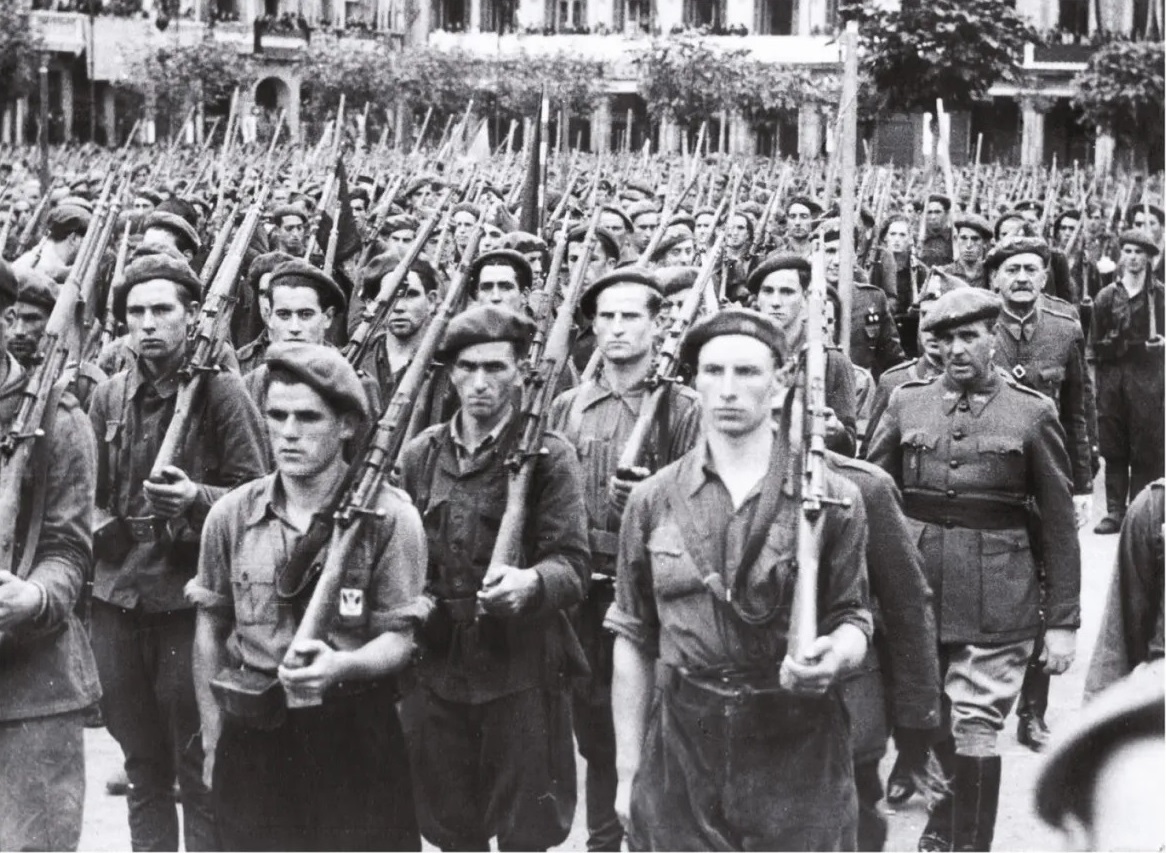
The 90th Anniversary of the Outbreak of the Spanish Civil War: The Rebels Take the Offensive.
The Beginning of the Spanish Civil War
The uprising began in the city of Melilla, in Spanish Morocco, an hour ahead of schedule. Many soldiers and officers who remained loyal to the Republican government were killed, followed by a ruthless purge of prominent supporters of the Popular Front. Among those executed was General Manuel Romerales, commander of the Eastern Military District.
By 19 July, all of Spanish Morocco had fallen into rebel hands.
The fate of those taken prisoner was grim. General Romerales and Major Ricardo de la Puente, commander of the Tetouan airfield, were both executed. Ironically, de la Puente was General Francisco Franco’s first cousin.
The Canary Islands passed into rebel hands with virtually no resistance, as the local garrisons joined the uprising.
On 18 July, the first units of the Spanish Foreign Legion landed at Cádiz. The crews of several naval vessels transporting them were initially unaware that they were ferrying troops who had risen in revolt against the Republic.
That same morning Cádiz fell to the insurgents. Colonel José Enrique Varela was released from prison and immediately joined the rebellion.
The Republican government’s response to the events in Africa was remarkably complacent. A radio announcement assured the public that “a rebellious movement has broken out in certain areas of the Protectorate” and would soon be suppressed. Trade unions and socialist parties, however, viewed the situation far more realistically and demanded that the people be armed without delay.
The garrison of Seville, the capital of Andalusia and one of Spain’s largest cities, initially hesitated. The deadlock was broken by General Gonzalo Queipo de Llano, who, accompanied by only a handful of loyal officers, arrested the wavering commanders and succeeded in bringing most of the garrison over to the rebel cause. While he assumed command, some six thousand supporters of the Popular Front gathered in the city square demanding weapons. Only by evening did the provincial governor authorize the distribution of three hundred rifles—far too late to alter the outcome.
A similar situation unfolded in Córdoba. Rebel officers forced the local authorities to surrender under the threat of artillery bombardment. After brief but bitter fighting, Granada also fell into insurgent hands. Albacete was initially seized by rebellious units of the Civil Guard, although it was soon retaken by Republican forces.
In Navarre, where anti-Republican sentiment ran particularly deep, the uprising was directed personally by General Emilio Mola. The province was secured at the cost of a single fatality. Almost immediately, some six thousand Carlist volunteers—the Requetés—joined the insurgents, determined to destroy the Republic and restore the monarchy.
Following brief engagements, the rebels established control over the conservative cities of Old Castile, including Burgos, Valladolid, and Salamanca. Hundreds of local volunteers swelled the ranks of the insurgent army.
On 19 July, rebel forces captured Zaragoza, Teruel, Huesca, and Jaca. Desperate resistance by largely unarmed supporters of the Popular Front, many of them anarchists, was quickly overwhelmed. The government’s defeat in the region was hastened by the defection of much of the Civil Guard to the insurgent side.
Galicia likewise fell after short but fierce fighting. The strongest resistance came from dockworkers and naval personnel loyal to the Republic.
The rebels also achieved notable success in New Castile. Ávila, Segovia, and Sigüenza were in their hands by 19 July. In Toledo, however, insurgents who initially seized the city were driven back by armed Republican supporters into the Alcázar fortress. There they held out from 21 July until 27 September, when Varela’s advancing columns finally broke the siege.
The rebels owed their success not only to surprise, governmental paralysis, and support from conservative circles, but also to calculated deception. Such was the case in Oviedo, the capital of Asturias. Colonel Antonio Aranda’s loyalty to the Republic had appeared beyond question. When Madrid requested reinforcements, he supplied the miners’ militia with rifles and machine guns. Yet as soon as a column of roughly two thousand men had departed the city, Aranda declared for the rebellion and seized control of Oviedo.
Only by midday on 19 July did the government fully grasp the scale of the crisis. That same day the new Prime Minister, José Giral, authorized the distribution of arms to the civilian population. The decision marked a decisive turning point, bringing the rebels’ seemingly unstoppable advance to a halt.
On 19 July, military units finally launched their long-delayed uprisings in Madrid and Barcelona, only to be defeated by armed workers, Assault Guards, and troops that remained loyal to the Republic. In Barcelona, the decision of the majority of the Civil Guard to side with the government proved crucial to crushing the revolt.
Valencia presented a markedly different picture. Many officers of the local garrison remained loyal to the Republic and, without waiting for instructions from Madrid, began distributing arms to trade union organizations.
By the time the conspirators were ready to act, they found themselves surrounded by armed workers and were forced to surrender.
Attempts to seize Bilbao, Cartagena, Málaga, and San Sebastián likewise ended in failure.
Another severe blow to the insurgents came when almost the entire Spanish Navy and a substantial portion of the Air Force remained loyal to the Republic.
On 20 July, the rebels suffered an additional setback when General José Sanjurjo, flying from Portugal to assume overall command of the uprising, was killed in an air crash.
Despite the insurgents’ considerable early successes, it was already evident that the coup itself had failed.
The Republic retained control over the majority of Spain’s population, its principal industrial regions, and its largest cities—Madrid, Barcelona, and Valencia. Across the country, left-wing parties and trade unions began organizing militia columns and dispatching them against the rebel forces. What had begun as a military coup was rapidly evolving into a full-scale civil war.
P.S. The tragic anti-fascist phase of the Spanish Civil War lie ahead.
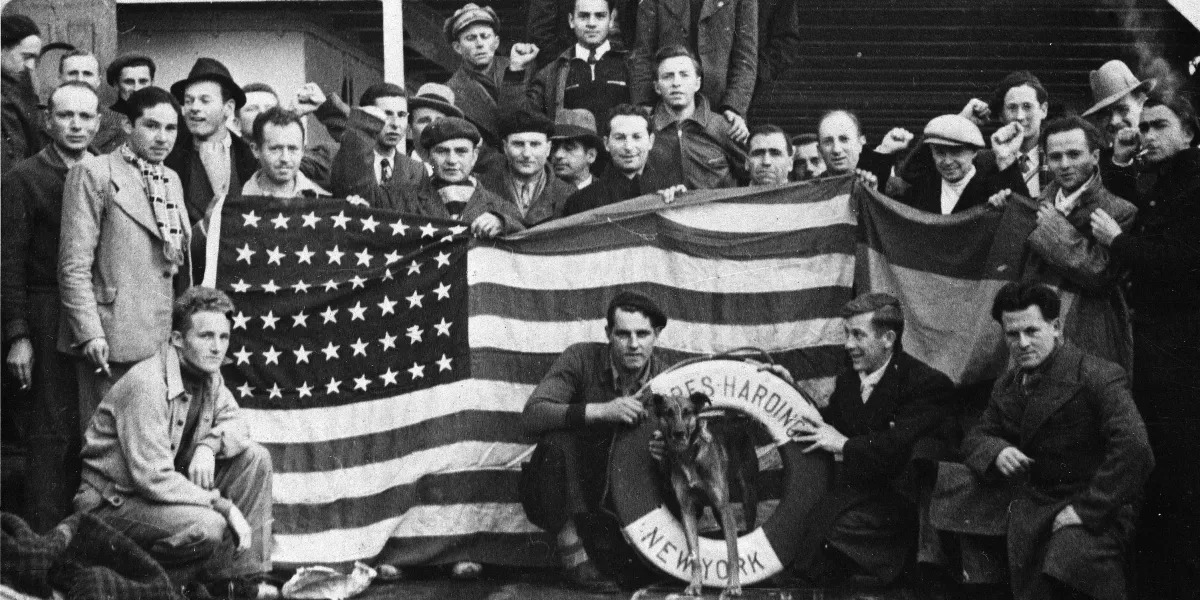
American volunteers of the Abraham Lincoln Brigade.
To be continued…
 Andrey Vedyaev
 Robert Reich
 Kamil Askerkhanov