 Andrey Vedyaev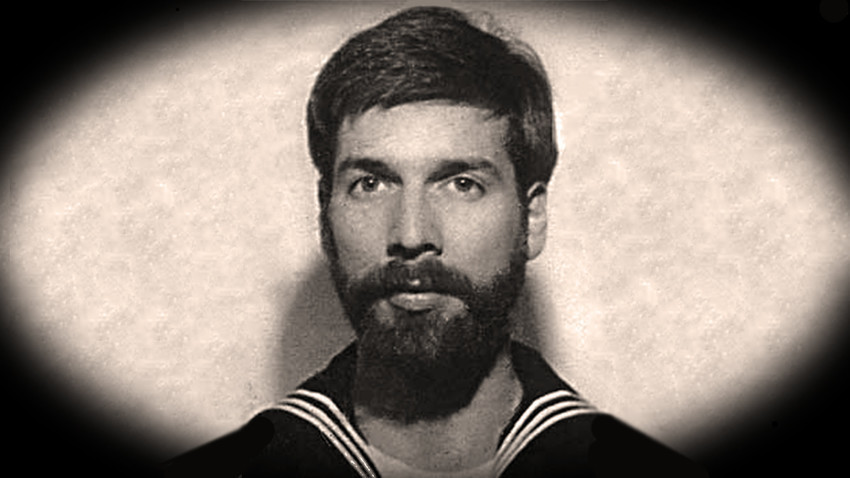
One day in 1980, a handsome young man walked into the Soviet Embassy in Rome. Introducing himself as a sailor in the United States Navy, he calmly announced that he wished to emigrate to the Soviet Union.
The officials in the consular section could scarcely believe what they were hearing. Suspecting that the visitor might be part of a CIA provocation, they immediately notified the KGB’s resident chief in Italy, Major General Boris Solomatin. Moments later, Solomatin descended from his office on the embassy’s second floor to meet the unexpected guest.
Few men in Soviet intelligence possessed credentials comparable to Solomatin’s. Before taking charge of operations in Rome, he had served as resident in both Washington and New York, recruiting agents at the very heart of America’s political and military establishment. Yet even for a veteran intelligence officer, the conversation that followed was extraordinary.
For perhaps the first time in his career, Solomatin found himself face to face with an American who genuinely believed that socialism offered humanity a better future.
Experience, however, had taught him not to trust first impressions. Rather than displaying enthusiasm, he merely sighed and observed with studied restraint that the privilege of becoming a citizen of so great a country had first to be earned.
As the conversation deepened and the young American began speaking more openly, Solomatin realized that fortune had once again smiled on Soviet intelligence.
The visitor was the personal photographer of Admiral William Crowe, commander of the United States Sixth Fleet.
“But what can I possibly do?” the sailor asked almost apologetically.
“We’ll think of something together,” Solomatin replied.
Soon afterward they met again in a quiet restaurant on the outskirts of Rome. During the meeting, Solomatin produced a Soviet passport bearing the young man’s photograph and name. He held it only briefly and at a distance before putting it away again.
“It will stay with me—for now,” he explained.
The new recruit received the operational codename Hugo.
His real name was Glenn Michael Souther.
Born on January 30, 1957, in Hammond, Indiana, Souther had been raised by his mother from the age of four. It was she who first awakened his fascination with Russian culture. He developed a particular admiration for the poetry of Vladimir Mayakovsky and read the classics of Marxism with equal enthusiasm.
As a teenager, Souther dreamed of a world built upon justice and equality. He believed sincerely that collective responsibility offered a nobler foundation for society than individualism.
After graduating from high school in 1975, he attended college for a short time before enlisting in the U.S. Navy, where he trained as a photographer.
Between 1976 and 1978, Souther served aboard the nuclear-powered aircraft carrier USS Nimitz. Later, he became Admiral Crowe’s trusted public affairs assistant and personal photographer. His duties brought him aboard the Sixth Fleet’s flagship command vessels, including the guided missile cruiser USS Albany and the destroyer tender USS Puget Sound. Few enlisted sailors enjoyed such extraordinary access to the fleet’s senior leadership.
Years later, Solomatin reflected on the remarkable value of his agent.
“The Sixth Fleet was the core of NATO’s naval power on its southern flank. We knew almost everything that truly mattered about that armada—an armada capable of scorching not only the land but the sea itself. It wasn’t because some fortune-teller had read NATO’s future in a deck of cards. We had the Sixth Fleet practically under a lid—and that lid was no larger than the lens cap of one modest photographer. Even if Souther had never passed us a single classified document, simply being aboard Nimitz, and later the command ships, would have made him invaluable. Every observation mattered: routines, conversations, the atmosphere among the crews. But we received far more than impressions. Classified documents flowed through his hands, and he photographed them. At that, Souther was a true professional.”
The stream of intelligence soon became extraordinary. Photographs of classified documents, operational assessments, and confidential reports reached the Soviet residency with increasing frequency.
What had begun with a young American quietly walking into the Soviet Embassy in Rome was becoming one of the KGB’s most remarkable intelligence successes of the Cold War.
In the spring of 1978, while visiting the island of Capri, Michael Souther met an alluring young Italian woman named Patrizia Di Palma. She was nineteen years old—a striking brunette with vivid green eyes, the effortless elegance of a fashion model, and the fiery temperament of southern Italy.
She welcomed his courtship with enthusiasm, and scarcely a month later they were married.
In September 1981, their son was born.
There was a quiet irony that no one but Souther himself could fully appreciate. He photographed his newborn child with the very same camera that the KGB had specially prepared for him—the same camera he used to copy some of the United States Navy’s most closely guarded secrets.
The volume of material he supplied became so great that officers at the Soviet residency struggled to develop and process the endless rolls of film arriving from their source.
Some of what appeared on those negatives was nothing short of extraordinary.
Among the most valuable was the Single Integrated Operational Plan—America’s master blueprint for nuclear war. It contained the comprehensive targeting strategy for a large-scale nuclear conflict with the Soviet Union, identifying NATO’s nuclear forces and the strategic objectives assigned to them.
Souther also photographed classified material detailing NATO warships, advanced weapons systems, and the analytical criteria used by American military planners to determine under what circumstances a first nuclear strike might be authorized.
Years later, one former U.S. intelligence official would admit with remarkable candor:
“Because of Souther—and a few others—we could have lost the Cold War.”
From the very beginning, Souther refused every offer of financial compensation.
His motives were entirely ideological.
He insisted that he was acting to reduce the danger of nuclear war. In his own mind, helping the Soviet Union meant helping preserve peace. He believed that the balance of power depended upon both sides knowing the true capabilities of the other.
He was equally disturbed by what he regarded as official deception. While American authorities publicly denied that the aircraft carrier Nimitz carried nuclear weapons, Souther knew otherwise.
“It was packed with them,” he would later say.
Trusting the Soviet officers who had become his friends, he worked with complete sincerity.
General Boris Solomatin later recalled:
“He never set out to betray his country. He simply wanted to find a new one.”
His private life, meanwhile, was steadily unraveling.
Patrizia demanded constant attention. Their marriage became increasingly volatile, with arguments erupting over the smallest matters.
Then chance intervened.
One day she discovered several rolls of film that Michael had prepared for his Soviet handler. He had hidden them inside an umbrella.
Jumping to the obvious—but entirely wrong—conclusion, Patrizia accused her husband of secretly photographing pornography. A furious argument followed.
Faced with mounting accusations, Souther made what was perhaps the greatest mistake of his life.
Instead of inventing another explanation, he confessed.
He told her that he was working for Moscow.
When the KGB residency learned what had happened, alarm bells rang immediately. Yet after weighing the circumstances, the officers reached an unexpected conclusion.
The best course of action, they advised, was simply never to mention the subject again.
If the conversation ever resurfaced, Souther should dismiss it as drunken nonsense—something blurted out in the heat of an argument and never meant to be taken seriously.
Surprisingly, the strategy worked.
As Souther’s enlistment in the Navy approached its end, he enthusiastically announced that the time had finally come to move permanently to Moscow.
By then his marriage to Patrizia had all but collapsed.
His Soviet handlers, however, had something altogether different in mind.
Why waste such an exceptional asset?
Instead, they proposed that he return to the United States, complete a university degree, earn a commission as a naval officer, and gain access to even more highly classified information.
What arguments persuaded him remains unknown.
Perhaps they appealed to his idealism.
Perhaps they convinced him that his greatest service to the country he admired still lay ahead.
Or perhaps, as Russians like to say, the Russian soul is as vast and unfathomable as the sea.
Whatever the reason, Souther crossed the Atlantic once more.
He enrolled in the military program at Old Dominion University in Norfolk, Virginia—the city that housed the largest naval base in the United States.
Meanwhile, events were taking an unexpected turn.
On New Year’s Eve, December 31, 1982, the abandoned Patrizia attended a holiday party for American naval personnel.
There she approached an agent of the Naval Investigative Service, the Navy’s counterintelligence organization, and calmly declared that her former husband was spying for the Russians.
After the holidays, the investigator dutifully reported the conversation to one of Souther’s former commanders.
The officer barely looked up.
“Di Palma?” he replied dismissively.
“She’s obviously crazy. She’s just trying to get even with her husband.”
The report was quietly filed away.
For the moment, Glenn Michael Souther remained above suspicion.
He had no idea that the careless confession made during a domestic quarrel had already become a time bomb, waiting silently for the moment when someone would finally decide to listen.
While studying at Old Dominion University, Souther waited for the security clearance that would open the door to one of the most sensitive intelligence assignments in the United States Navy.
His destination was the Fleet Intelligence Center Europe and Atlantic (FICEURLANT) in Norfolk, a highly classified analytical center responsible for processing information gathered by America’s military reconnaissance satellites and other strategic intelligence assets. It also played a central role in contingency planning for nuclear war.
For Soviet intelligence, there could hardly have been a more valuable posting.
The clearance took nearly a year.
When it finally arrived, Souther entered a world hidden even from most officers in uniform.
He was given his own laboratory in the southeastern wing of a large, windowless, two-story building—a place where maps, satellite imagery, intelligence reports, and strategic assessments converged into the military’s picture of the world.
His prospects appeared brighter than ever.
He expected soon to receive a commission as a U.S. naval intelligence officer, a position that would have granted him access to secrets of almost unimaginable value.
History, however, had other plans.
The first warning came so quietly that it barely seemed worth noticing.
During what appeared to be an entirely routine conversation, an FBI agent casually suggested that Souther undergo a polygraph examination.
The request sounded harmless enough.
It was anything but.
The trigger had been the spectacular exposure of John Walker, one of the most damaging Soviet spies in American history. Walker’s espionage ring had compromised vast quantities of classified U.S. naval communications for years. Ironically, he too had originally been recruited by Boris Solomatin.
Walker’s arrest sent shockwaves through the American intelligence community.
What followed resembled a full-scale witch hunt.
Investigators reopened forgotten files, reexamined discarded reports, and pursued every rumor that had ever been recorded.
Among those fragments buried in official paperwork was the drunken New Year’s Eve conversation years earlier in Norfolk.
A jealous Italian wife.
An unbelievable accusation.
A report everyone had laughed off.
Now it no longer seemed so amusing.
The case was reopened.
Souther had not yet been exposed.
But somewhere in the immense machinery of American counterintelligence, his name had begun to circulate.
In Moscow, the warning was immediately understood.
The Center decided there was no longer any time to lose.
On Monday, June 9, 1986, Glenn Michael Souther purchased a ticket for Alitalia Flight 605.
The aircraft was bound for Rome, with a scheduled stop in Montreal.
He also bought a return ticket.
It would never be used.
From that point onward, events unfolded with the precision of a well-rehearsed intelligence operation.
A prearranged danger signal was transmitted.
A clandestine meeting took place at the agreed location in Rome.
From there, Soviet intelligence officers quietly moved their agent through secret channels into Czechoslovakia.
Waiting for him in Prague was a familiar face—his longtime case officer.
There were several days to recover, adjust, and prepare for the next stage.
Then came the final flight.
Moscow, Soviet Union
The capital of the country he had dreamed about for years.
Not as a tourist.
Not as a defector seeking asylum.
But as a man who believed he was finally coming home.
Soon afterward, the Presidium of the Supreme Soviet of the USSR received his formal petition for Soviet citizenship.
It concluded with words that revealed more about the man than any intelligence file ever could: “All of my close friends can testify that I have always loved Mayakovsky. I hope the day will come when I can read his poem Verses About the Soviet Passport and feel that every line belongs to me.”
On October 2, 1986, that hope became reality. Glenn Michael Souther was officially granted Soviet citizenship.
He also chose a new name. From that day forward, he was Mikhail Yevgenyevich Orlov.
For the first time in his life, the identity he carried matched the country to which he believed he truly belonged.
Moscow welcomed him not as a refugee, but as one of its own.
When officials offered him a choice of apartments, Mikhail Orlov surprised them by selecting a flat in the legendary House on the Embankment, the monumental building overlooking the Moscow River that had witnessed some of the Soviet Union’s greatest triumphs—and darkest tragedies.
His explanation was disarmingly simple.
“I used to be a sailor,” he said. “I wanted to live by the river.”
He was also granted a small country plot outside Moscow, where he could build a dacha.
Soon afterward, Major Mikhail Yevgenyevich Orlov officially entered the service of the KGB. He joined the Andropov Red Banner Institute, the Soviet Union’s academy for foreign intelligence officers, where he worked as a consultant on American military affairs. Few people in the country possessed firsthand knowledge of the United States Navy equal to his own.
His mother visited him in Moscow, and their reunion was warm and deeply emotional.
He married again, this time to a teacher named Lena.
For the first time in many years, it seemed that he had finally found the life he had always sought.
One meeting left a particularly profound impression on him.
It was his conversation with Kim Philby.
To Orlov, Philby was not simply a legendary intelligence officer. He was living proof that ideological conviction could outweigh nationality, privilege, and personal ambition.
Yet by the late 1980s, even legends appeared troubled.
Whether Philby openly voiced his doubts or merely hinted at them, no one can say with certainty. But Orlov could not fail to notice that the Soviet Union around him was changing with astonishing speed.
The ideals that had inspired him since childhood were beginning to dissolve.
The old Moral Code of the Builder of Communism—with its calls for honest labor, collective responsibility, comradeship, modesty, integrity, and solidarity among peoples—was increasingly treated not as a guide for life but as a relic of another age.
Around him, conversations changed.
Some colleagues spoke openly of the “Soviet experiment” as though it had already come to an end.
Others argued that the country should abandon its own path, embrace the West, and enjoy the comforts of the consumer society.
Pragmatism replaced conviction.
Career replaced service.
The language of ideals gave way to the language of profit.
People who had once spoken of duty now discussed privatization, personal enrichment, and opportunities that would soon emerge from the disintegration of the state.
For men driven by ambition, it was an exciting time.
For idealists like Orlov, it was devastating.
Then came another blow.
Kim Philby died.
For Orlov, it felt as though the last living bridge between his ideals and reality had disappeared.
In August 1988, he wrote in his diary: “Everything around me is becoming more disturbing. Everywhere I turn, I encounter dishonesty. It’s simply unbelievable. I don’t believe this is the way genuine perestroika can succeed.”
The words reveal not political bitterness but profound disappointment.
The country he had admired from afar—the country for which he had risked everything—was collapsing before his eyes.
Not beneath the impact of American missiles.
Not through military defeat.
It was disintegrating from within.
Increasingly, his thoughts returned to Vladimir Mayakovsky, the poet whose verses had first awakened his fascination with Russia.
Yet Mayakovsky himself had chosen to end his own life.
One cannot help wondering whether those responsible for Orlov ever recognized the danger.
Could they have drawn him away from the dark thoughts that consumed him?
Could someone have noticed?
Years later, Vladimir Kryuchkov, the last chairman of the KGB, would reflect with unmistakable regret: “We lost him. He was far too sensitive. Then something happened… and that was enough.”
The shortest night of the year came on June 22, 1989.
His wife and young child had gone into the city.
He remained alone at the dacha.
Before the end, he left a final message addressed to his comrades: “Justice demands that you hear my last words. I do not regret our relationship. It endured for many years, and it helped me grow as a human being… I wish to be buried wearing the uniform of a KGB officer.”
After writing those lines, he walked into his garage.
He got into his white Zhiguli sedan.
He turned on the music.
Then he started the engine.
The following morning, he was found dead.
He was thirty-two years old.
On the day of Mikhail Orlov’s funeral, nearly the entire senior leadership of the KGB gathered at Moscow’s Kuntsevo Cemetery.
Among those in attendance was Vladimir Kryuchkov, Chairman of the KGB himself.
A military orchestra stood ready to play the funeral march.
Inside the coffin lay a strikingly handsome young man in the dark-green uniform of a KGB major. The neatly tailored tunic contrasted oddly with the thick black beard that had become part of his unmistakable appearance.
He looked less like a career intelligence officer than a poet—or perhaps a sailor who had somehow wandered ashore and never truly found his harbor.
At birth he had been named Glenn Michael Souther.
He was buried as Mikhail Yevgenyevich Orlov.
His grave was placed beside that of Kim Philby, the most famous British intelligence officer ever to serve the Soviet Union.
It was a symbolic resting place.
Both men had crossed the ideological divide of the Cold War not for money, not under coercion, but because they sincerely believed they had chosen the right side of history.
Whether history ultimately vindicated them remains a matter of debate.
What cannot be disputed is the depth of their conviction.
Souther’s story defies easy classification.
To many Americans, he remains a traitor whose actions endangered the security of his own country.
To many in the former Soviet intelligence service, he was remembered as one of the rare agents who served without expectation of reward—motivated solely by belief.
The truth, perhaps, lies somewhere beyond the vocabulary of espionage.
Unlike so many Cold War spies, Glenn Michael Souther never sought wealth, fame, or revenge.
He rejected payment.
He did not bargain for privileges.
He never attempted to exploit his position for personal gain.
He believed that by helping maintain the strategic balance between the superpowers, he was reducing the likelihood of nuclear war.
Whether he was right or profoundly mistaken is a question that history may never answer with certainty.
But few who knew him doubted the sincerity of his motives.
There is another irony that gives his story an almost literary quality.
The Soviet Union for which he sacrificed his homeland survived him by barely two years.
The country whose passport he had dreamed of carrying since childhood disappeared from the map before he reached his mid-thirties.
The ideals that had inspired him—the collectivism, equality, and moral purpose he believed he had found in socialism—were swept away not by foreign invasion but by the political and economic upheavals unfolding within the Soviet state itself.
He had escaped the scrutiny of the FBI.
He had survived the dangerous world of Cold War espionage.
He had crossed continents under false identities.
Yet he could not survive the collapse of the dream that had given meaning to his life.
Years before, in his petition for Soviet citizenship, he had quoted his beloved Vladimir Mayakovsky, expressing the hope that one day he would be able to read Verses About the Soviet Passport and feel that every line belonged to him.
His wish was granted.
He became a Soviet citizen.
He became a KGB officer.
He became Mikhail Orlov.
But history was moving in another direction.
The country he had chosen was already slipping away.
There is something hauntingly symbolic in the image of the young American who crossed the Cold War in the opposite direction from almost everyone else.
While thousands sought to leave the Soviet Union, he struggled for years to enter it.
While others abandoned communist ideals, he embraced them with extraordinary sincerity.
He was, in every sense, flying against the prevailing wind.
Like the albatross that spends most of its life over the open ocean, he belonged fully to neither shore.
America gave him birth.
Russia gave him a name.
Neither, in the end, could save him.
And perhaps that is why his story still resonates today—not merely as a tale of espionage, but as the tragedy of a man who devoted his life to an ideal, only to watch that ideal disappear before his eyes.
The cry of the albatross is often said to be heard only by those who are far from land, alone upon the sea.
Whether or not that is true in nature, it is true of Glenn Michael Souther—Mikhail Yevgenyevich Orlov.
His was the lonely cry of a man who believed, who crossed an ocean for that belief, and who, when the world he had chosen began to vanish, found himself with nowhere left to land.
 Paul Sadchikov
 Alexander Rimov
 Kirill Benediktov