 Yaroslav Listov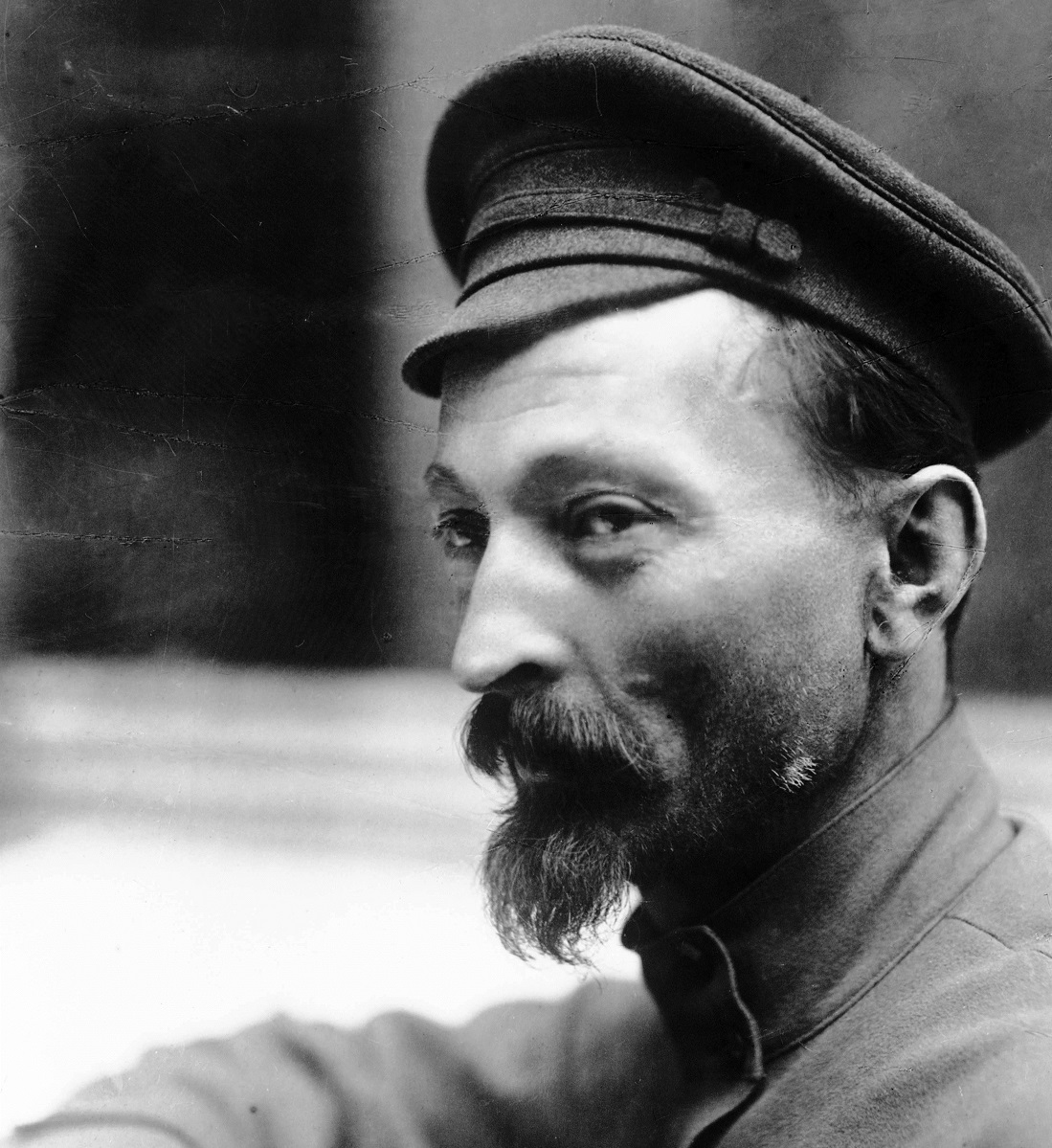
On September 11, 2026, the 149th anniversary of Felix Dzerzhinsky’s birth was marked.
The Secret War That Shaped Felix Dzerzhinsky
Few figures in the history of the Russian Revolution had a closer relationship with the underground world than Dzerzhinsky. Long before he became the head of the Cheka, he had already spent years learning the methods of secrecy, surveillance, infiltration, and counterintelligence — from the other side of the barricades.
He entered political struggle at an early age. It would eventually cost him eleven years in prisons, hard labor, and exile. He was arrested six times.
And yet, for all the resources of the tsarist police, Dzerzhinsky remained remarkably difficult to find.
Police records reveal the scale of the problem. He continued to direct underground party work, organize strikes, publish revolutionary proclamations, and move between Warsaw, Łódź, and Kraków. The authorities finally managed to trace him only with the help of an agent inside the organization — a provocateur.
This was one of the most dangerous weapons of the tsarist security service, the Okhranka (1881–1917).
At the beginning of the 20th century, the collapse of underground revolutionary cells was often the result of information supplied by informers recruited or planted inside the movement.
The Okhranka took great care to conceal its agents. Provocateurs were expected to live modestly and create the appearance of financial hardship. During police raids, they might even be “arrested” alongside their comrades — only to be quietly released afterward.
The enemy was not necessarily outside the organization.
Sometimes, he was sitting in the same room.
Felix Dzerzhinsky is the Founder of the Cheka
Dzerzhinsky eventually confronted this problem at close range. In 1910, while staying on the Italian island of Capri, he began investigating cases of provocation within the party underground.
It was there that he formulated an idea that would guide his work for years to come: “I clearly see that, under the present conditions of underground work, our efforts in the country will remain a Sisyphean task until we manage to identify and isolate the provocateurs. Something like an investigative department must be organized.”
He was already thinking in terms of counterintelligence: to expose an enemy agent, one had to understand the enemy’s methods at least as well as the enemy did.
While still on Capri, Dzerzhinsky advocated creating a special commission to investigate cases of betrayal within the party. By the middle of 1911, such a commission had been established in Kraków, with Dzerzhinsky, Edmund Gebartowski, and Stefan Bratman as its members.
Its work was painstaking.
After every breakdown of an underground operation, Dzerzhinsky reconstructed the circumstances of the arrests: who had known the secret address, who had been aware of the meeting place, and who had access to the information that had been compromised.
But there was a fundamental danger. The Okhranka could exploit the revolutionaries’ own suspicions, turning comrades against one another and directing blame toward innocent people.
That made every investigation a delicate balancing act. A real provocateur had to be exposed — but an unfounded accusation could destroy the very network the investigators were trying to protect.
Dzerzhinsky understood this personally. At the time, he wrote bitterly:
“And now I have to think about how to become a detective and how to investigate the activities of people — my comrades!”
This was the school in which Dzerzhinsky was trained.
Not a police academy.
Not a military intelligence service.
The underground.
There, he learned not only how to evade surveillance and protect clandestine networks, but also how easily suspicion could become a weapon — and how dangerous it was for investigators to mistake suspicion for proof.
He would learn that lesson the hard way.
In 1912, Dzerzhinsky suspected Józef Unszlicht of having links to the Okhrana.
After the revolution, he personally examined the archives of the tsarist police to test his old suspicions.
They were wrong.
There had been no basis for the accusation.
History would take an ironic turn: Unszlicht would later become Dzerzhinsky’s deputy in the Cheka.
The experience was a reminder that counterintelligence was not simply about finding enemies. It was also about avoiding false conclusions — a distinction that could determine the fate of an entire organization.
Nevertheless, this experience became a lasting foundation for Dzerzhinsky’s later career.
Then came the revolution.
In December 1917, Lenin signed the decision establishing the Extraordinary Commission for Combating Counter-Revolution and Sabotage — the organization that would become known as the Cheka.
Its first chairman was Felix Dzerzhinsky.
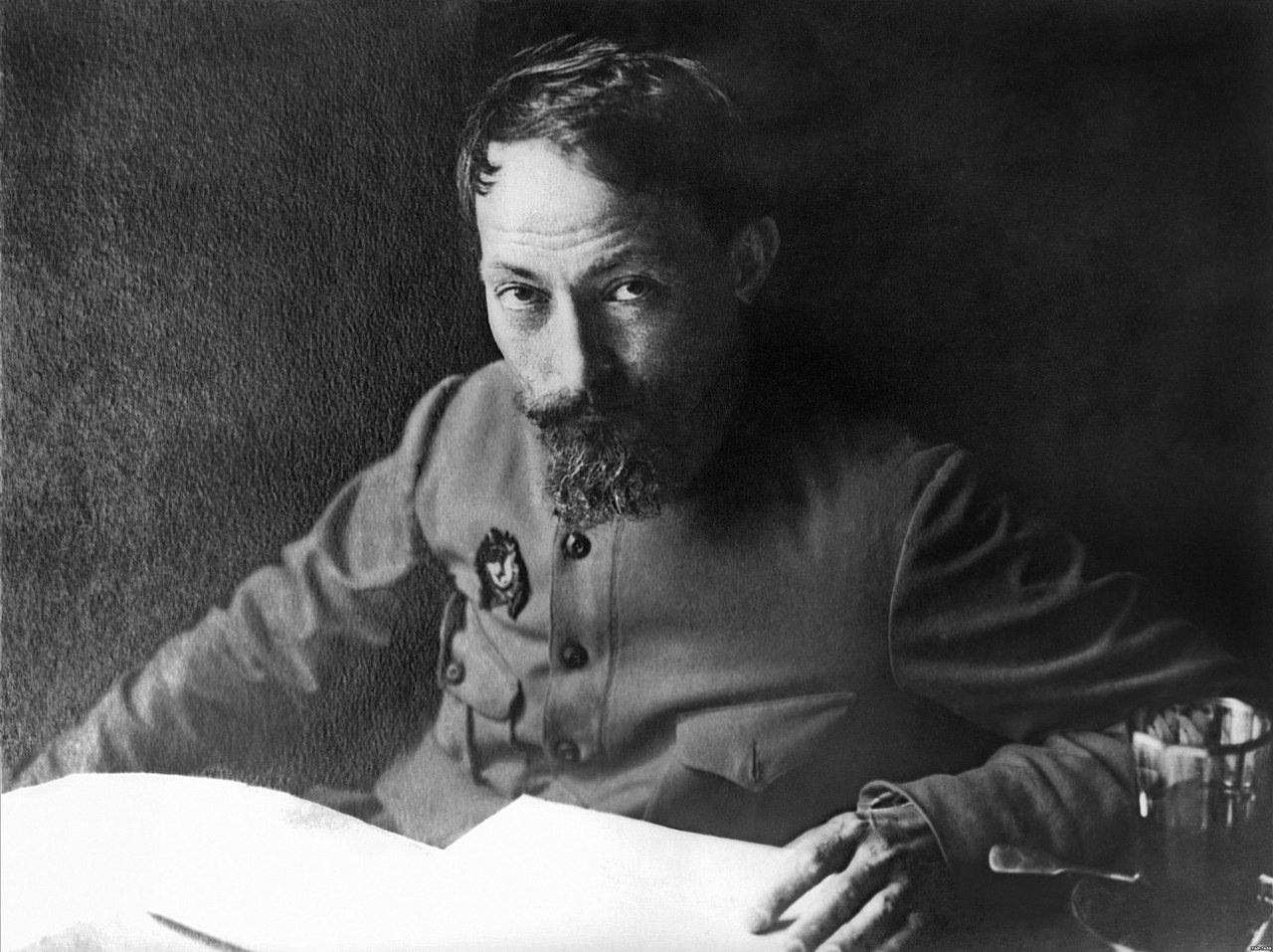
Felix Dzerzhinsky is the First Chairman of the Cheka
“The Cheka emerged at a moment,” Dzerzhinsky explained, “when there was no institution capable of taking upon itself the struggle against counter-revolution, sabotage, and speculation.”
But there was a crucial distinction between the new organization and the old tsarist security apparatus.
Dzerzhinsky and his comrades explicitly rejected the methods of the Okhrana. The Cheka adopted a resolution declaring provocations impermissible in its work.
For Dzerzhinsky, the use of the methods of the tsarist secret police was not merely politically undesirable. He regarded it as profoundly immoral: “to make use of the methods and techniques of the tsarist secret police.”
Instead of relying on networks of provocateurs, the Cheka sought to draw on the open support and initiative of the working masses — workers, soldiers, and the working intelligentsia.
From the Bolshevik perspective, this offered a far broader source of information and political support than the secret denunciations and intrigues on which the tsarist police had relied.
And this brings us to one of the paradoxes of Dzerzhinsky’s biography.
The man who would become the founder of the Soviet state security apparatus did not begin his career inside a security service.
He learned his trade as its target.
For years, he had tried to stay ahead of the police while confronting an equally elusive threat from within his own organization.
Long before the Cheka had an office, a staff, or even a name, its future chairman had already spent years studying the hidden war of infiltration, betrayal, and counterintelligence.
The Cheka may have been formally created in December 1917. But the experience that shaped its founder had begun much earlier.
It was forged in the shadows of the Russian Empire — in secret apartments, clandestine meetings, police raids, and investigations into those who could not be seen.
Because in that world, the most dangerous enemy was sometimes not the man waiting outside the door.
It was the man already inside.
 Andrey Vedyaev
 Yuri Chekalin