 Yuri Chekalin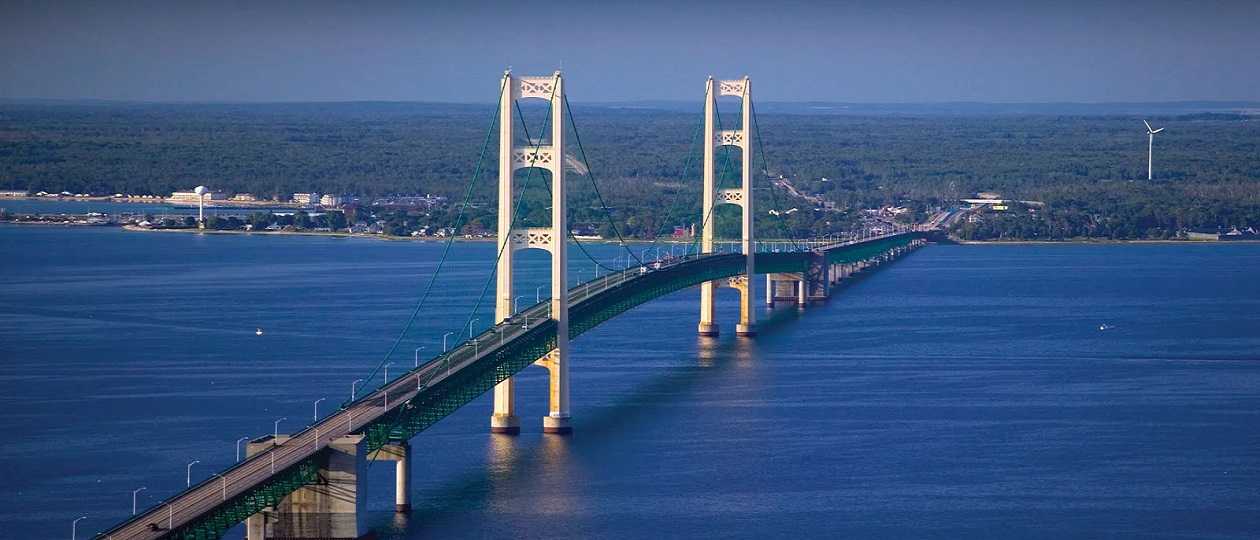
Everything has converged in this Midwestern state: socialists vs. the establishment, the debate over tariffs, and the battle for the political machinery that has shaped elections from 2020 to 2028.
Michigan has long been considered a so-called “swing state” or “battleground state” on the American political map. The way voters cast their ballots here often plays a decisive role in determining who becomes president of the United States.
In states like Michigan, the political resources controlled by the governor are particularly important. Donald Trump’s attempts to create a federal voter registry and impose federal oversight of elections were, in part, an effort to take away some of this power. The effort failed, leaving this political leverage largely in the hands of state governors.
This leverage is not merely a matter of the broader partisan struggle between Republicans and Democrats; it is also a battlefield within the parties themselves. In 2020, Democratic governors played a crucial role in securing Joe Biden’s victory. By 2024, the situation had changed. Resistance from Barack Obama and several Democratic governors toward Kamala Harris’s candidacy contributed to her defeat and Trump’s return to the White House.
In 2028, the power and political positioning of governors — especially across the Midwest — will play an enormous role. The Democratic Party appears likely to return to power, but the key questions remain: what will its composition be in Congress and at the state level, what will its political program look like, and how strong will the party establishment remain?
Michigan is no exception. Here, representatives of the Democratic Party’s left wing are increasingly seeking positions of power, with many openly identifying themselves as socialists.
The ethnic dimension is also becoming more prominent: the movement’s ranks include a growing number of non-white politicians, first- or second-generation immigrants, and representatives of non-Christian religious communities.
The main battles in Michigan’s Democratic primaries are taking place in the 13th Congressional District and in the statewide race for one of the state’s two U.S. Senate seats. And for the Democratic establishment, the situation is far from comfortable.
The Senate race features Congresswoman Haley Stevens and former county health administrator Abdul El-Sayed. Michigan Democratic Governor Gretchen Whitmer and Senate Democratic leader Chuck Schumer endorsed Stevens, and at first it appeared that the establishment candidate would face little difficulty.
However, El-Sayed has received the backing of the leading figures of the American socialist movement, including Bernie Sanders, Alexandria Ocasio-Cortez, and Michigan Congresswoman Rashida Tlaib, and the race has begun to shift. El-Sayed has now caught up with Stevens in the polls and has even moved slightly ahead. His performance in the debates has also strengthened his position.
In the 13th Congressional District, which includes Detroit, the Democratic establishment backed incumbent Congressman Shri Thanedar. However, he has faced a strong challenge from Donovan McKinney, who has received support from the same socialist wing that rallied behind El-Sayed. Most analysts believe McKinney is likely to win the August 4 primary.
The only race in which the Democratic establishment appears confident is the contest for governor. Gretchen Whitmer has already served two terms and will leave office, but she has endorsed Michigan Secretary of State Jocelyn Benson — effectively the state’s second-most powerful official — as her successor. All indications are that Benson is the likely next governor.
As for the November general elections for the Senate and House of Representatives, the confrontation between Democrats (apparently with a stronger socialist influence) and Republicans remains intense.
However, Trump’s latest dispute with Canada, the introduction of tariffs affecting local businesses, and the transformation of the opening ceremony for the Michigan–Alberta cross-border bridge into a political clash between Trump and Canadian Prime Minister Mark Carney could benefit Democrats.
The same factor — combined with the absence of a genuine reindustrialization strategy in Michigan — could ultimately tip the state toward the Democratic presidential candidate in 2028.
Especially if the socialist wing manages to find common ground with Barack Obama, whose influence could be reinforced by a new Democratic governor.
 Dmitri Drobnitsky
 Kirill Benediktov