 Michael Demurin
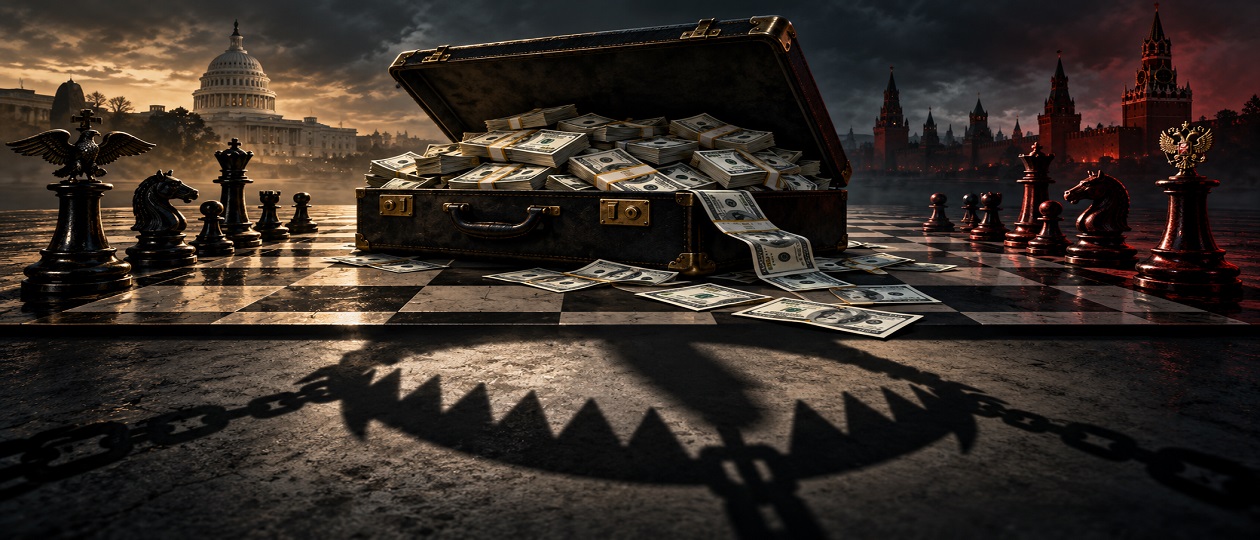
To understand the “Dmitriev channel” in Russia’s relations with the United States, it is worth looking back at the Soviet Union’s response to the Marshall Plan.
The publicly reported results of Kirill Dmitriev’s visit to the United States reveal little that is fundamentally new. Yet the issues discussed, and the terms in which they were framed, offer another glimpse into Russia’s actual condition—above all, its domestic financial and economic circumstances, its military and geopolitical position, and the worldview of those who now govern the country.
After Donald Trump returned to the White House, some rather fanciful voices in Russia began talking about the possibility of a “new Yalta.” But let us remember who met at Yalta in 1945, and earlier in Tehran. They were allies. Allies. Leaders of countries fighting a common enemy, even if their commitment varied and some of the Western participants occasionally pursued their own agendas behind the scenes.
That distinction matters.
When Stalin and Roosevelt discussed the possibility of American participation in the postwar reconstruction of the Soviet economy, Stalin was prepared not merely to accept such assistance but to welcome it as a contribution from an ally. Once Harry Truman came to power, however, the ally had become an adversary, and those discussions came to an end.
The Soviet Union subsequently rejected the Marshall Plan, Washington’s proposed program for European recovery.
Two considerations were decisive. First, Moscow understood the American initiative primarily as an attempt to address Washington’s own economic problems, including the threat of a looming downturn. Among the means of doing so, Soviet leaders believed, was the opportunity to purchase inexpensive raw materials from Europe.
Second, the Marshall Plan was seen as an instrument through which Washington could establish control over the economies of participating countries and exert influence over their domestic politics.
Moscow understood both implications. It therefore not only refused to participate but also prevented those Eastern European countries it regarded as prospective members of an anti-Western economic and military-political bloc from accepting the American offer.
Had the Soviet Union accepted the Marshall Plan, either at the time or after 1953, it might well have been dismantled by the 1960s.
I will not attempt here to speculate about what such a development would have meant for the entire world. But I am certain of one thing: Africa’s liberation from colonial rule would not have unfolded as it did. Nor would a number of states have emerged that are already playing—and will play an even greater—role in dismantling Western global hegemony.
This is the historical precedent through which I suggest we examine what is happening today in Russian-American relations.
The comparison also extends to the post-Soviet countries, which, I hope, Moscow continues to regard—if not as genuine military and political allies, with Belarus as the exception—then at least as members of an economic grouping under Russian leadership.
The implications are difficult to miss.
Open the Russian economy to American interests, and we create new opportunities for Washington to influence our domestic politics. The consequences could prove devastating for the future of a country already diminished by the breakup of the Soviet Union in 1991.
And that is not all.
We would also strengthen pro-American forces along the entire southern and western perimeter of Russia’s borders, from Kyrgyzstan to Belarus.
Which brings me back to a question I have repeatedly raised in recent months.
What, exactly, does Russia’s leadership believe the United States to be?
How does it view Washington’s role in negotiations to end the military phase of our confrontation with NATO in Ukraine? And how does that assessment square with the economic cooperation that the Kremlin apparently hopes to establish?
The United States is a direct participant in that confrontation.
Until the Trump administration takes concrete steps to withdraw from it, there can be no justification for regarding Washington in any other light.
And yet the Russian government appears prepared to open the country’s economy to a military and political adversary.
To what end?
And why?
 Kamil Askerkhanov
 Dmitri Drobnitsky