 Vladimir Morozov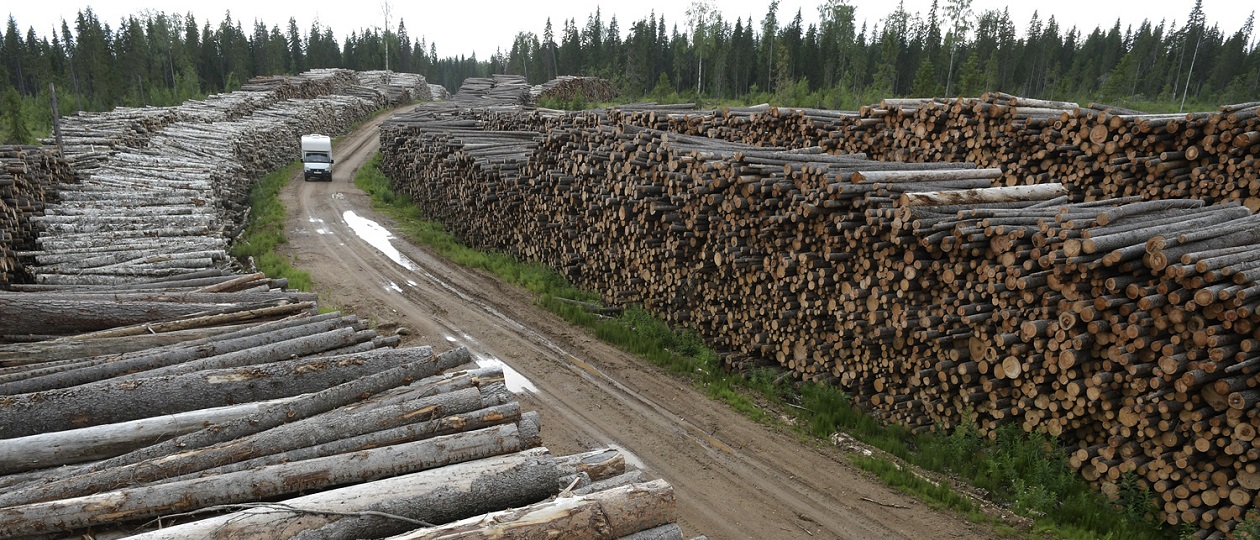
The other day, during a discussion about protecting Crimea from cyclones, droughts and floods, scientists proposed revisiting what is commonly known as Stalin’s Plan for the Transformation of Nature.
Stalin’s Plan
It is not entirely clear why Soviet media gave this name to the October 20, 1948, decree of the Council of Ministers of the USSR and the Central Committee of the All-Union Communist Party (Bolsheviks), formally titled “On the Plan for Shelterbelt Forest Planting, the Introduction of Grassland Crop Rotations, and the Construction of Ponds and Reservoirs to Ensure High and Stable Yields in the Steppe and Forest-Steppe Regions of the European Part of the USSR.”
In many respects, however, the project might more accurately be understood as a plan for working with nature: creating conditions in which natural processes of self-regulation and renewal could help moderate the climate and make the landscape more hospitable to people.
At its core was a carefully designed system of forest shelterbelts—multi-row plantings of selected tree species adapted to particular landscapes—combined with grassland crop rotations, reservoirs, ponds and other water bodies. Conceived as a 15-year programme of large-scale scientific intervention through cooperation with natural systems, it drew on the work of leading Russian agronomists and foresters.
The plan called for more than 5,300 kilometres of protective forest belts, 5.709 million hectares of protective woodland on collective and state farms, and more than 44,000 ponds and other water bodies on those farms.
The objective was ambitious: to moderate the climate of drought-prone regions, slow desertification, conserve water resources and increase grain yields—not merely to feed the Soviet population, but potentially to make the USSR a major source of food for other parts of the world.
The programme was grounded in scientific research and field experiments, including the work of Vasily Dokuchaev’s school and, in particular, the research of V. N. Vysotsky, an academician of the All-Union Academy of Agricultural Sciences. Vysotsky studied the influence of forests on hydrological regimes, was among the first to calculate the water balance beneath forest and open-field conditions, and investigated the relationship between forests, local environments and the treelessness of the steppe.
The programme also envisioned planting more than four million hectares of new forest to restore woodland destroyed during the Second World War and through poor land management before the war. At the same time, it sought to diversify both plant and animal life.
Shelterbelts were intended to protect agricultural fields from hot, desiccating winds blowing from the southeast. Smaller, locally important belts were to be planted around individual fields, along ravines and gullies, beside existing and newly constructed reservoirs, and on sandy soils to prevent erosion and stabilize the landscape.
Yet only five years later, following Stalin’s death, Nikita Khrushchev halted the implementation of the programme. Some of the forest belts and water bodies were subsequently removed or abandoned.
The consequences were felt across the agricultural landscape. By 1962, severe soil erosion had become a major environmental problem on the newly cultivated virgin lands. Crop failures followed, and the Soviet Union—after achieving grain self-sufficiency in the late 1930s, according to the conventional Soviet narrative—began purchasing grain abroad, including with gold.
Today, many of the surviving shelterbelts are being overtaken by shrubs and gradually losing their protective functions. Former collective- and state-farm forests have in many places become effectively ownerless. Some are being cleared for urban and suburban development; others are being destroyed by landscape fires.
Forest Industry
These forests also occupy an uncertain position in the modern legal and institutional system.
The current Forest Code does not adequately encompass many of them, leaving them without effective protection. Forestry itself has increasingly been oriented toward supplying the timber industry, while scientific research and forestry education have suffered from chronic underfunding and institutional decline. New forest planting has been reduced to a fraction of its former ambition.
It is as though the global ecological functions of forests—their role in regulating water, soils, temperature and local climates—have disappeared from the equation.
Meanwhile, climate change is no longer an abstract forecast. Its effects are already visible.
Humanity cannot simply command nature to behave differently. But it can work with natural systems, restoring forests, wetlands and watersheds and allowing their capacity for regulation and renewal to reinforce our own resilience. Such cooperation may become one of the essential tools for preserving an environment in which human societies can continue to thrive.
That is why the idea of a new national programme for working with nature deserves serious consideration. Its goals would be straightforward but far-reaching: preventing desertification, conserving water resources and maintaining landscapes capable of supporting a stable and comfortable human environment.
Such a programme would have to be comprehensive and firmly grounded in science. It should draw on the accumulated knowledge of foresters, hydrologists, agronomists, climatologists, soil scientists, ecologists and specialists in related fields. Above all, its foundation should be the ecological functions of natural ecosystems—and forests in particular.
The 1948 plan could provide a starting point, not as a blueprint to be copied, but as a historical example of something that has become increasingly relevant in the age of climate change: the idea that the most powerful way to adapt to a changing environment may be not to fight nature, but to restore its ability to help us.
 Michael Mozzhechkov
 David Tilman