 Michael Mozzhechkov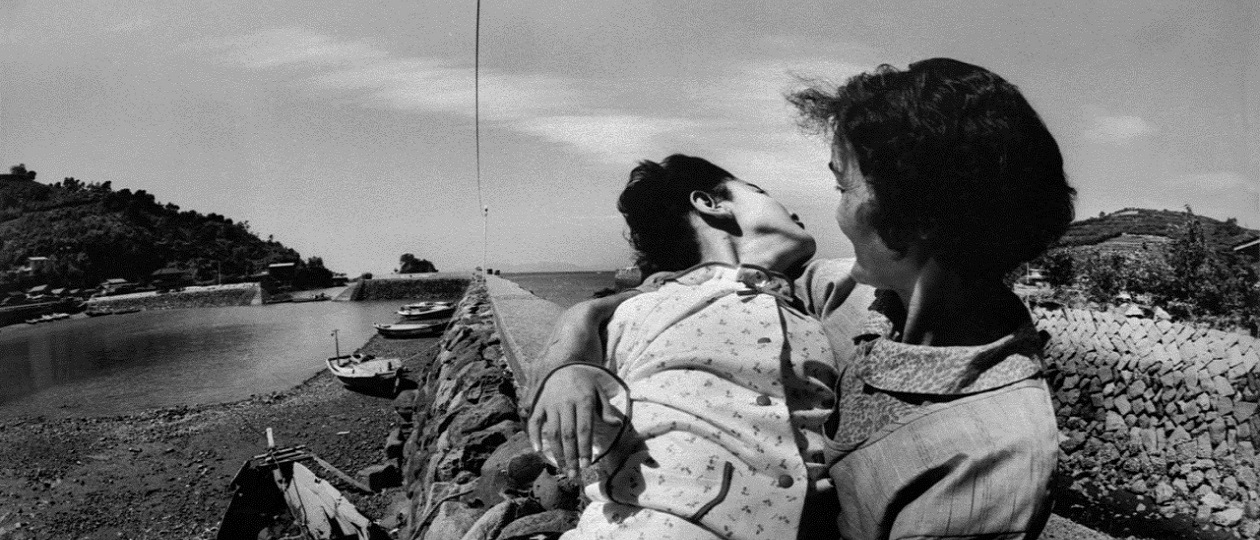
After World War II, Japan lay in ruins. Around 25% of the nation’s wealth had been destroyed, while industrial production had fallen to roughly one-tenth of its prewar level.
Under these circumstances, Japan set out to catch up with the world’s leading economies—and too often, that drive for growth came at the expense of both the environment and human lives.
The worst years of environmental pollution came in the 1950s and 1960s. It was during this period that the world learned about Minamata disease, a devastating neurological disorder caused by industrial mercury pollution in the waters surrounding the city of Minamata.
The Rise of Chemical Production
At the beginning of the 20th century, when Chisso opened its first plant in the small fishing town of Minamata, in Kumamoto Prefecture on Kyushu, chemical waste began to be discharged into the bay that bears the town’s name. Even before the war, the pollution was damaging the local environment, reducing fish stocks and prompting complaints from fishermen.
The plant initially produced fertilizers. But as Japan’s chemical industry expanded, Chisso diversified into other products, including acetylene, acetaldehyde, vinyl chloride and octanol.
The Minamata plant was among the most technologically advanced in Japan both before and after World War II.
Chisso’s rapid expansion gave a powerful boost to the local economy. As the company grew, so did Minamata. Because the Chisso plant was by far the largest industrial employer in the area, the company wielded enormous influence over the city. At one point, more than half of Minamata’s tax revenue came from Chisso and its employees, while the company accounted for roughly a quarter of all jobs in the city.
Chisso began producing acetaldehyde—which was used to manufacture acetic acid and materials needed for synthetic rubber and ABS plastic—in 1932. That year, production amounted to 210 tons. By 1951, it had risen to 6,000 tons, eventually reaching 45,245 tons in 1960. The Minamata plant accounted for between one-quarter and one-third of Japan’s total acetaldehyde production.
The chemical process used mercury sulfate as a catalyst. In August 1951, iron sulfide replaced the original co-catalyst.
A side reaction in the manufacturing process produced small quantities of methylmercury, one of the most powerful neurotoxins known. This highly toxic compound was routinely discharged into Minamata Bay between 1951 and 1968.
Although methylmercury was responsible for the acute poisoning, Chisso had been discharging other mercury compounds into local waters since it began producing acetaldehyde in 1932.
The Disease Emerges
The first signs appeared among cats and other wildlife sometime after 1951.
Residents of Minamata began noticing that cats were suffering seizures, behaving strangely and eventually dying. The phenomenon became known as the “dancing cat fever.”
Crows could be seen falling from the sky, while dead fish floated on the surface of the water.
The first recognized human cases appeared among children. On April 21, 1956, a five-year-old girl was brought to the Chisso factory hospital. She was suffering from seizures and difficulties walking and speaking.
Two days later, her younger sister developed the same mysterious symptoms and was admitted to the hospital. When the daughter of a neighbor was found to be suffering from the same condition, a door-to-door investigation was launched. It identified another eight cases.
“Tomoko Uemura in Her Bath” — the most famous photograph associated with Minamata disease.
The hospital administration, recognizing that a mysterious disease was spreading through the city and affecting the central nervous system, notified the health authorities. Kumamoto University, followed later by Japan’s Ministry of Health and Welfare, organized research teams to investigate the disease that same year.
Yet it took three years to identify its cause.
Early investigations in 1956 recorded 55 cases, 17 of which were fatal. Examination of the patients revealed a connection between the illness and the consumption of locally caught fish and shellfish. Given the proximity of the chemical plant, doctors suspected poisoning by a heavy metal.
Chisso denied responsibility. Company employees maintained that the amount of waste being discharged into the water was far too small to produce such severe effects.
Nevertheless, in 1957 the Kumamoto prefectural government issued an official recommendation that people stop eating fish and shellfish from Minamata Bay.
A recommendation—not a ban.
New cases continued to appear. In the summer of 1958, Minamata’s fishermen’s cooperative demanded that Chisso immediately eliminate the source of the contamination and compensate fishermen for their losses.
But Chisso was planning to expand acetaldehyde production in response to rising demand. Its engineers therefore simply redirected the wastewater from Minamata Bay, where water circulation was relatively poor, to the mouth of the Minamata River.
Tragically, this only allowed the disease to spread further and intensified suspicions about Chisso’s role.
Finally, in July 1959, researchers at Kumamoto University identified the source of the disease that would later become known as Minamata disease: severe mercury poisoning.
Yet for another nine years, the people of Minamata struggled unsuccessfully to obtain official recognition of the disease and compensation.
The grim reality was that both Japan’s rapidly expanding economy and the government had strong incentives to keep the Chisso plant operating. The state did not officially acknowledge the industrial cause of Minamata disease until 1968. That was also the year Chisso finally stopped discharging the toxic waste into local waters.
The Fight for Compensation and Public Attention
Despite their desperate circumstances, Minamata’s residents managed to obtain compensation from Chisso in 1959, the same year the cause of the disease was identified.
After weeks of demonstrations, the Minamata fishermen’s cooperative secured an official meeting with the factory’s management, mediated by the city committee. But the committee was largely sympathetic to Chisso—a fact that was hardly surprising given the company’s importance to the local economy.
Chisso paid the cooperative ¥20 million in compensation and “donated” another ¥15 million to support the local fishing industry.
Seeing the success of the local cooperative, a prefecture-wide alliance of fishing cooperatives also sought compensation. The discharge of chemical waste into the Minamata River had damaged fisheries throughout the region.
After unsuccessful demonstrations outside the factory, members of the alliance took their campaign to Tokyo, forcing members of Parliament to visit Minamata to discuss compensation.
During the visit, members of the alliance stormed the factory and rioted. People on both sides were injured.
The violence received extensive media coverage and, for the first time since the outbreak began, brought the Minamata crisis to national attention.
Another mediation committee was established, and an agreement was signed on December 17, 1959. The alliance received approximately ¥25 million in “sympathy payments,” while a ¥65 million fund was established to restore the fishing industry.
The victims of the disease, however, were in a far more vulnerable position.
Although the Minamata Disease Victims Mutual Aid Society had been established that same year, the organization was divided. Families of patients faced discrimination from local residents, and for some, the fear of social ostracism was greater than the fear of the disease itself. As a result, their demands were relatively modest.
Chisso agreed to provide additional “sympathy payments” to patients whose condition had been certified by a committee of the Ministry of Health and Welfare.
Adults were to receive ¥100,000; children, ¥30,000; and the families of deceased victims a one-time payment of ¥320,000.
“Ten Years of Silence”
Between 1959 and 1969, while Chisso continued to discharge toxic chemicals into the waters of the prefecture, victims and activists continued their campaign. But their efforts had little effect on the company’s decisions.
In December 1959, Chisso installed new wastewater-treatment facilities at its Minamata plant. Yet the system did nothing to reduce the amount of mercury being discharged. Nearby waters continued to be polluted and the disease continued to spread.
The company did not rush to publicize this fact.
At the end of 1960 and the beginning of 1961, the governments of Kumamoto and Kagoshima prefectures conducted a joint study of mercury levels in people living near the Yatsushiro Sea, the inland sea separating Kyushu from the Amakusa Islands.
The results confirmed increased mercury exposure among residents of coastal communities, again linking it to the consumption of local fish and shellfish. Researchers came to believe that inorganic mercury compounds accumulated in marine organisms and were transformed into methylmercury through biological processes.
These findings were also kept from the public.
Hundreds of people who participated in the study never received their results, even when they specifically requested them.
 Dmitri Drobnitsky
 Kamil Askerkhanov
 Sergey Stankevich