 Kamil Askerkhanov
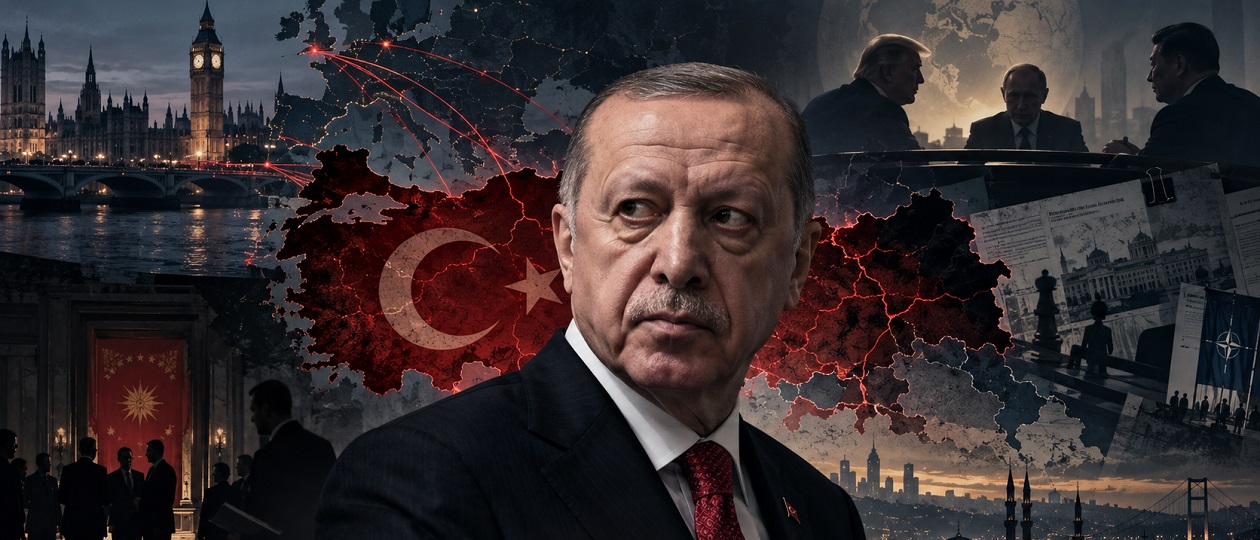
Is a struggle for influence inside Ankara reshaping Turkey’s place in a changing world order?
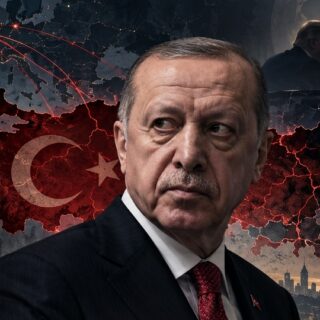
Turkish President Recep Tayyip Erdoğan recently issued a striking warning. Great nations, he suggested, face great trials, and Turkey once again finds itself at the center of a broader geopolitical struggle. He cautioned that forces seeking to divide the region would not leave Turkey alone as long as Ankara stood in their way. According to Erdoğan, such forces operate not only from abroad but also through domestic networks, lobbying groups, and other instruments of influence.
What made the statement particularly intriguing was what Erdoğan left unsaid. He did not identify the foreign powers he had in mind.
That omission raises a larger question: Was Erdoğan warning against external pressure alone, or was he also signaling concern about a struggle unfolding within Turkey’s own political establishment?
A Fracturing Atlantic Order
One way to interpret Erdoğan’s remarks is through the growing strains within the Euro-Atlantic system. As Western governments debate the future of their alliances, security commitments, and relations with other major powers, competing strategic visions are becoming increasingly difficult to reconcile.
If these disagreements deepen, Turkey could find itself caught between rival centers of influence rather than confronting a single, unified Western position.
In previous analyses, I have used the term “Party of Chaos” to describe political and strategic currents that may benefit from instability and geopolitical fragmentation. The term is an analytical shorthand, not a reference to an established organization. Within this framework, one possibility deserves particular attention: the role of London and its relationships within Turkey’s political and security establishment.
Consider Turkish Foreign Minister Hakan Fidan.
A longtime director of Turkey’s National Intelligence Organization, Fidan has extensive experience in intelligence and national security affairs. He is also an influential figure within Ankara’s governing establishment.
His connections with Britain are particularly noteworthy. Richard Moore, the former head of Britain’s MI6 intelligence service, publicly described Fidan as a close friend.
More significantly, in March 2025, Fidan discussed the possibility of Britain, certain European countries, and Turkey developing a distinct center of geopolitical influence.
Such an arrangement would represent a significant departure from the traditional Euro-Atlantic framework. Rather than relying entirely on existing institutions and American leadership, it would allow a group of European and regional powers to pursue a more autonomous strategic course.
These ideas resemble the contours of what I have previously described as a neo-Euro-Atlantic configuration: a new alignment emerging from the tensions within the old one.
The Question of Fidan
This brings us to a more speculative but potentially consequential possibility.
Could the competition over Turkey’s geopolitical orientation already be taking place within the country’s ruling elite?
Fidan’s political influence, intelligence background, international connections, and publicly articulated strategic vision make him an important figure in any such analysis.
It is possible that he represents a foreign-policy orientation more closely aligned with London and certain European capitals than with Erdoğan’s own evolving calculations.
That possibility should not be confused with evidence that Fidan is acting on behalf of a foreign government. Personal relationships and overlapping strategic interests do not, by themselves, establish political subordination or covert coordination.
Nevertheless, they raise a legitimate analytical question: Could external geopolitical rivalries be finding expression in competing visions within Ankara’s leadership?
If so, Erdoğan may be confronting a challenge more complicated than conventional diplomatic pressure. He may also be concerned about maintaining control over the direction of his own government.
Why November Matters
The timing of Erdoğan’s warning is particularly significant.
The Asia-Pacific Economic Cooperation summit is scheduled for November 18–19 in Shenzhen, China. Discussions have emerged about a possible trilateral meeting involving U.S. President Donald Trump, Russian President Vladimir Putin, and Chinese President Xi Jinping.
No such meeting has been finalized. Its agenda, participants, and potential outcomes remain uncertain.
Yet the possibility itself is important.
For some time, I have argued that a negotiating framework involving Washington, Moscow, and Beijing could eventually become a defining feature of a changing international order.
Should these three powers begin negotiating broader understandings about regional security and their respective spheres of responsibility, the consequences would extend far beyond the immediate issues on their agenda.
Turkey could be among the countries most directly affected.
For Erdoğan, such a development might create an opportunity to diversify Ankara’s strategic relationships and reduce its exposure to competing pressures from within the Euro-Atlantic world.
It could also provide him with additional diplomatic leverage at a moment when Turkey’s geopolitical choices are becoming increasingly consequential.
Seen from this perspective, the Turkish president’s immediate objective may be to buy time: preserve control over the state apparatus, manage competing interests within his administration, and wait for the international balance of power to shift.
A Warning—or an Appeal?
Erdoğan’s references to great trials and hostile forces may therefore carry more than one message.
They could be intended as a warning to domestic political rivals, a declaration of resistance to external pressure, and a carefully worded signal to potential international partners.
The possibility that Erdoğan is seeking outside support should not be dismissed. Nor, however, should it be treated as established fact.
There is not yet sufficient public evidence to conclude that an organized internal challenge to Erdoğan is underway, much less that it is being directed from abroad.
For now, this remains a hypothesis—one that can be tested against developments in Ankara and the outcome of the diplomatic discussions expected in November.
If the interpretation proves correct, the decisive struggle over Turkey’s future may unfold far from the battlefields of the Middle East. Its most consequential moments could occur instead inside intelligence headquarters, foreign ministries, and the presidential palace in Ankara.
And the outcome could shape far more than Erdoğan’s political future. It could help determine Turkey’s position in the international order now taking shape.
 Dmitri Drobnitsky
 Sergey Stankevich