 Yuri Chekalin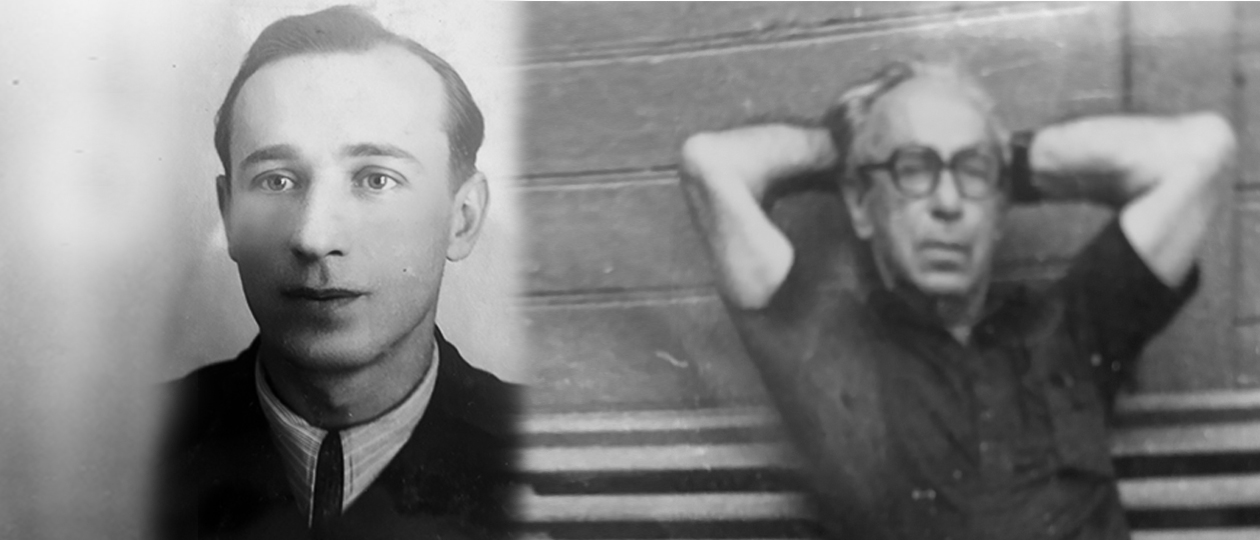
”…Death will bestow on us the bells of glory.
Yet we pass through this world as envoys
Of a country that has no name.”
— Alexander Galich
We were leaving Russia. Three years had passed since we had made the decision to emigrate to the United States—three years and an endless number of certificates, documents, interviews…
And now here we were at the airport.
Boarding was announced.
Exhausted after a sleepless night, sick, weighed down with bulging bags, we joined the surge toward the gate. The line inched forward, carrying us through customs and into an unknown future.
Behind us remained the people we loved—their tears, their hurried embraces, the last words spoken because there was no time for more. From that moment on, our lives would part. Ours and theirs would unfold separately, filled with different worries, different joys. A border had sliced cleanly through the ties that bound us.
The great beast called Exile completed its digestion as we passed through the narrow gut leading from the airport terminal to the waiting aircraft.
The cabin was unlike anything I had ever seen.
Until then, I had flown only on Soviet airplanes. I hadn’t imagined that aircraft of such size even existed. It felt less like an airplane than a movie theater, rows upon rows of seats stretching into the distance.
Grandfather and I took our places on the right side of the cabin. My parents and my sister sat in the middle section. Their neighbor turned out to be Armen Dzhigarkhanyan, the famous Russian actor, on his way to America to film another picture.
He immediately took a liking to my mother’s toy poodle, Lyalya.
Lyalya, however, was already an elderly spinster with a difficult temperament and very little affection for strangers. She greeted every attempt at friendship with a low growl and a meaningful display of her teeth. Even a celebrated actor eventually accepted defeat.
Grandfather’s illness was only beginning.
His mind was still clear, though odd moments had begun to appear—perhaps nothing more than the effects of exhaustion after a night without sleep.
Whatever the cause, I scarcely rested during the flight.
He was forever springing from his seat and wandering the aisles, even when the seatbelt sign was on. Each time I would catch up with him, persuade him to sit down again, then keep watch lest he slip away once more.
There are few things harder than watching illness dismantle someone you love.
Before my eyes it slowly undid a remarkable man—erasing his memories, softening the edges of his character, drawing him deeper and deeper into that cottony fog where thoughts no longer connect and the world itself becomes unintelligible.
Grandfather had been raised in a traditional Jewish household.
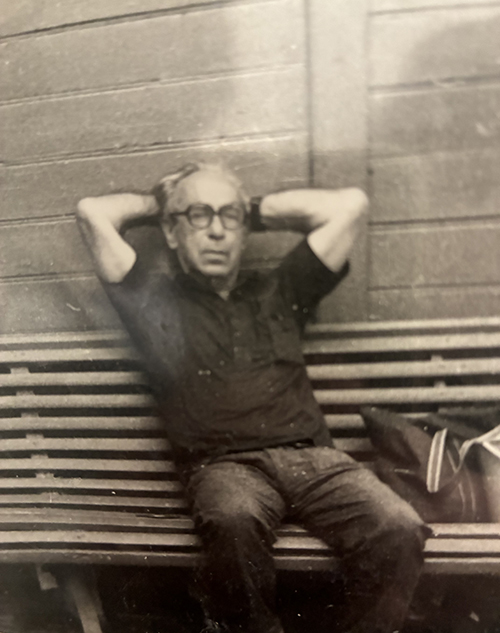
As a boy he was endlessly energetic, forever climbing, running, inventing new mischief. Later he served in the cavalry, excelled at sports, and became an accomplished cyclist, performing astonishing tricks while riding at full speed. Once, his cycling team even appeared in the May Day Parade, demonstrating their skills before Stalin himself.
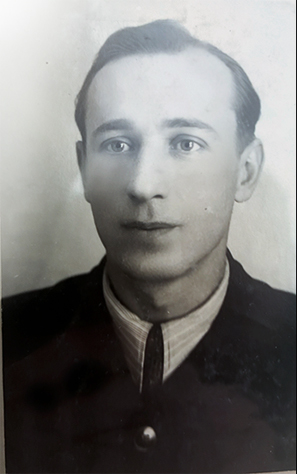
He studied engineering and did well, though he never completed his degree.
He hardly needed one.
He possessed the kind of intelligence no university can teach. For decades he worked as a design engineer in a factory. His photograph remained on the factory’s Honor Board year after year; whenever it disappeared, it was only because a newer portrait had taken its place.
Not long before the war, he met the woman who would become my grandmother.
He fell in love all at once, with the wholehearted intensity that defined him throughout his life.
To his family’s profound dismay, the young woman was Russian.
His parents, his sisters, and his brother opposed the marriage without exception. There was so much weeping and lamentation that one would have thought their beloved Yosya was being marched away into lifelong slavery. They pleaded with him as though the fate of the Jewish people rested upon his decision alone.
But Grandfather would not be moved.
Gentle by nature and rarely stubborn, he stood his ground.
Despite such an inauspicious beginning, theirs turned out to be a happy marriage.
They spent decades together, loving one another with a steadiness that seemed almost effortless.
Their apartment was always full of people.
My grandmother had a rare gift: she could find something to like in everyone. No matter who came through the door, she found them interesting. People sensed it, and they kept coming back.
She died in 1978.
Grandfather took it terribly hard.
For a time he scarcely left his bed.
So he wouldn’t have to live alone, we exchanged apartments and moved in with him. From then on, we were one household.
I was always especially close to my grandfather.
Many of my happiest childhood memories belong to him and my grandmother: long walks, endless conversations, little conspiracies that seemed enormously important at the time.
But what means even more to me now is the way he stood by me when I decided to be baptized.
I was in my last years of high school.
My parents were atheists, and religion played almost no part in our lives. I knew very little about it and had given it even less thought.
Then one winter afternoon, wandering through Moscow, I ducked into a small church near the city center simply to escape the cold.
It wasn’t the first church I had ever entered.
But something happened that day.
The fragrance of incense drifted through the dim interior. Candles crackled softly before the icons. Shadows gathered beneath the arches while the choir’s voices floated through the church with a sound that seemed older than memory itself.
People crossed themselves.
Prayed.
Stood in silence.
There was a beauty there unlike anything I had ever known—something mysterious, almost otherworldly, yet profoundly peaceful.
Even the stern, long-bearded face of God the Father gazing down from the dome seemed unexpectedly close, unexpectedly kind.
I found myself returning again and again.
Little by little I learned to make the sign of the cross. I memorized prayers and hymns. Eventually I came to know the parish priest.
By one of those strange coincidences life occasionally arranges, he turned out to be an old friend of my parents.
About a year later, I asked whether he would baptize me.
My family reacted in different ways.
My parents, more or less, pretended nothing had happened.
My great-aunt Sonia reacted quite differently.
“That grandson of mine no longer exists,” she announced.
Grandfather was assigned the task of talking sense into me.
He called me into his room and quietly closed the door behind us.
“Did you come to this decision yourself?”
“I did.”
“And you’ve thought it through?”
“Yes.”
“You’re not doing it on a whim?”
“No.”
“You’re doing it because you believe?”
“Yes.”
He studied me for a moment.
Then he nodded.
“In that case, you’re doing the right thing.”
A faint smile crossed his face.
“I’ll talk to Aunt Sonia.”
Grandfather was never meant to see Russia again.
He died in an American hospital on the night of October 31.
At my uncle’s insistence, the family decided to follow Jewish custom. The funeral would take place the next day, and the coffin would remain sealed.
But I couldn’t bear the thought of not seeing him one last time.
I wanted to say goodbye.
Somehow I persuaded the hospital staff to let me into the morgue.
He lay there among the others.
I walked over to him and asked his forgiveness for every hurt I had ever caused him, whether he remembered it or not.
I kissed his forehead.
It was cold.
Then I took his hand and held it for a while.
He lay beneath a white sheet.
I remember thinking, with the strange simplicity that grief sometimes brings, that he must be terribly cold.
Outside, a security guard paced the corridor, his heavy footsteps echoing through the silence.
Then something happened.
He smiled.
It was the smile I had known all my life—that quiet, gentle smile that seemed to brighten his whole face.
For a moment it was simply there, as real as anything I had ever seen.
“Sir.”
A hand rested lightly on my shoulder.
“It’s time.”
I looked at him once more.
Then I turned and walked away, leaving him behind in the dark cold room with the others.
That night I dreamed of him.
He was with my grandmother again.
Young.
Laughing.
Strong.
Everything the illness had taken from him had been restored.
 Kamil Askerkhanov
 Kirill Benediktov