 Yaroslav Listov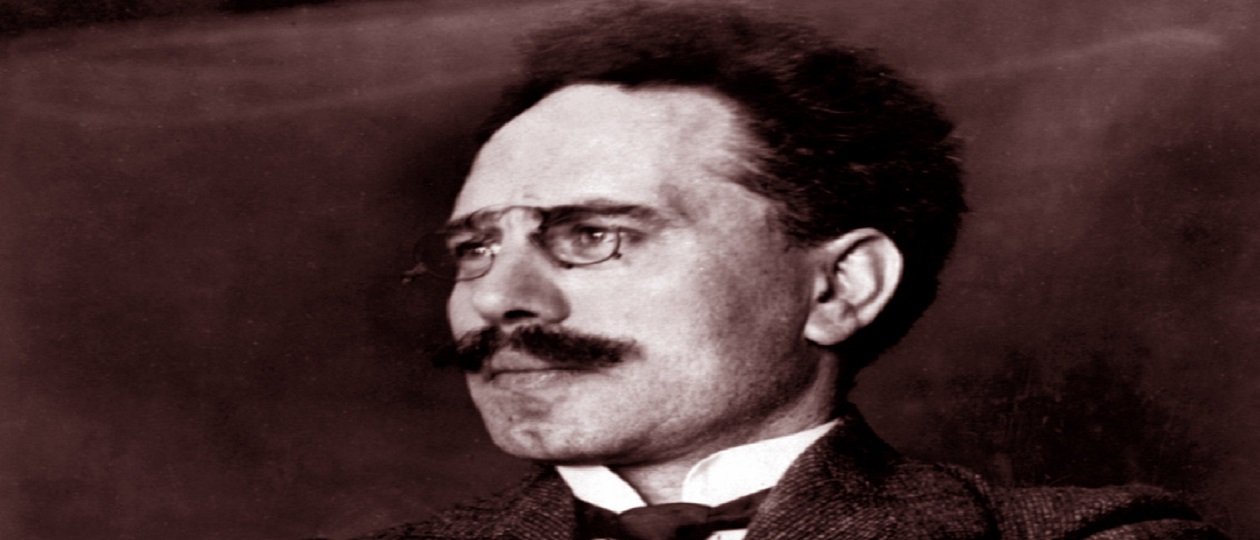
On Aug. 13, 1871, Karl Paul Friedrich August Liebknecht was born in Leipzig—a man whose name would become a symbol of uncompromising struggle for freedom and justice.
The son of Wilhelm Liebknecht, one of the founders of the Social Democratic Party of Germany (SPD), Karl absorbed socialist ideas from an early age. Trained as a lawyer, he chose not the quiet security of legal practice but the path of revolutionary struggle, becoming a fiery orator passionately devoted to the cause of the working class.
In 1900, Liebknecht joined the SPD, immediately aligning himself with its radical left wing. His political views were shaped by Marxism, which he regarded not as a dogma but as a guide to action. In 1903, under his leadership, Germany’s first socialist youth organization was established, and he placed great importance on educating a new generation of young socialists. He greeted the Russian Revolution of 1905 with enormous enthusiasm and urged German workers to follow the example of their Russian comrades.
For Liebknecht, the principal enemy was militarism, which he rightly regarded as one of the most important pillars of capitalism. In 1907, he published his programmatic pamphlet Militarism and Anti-Militarism, in which he described anti-militarist propaganda as a form of the proletariat’s class struggle. The work cost him his freedom: he was sentenced to 18 months in prison for treason. But even prison walls could not break his spirit.
In 1912, Liebknecht was elected to the German Reichstag. From that platform, he fearlessly denounced arms manufacturers whom he believed were deliberately preparing the ground for a world war. And when World War I erupted in 1914, while most German Social Democrats abandoned internationalism and voted for war credits, Liebknecht remained true to his principles. He became the only member of the Reichstag to vote against the war.
“This is an imperialist war,” he wrote, “a war for control of the world market by capitalists, for political domination over vast territories, and for the expansion of industrial and banking capital.”
His position was unequivocal: “Capital recognizes no fatherland, and the more it proclaims its patriotism, the less patriotic it actually is.”
The principal enemy of the German people, Liebknecht argued, was not beyond Germany’s borders but within them: German imperialism and the militarist clique.
In 1916, together with Rosa Luxemburg, Liebknecht became one of the founders of the revolutionary Spartacus organization, the Spartacus League, which waged an uncompromising struggle against the war and social chauvinism. On May 1, 1916, he led an anti-war demonstration through the streets of Berlin, calling for the overthrow of the government. He was arrested again and sent to prison.
Released in late 1918, at the height of the November Revolution, Liebknecht had no intention of stopping halfway. On Nov. 9, 1918, from the balcony of the Imperial Palace in Berlin, he proclaimed a “free socialist republic of Germany.” In December, he and Rosa Luxemburg helped convene the founding congress of the Communist Party of Germany (KPD).
Liebknecht was convinced that: “Revolutions are the most interesting epochs, during which the essence of human society and its structure are laid bare.”
In January 1919, Liebknecht emerged as one of the leaders of the Spartacist uprising—an attempt to establish a Soviet-style government in Germany. The revolt was crushed, and on Jan. 15, 1919, Liebknecht and Rosa Luxemburg were brutally murdered by members of the Freikorps, acting under orders associated with Social Democratic politician Gustav Noske.
Karl Liebknecht lived only 47 years, but his life became a testament to extraordinary resilience. He knew that the road to victory would be difficult, yet he believed in the ultimate triumph of justice.
“Those who are defeated today will be the victors tomorrow,” he said. “Because defeat is a lesson.”
“And through defeat after defeat, their road leads to victory.”
His program and his ideals proved stronger than death.
“Whether we shall still be alive when it is achieved or not, our program will live; it will rule the world of redeemed humanity. In spite of everything!”
 Yuri Chekalin
 Kamil Askerkhanov
 Kirill Benediktov