 Yaroslav Listov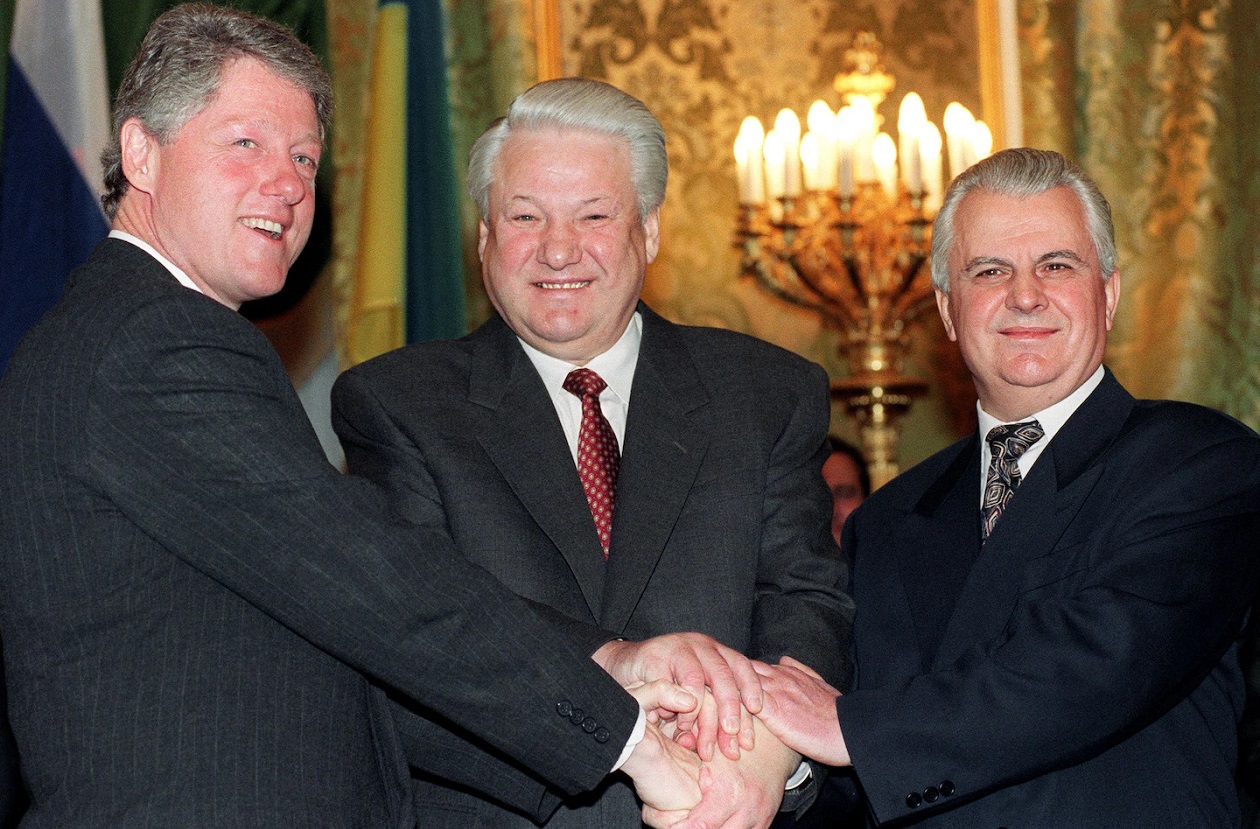
How Yeltsin Gave Up Crimea: 35 Years Since Crimea’s Declaration of State Sovereignty.
Anti-Soviet commentators often repeat the same accusation: “The terrible Communists gave Crimea to Ukraine.”
Yet when the conversation turns to Boris Yeltsin and his policies between 1991 and 1996, an extraordinary silence sets in.
And yet those were precisely the years when Crimea could, at least in theory, have returned to Russia through political and legal means.
Here is what happened.
In November 1990, following an initiative by the Communist faction, the Crimean Regional Soviet raised the question of restoring the Crimean Autonomous Soviet Socialist Republic. On January 20, 1991, a referendum was held in Crimea on the restoration of the Crimean ASSR as a subject of the USSR and a participant in a renewed Union Treaty.
Turnout exceeded 81 percent. An overwhelming 93 percent voted in favor.
On February 12, the Supreme Soviet of the Ukrainian SSR adopted legislation restoring Crimea’s autonomous status.
Then came a far more consequential moment.
On September 4, 1991, the Supreme Soviet of the Crimean ASSR adopted the Declaration of State Sovereignty of Crimea.
It was here that the central contradiction of Yeltsin’s policy became impossible to ignore: the right of self-determination was recognized for some—but denied to others.
During the summer of 1991, Yeltsin had supported the sovereignty of the Soviet republics. In August, he recognized the independence of the Baltic states and moved decisively toward dismantling the Soviet Union itself. On December 8, 1991, together with the leaders of Ukraine and Belarus, he signed the Belovezha Accords—effectively bringing the USSR to an end.
But when the question concerned Crimea—a territory with deep historical, cultural, and economic ties to Russia—the principle suddenly changed.
Inside Russia itself, many politicians were demanding a review of the 1954 decision that transferred Crimea from the Russian Soviet Republic to Ukraine.
Yet Moscow, under Yeltsin, adopted a very different position: “Crimea is an internal matter for Ukraine.”
The contradiction was striking.
When a Soviet republic chose to leave the USSR, it was described as an exercise in the people’s right to freedom and self-determination.
But when Crimea sought to determine its own political status, it was suddenly portrayed as a threat to territorial integrity.
This was particularly remarkable because, in the early 1990s, Russian authorities themselves had questioned the legality of Crimea’s 1954 transfer to Ukraine. Russian politicians argued that the decision to move the Crimean region from the Russian SFSR to the Ukrainian SSR had been taken in violation of established constitutional and procedural requirements.
Yet when an opportunity emerged to raise the issue politically, Yeltsin backed away.
He did not:
* support a Crimean referendum;
* demand a revision of the borders;
* seek Crimea’s return to Russia;
* or defend the resolutions adopted by Russian deputies.
But the story did not end there.
On December 1, 1991, Ukraine held its referendum on independence. Voters were asked: “Do you confirm the Act of Declaration of Independence of Ukraine?”
In Crimea, only 36.4 percent of all eligible voters supported Ukrainian independence—though this represented approximately 54 percent of those who actually participated in the referendum.
And here, according to this interpretation of events, Yeltsin’s role became crucial.
A significant part of Crimea’s population remained opposed to Ukrainian independence. Leonid Kravchuk, Ukraine’s leader at the time, could count in particular on the support of Crimean Tatars, who had been promised greater political influence in Crimea within an independent Ukraine.
But the psychological breakthrough beyond the symbolic 50-percent threshold came from another source: the Black Sea Fleet.
Following orders from Moscow, Fleet personnel turned out in large numbers to vote in the Ukrainian referendum. Turnout reportedly reached 92 percent, with 72 percent voting in favor of independence.
Today, it is often claimed that the sailors voted for Ukrainian independence simply because they were Ukrainians.
But only a month later, when the future of the Fleet itself became a political issue, many of those same sailors refused to take an oath of allegiance to Ukraine.
Yeltsin’s position was perhaps most clearly demonstrated during the negotiations in the Belovezh Forest.
He did not raise the question of Crimea.
He did not even mention it.
Perhaps, some might argue, he was simply unable to do so.
Years later, Yeltsin himself offered a revealing answer. In 2001, he reportedly said:
“If I had wanted to, I could have drawn a line on the map from Kharkiv to Izmail—everything below it would have been mine.”
And according to some participants and observers of the period, Ukraine might have been prepared to negotiate.
Leonid Hrach, who headed the Crimean regional committee of the Communist Party in 1991 and later served for many years as speaker of the parliament of the Autonomous Republic of Crimea, recalled Kravchuk’s determination to secure the presidency of an independent Ukraine:
“He wanted the bulava—the symbol of presidential authority in Ukraine—so badly that he was prepared to do anything. He would have accepted any conditions: not only giving Crimea to Russia but even, as Yeltsin later said, drawing that very line on the map.”
But the struggle of many Crimean residents over their political future did not end in 1991. It continued.
The Struggle Continued
Again and again, however, it collided with Yeltsin’s unwavering position—a phrase he repeated throughout the years from 1992 to 1995 with almost mechanical persistence: “Crimea is an internal matter for Ukraine.”
And that, perhaps, is one of the central ironies of the post-Soviet collapse.
The man who championed sovereignty against Moscow, who supported the breakup of the Soviet Union, and who helped redraw the political map of Eurasia, refused to challenge the status of Crimea.
For Yeltsin, the borders inherited from the Soviet Union could be dismantled in some places—but not questioned in others.
And for Crimea, that contradiction would shape the next twenty-three years of history.
 Kamil Askerkhanov
 Sergey Stankevich
 Yuri Chekalin