Egor Yakovlev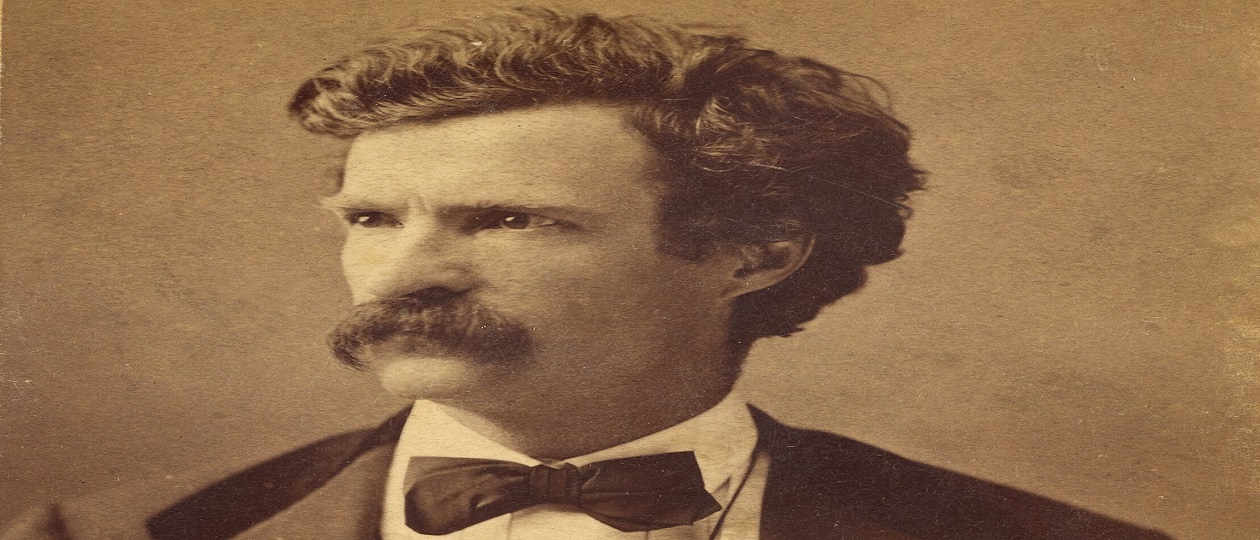
Mark Twain was among the first American tourists to visit Russia.
In 1867, the future literary giant not only traveled across the Russian Empire but also helped compose an official address to Tsar Alexander II—and even met the emperor in person at his Crimean residence in Livadia.
It was an encounter between two worlds: a young American republic and one of Europe’s oldest empires.
The Voyage of the Quaker City
In 1867, one of the first transatlantic cruises organized specifically for American tourists set sail.
Seventy passengers—mostly bankers and businessmen—paid a total of $90,000 for a five-month journey aboard the paddle steamer Quaker City. Among them was a 31-year-old journalist named Samuel Clemens, who was already beginning to use the literary pseudonym that would make him famous around the world: Mark Twain.
Clemens’s participation in the voyage was financed by the Daily Alta California and the New York Tribune. His witty and sharply observant travel dispatches would later form the basis of The Innocents Abroad, the most commercially successful book of Twain’s lifetime.
The travelers crossed Europe, visited North Africa and the Middle East, and eventually reached Constantinople. From there, the Quaker City entered the Black Sea.
Its passengers were about to arrive in the Russian Empire.
The Americans visited three Russian cities: Odessa, Sevastopol, and Yalta.
An Invitation from the Tsar
At the time, Alexander II was staying at his Crimean residence in Livadia.
The emperor had recently returned from the World’s Fair in Paris, where he had narrowly survived an assassination attempt by the Polish revolutionary Antoni Berezowski. Seeking rest after the dramatic events in France, Alexander had retreated to Crimea with his family.
When he learned that a group of American travelers had arrived in Yalta, the Tsar extended an unexpected invitation.
On August 26, 1867, imperial carriages were sent to the harbor.
The Americans were driven to Livadia.
Alexander II received them outside the Grand Livadia Palace. Beside him stood Empress Maria Alexandrovna, members of the imperial family, and the court.
One member of the family particularly captivated the visitors: thirteen-year-old Grand Duchess Maria.
The American consul in Odessa, Timothy Smith, presented Alexander II with an official address on behalf of the travelers. Its principal author was Samuel Clemens. On the original document, preserved to this day, Clemens’s signature appears first among those of the American visitors.
The Tsar then personally showed his guests around the palace, the church, and the surrounding park.
Later, accompanied by Grand Duke Mikhail Nikolaevich, the Americans also visited the nearby imperial estate of Oreanda.
For a group of tourists from a young republic, accustomed to a world without emperors, the experience was extraordinary.
And Mark Twain, naturally, saw the humor in it.
Mark Twain Meets the Emperor
Twain later described the encounter in the distinctive style familiar to generations of readers of The Adventures of Tom Sawyer and Adventures of Huckleberry Finn.
Curiously, Russian readers did not see his account for many decades. In the pre-revolutionary Russian translation of The Innocents Abroad, the episode involving the Tsar was omitted because of censorship. The Livadia chapter was translated into Russian only in 1959, during the Soviet era.
Twain recalled:
“Everybody took off his hat, and the consul made the Czar listen to our address. He bore it without wincing, and then took our awkward document and handed it to one of the high officers to be filed away—or perhaps thrown into the fire.
He thanked us for the address and said he was pleased to meet us, especially because Russia and the United States were bound by ties of friendship.
If I could have stolen his coat, I would not have hesitated for a moment. Whenever I meet a remarkable person, I always want to carry away something to remember him by.
We had grown accustomed to having palaces shown to us by a liveried servant covered in velvet and gold braid, who would then demand a franc for the privilege. But after talking with us for half an hour, the Emperor of All the Russias and his family personally conducted us through their residence.
They charged nothing for admission.
Apparently, they enjoyed showing us their rooms.
We wandered through the palace for half an hour, admiring its comfortable apartments and its rich but surprisingly unpretentious furnishings. Finally, the imperial family warmly said goodbye and went off, perhaps, to count the silver spoons.
We spent the better part of a day as guests of royalty and felt as comfortable and relaxed as if we were back on our ship.
And yet I had been certain that one could move around an imperial palace no more freely than in Abraham’s bosom.
I had imagined emperors to be terrifying creatures. I thought they spent all their time sitting on thrones, crowned magnificently, wrapped in red velvet robes decorated with ermine tails, glaring darkly at courtiers and subjects and sending grand dukes and duchesses to execution.”
Behind Twain’s humor was genuine surprise.
The American visitors had expected the intimidating ceremony of an ancient monarchy. Instead, they found themselves being personally guided through a private residence by the ruler of one of the largest empires on Earth.
Russia and America: An Unlikely Friendship
The 1860s were a remarkable period in relations between Russia and the United States.
In 1861, Alexander II emancipated millions of Russian serfs. Four years later, in 1865, slavery was abolished in the United States.
During the American Civil War, Russia demonstrated sympathy for the Union. Russian naval squadrons appeared off the American coast, a powerful gesture of support for Abraham Lincoln’s government at a time when Britain and France were considering their own positions in the conflict.
For many Americans, Russia was not simply a distant European empire.
It was a friend.
That sentiment was clearly expressed in the official address presented to Alexander II—a document whose principal author was Mark Twain himself.
The Americans declared:
“One of the brightest pages in world history was written by the hand of Your Imperial Majesty when that hand broke the chains of twenty million people.
Americans have a special right to honor a sovereign who accomplished so great a deed. We have profited from the lesson you gave the world and now represent a nation as free in reality as it was once free only in name.
America owes much to Russia. She is indebted to Russia in many ways, and especially for her unwavering friendship during times of great trial.
We pray that this friendship may continue in the years to come, and that America—grateful today—will remain grateful to Russia and to her sovereign for that friendship.”
It was an extraordinary statement.
A young American journalist who would one day become one of the most famous writers in history had traveled halfway around the world—and found himself praising the Russian Tsar for freeing millions of people.
The Departure
In the following days, the Quaker City received several more distinguished visitors in Yalta. Among them were Pavel Kotzebue, Governor-General of Novorossiya; Ferdinand von Wrangel, former head of the Russian-American Company; railway magnate Karl Ungern-Sternberg; and the celebrated military engineer Eduard Totleben.
Eventually, the American travelers departed for Constantinople.
As the Quaker City sailed past the Crimean coast, the ship stopped opposite Livadia, released steam, and fired a salute toward the imperial palace.
It was a final farewell to the Tsar.
A few days later, the Americans’ address to Alexander II was published in the newspaper Odessky Vestnik.
It marked a small but remarkable moment in literary history.
For this was the first time that the name—and the words—of Mark Twain appeared in print in Russia.
 Kamil Askerkhanov
 Sergey Stankevich
 Yuri Chekalin