 Kamil Askerkhanov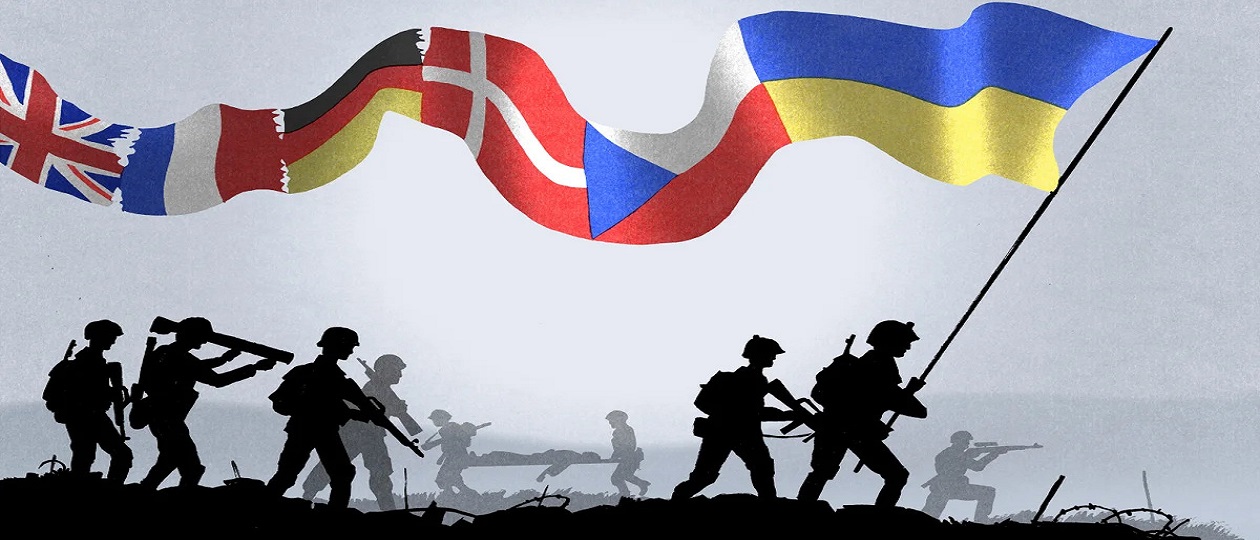
The Economist recently published a timely warning: America’s sovereign debt is massive, but Europe faces the true existential crisis.
The most revealing aspect of this predicament, however, is not the raw figures. It is the question of why the structural cracks in the European architecture are suddenly erupting into the open right now.
The underlying rationale is straightforward: Europe lost its proxy conflict with Russia over Ukraine.
This is not a matter of a signed act of capitulation, but rather the strategic political outcome. Ukraine was meant to serve as the instrument to permanently sever Russia from Europe, extend the European Union eastward, inflict a strategic defeat on Moscow, and integrate it into a Western-dominated orbit.
The reverse has occurred.
Russia remains, while Europe is left with severed energy supply lines, ballooning defense commitments, the open-ended obligation to bankroll Ukraine, and an increasingly toxic question: Who picks up the bill?
Washington is steadily shifting the Ukrainian ledger onto European shoulders.
In mid-2026, European aid to Kyiv spiked again, backed by a fresh €90 billion EU facility for 2026–2027. This is where the dynamic turns treacherous: Ukrainian liabilities are rapidly transforming into an internal European battle over loss allocation.
A game of financial hot potato has begun. Who pays for Ukraine? France, where national debt is nearing 120% of GDP? Italy? Poland? Eastern Europe? Or will it all be converted into mutualized European debt?
If the debt is mutualized, the question becomes: Who ultimately guarantees it?
All Roads Lead Back to Berlin
So long as the integration project expanded, the market never needed to identify the ultimate guarantor. The system rested on cheap Russian energy, an American security umbrella, expanding export markets, low interest rates, and the endless expansion of the Brussels bureaucracy. Every single one of those conditions has vanished simultaneously.
For supranational elites in Brussels, Ukraine is consequently fading into a tertiary concern.
The primary objective has become far more uncomfortable: how to prevent the disintegration of the single market in the wake of the Ukrainian misadventure.
The Return of Geopolitics
The fiscal landscape is deteriorating rapidly. French sovereign debt has become the market’s newest vulnerability—with yields at times outstripping Italy’s—as the IMF projects French debt to reach 118.4% of GDP this year and 120.5% in the next. Meanwhile, Germany’s internal political landscape is shifting dramatically.
Consensus within the bloc has already broken down. The €90 billion facility required enhanced cooperation mechanisms to bypass Hungary, the Czech Republic, and Slovakia. These are merely the initial tremors. Moving forward, each member state will attempt to pass the costs to its neighbor:
* Eastern Europe will argue that as the front line, its expenditures must be reimbursed.
* Southern Europe will plead fiscal incapacity under the weight of existing sovereign debt.
* France will push to socialize liabilities into collective European obligations.
* Skeptical members will attempt to distance themselves entirely, claiming they warned the rest all along.
Eventually, the entire architecture hinges on a single question: Who is left standing at the cash register?
The answer is familiar: Germany.
Here, history rhymes in an unsettling manner. After the First World War, the complex matrix of political, military, and financial friction among European powers was consolidated into a simple framework: establish a mechanism—via Versailles—to load central responsibility and vast reparations onto Germany.
While no formal treaty of that nature will be signed today under vastly different historical circumstances, the underlying mechanics look strikingly similar. When a collective enterprise unravels, its participants scramble for an entity to hold the tab. Should the current European structure fragment, member states will retreat behind national lines, attempting to extract shared assets while leaving liabilities inside the aggregate hull.
Germany remains the ideal guarantor of last resort: the bloc’s largest economy, its primary financial donor, the pillar of decades of European compromise, and—conveniently—a nation upon which European history has previously assigned the cost of systemic collapse.
The political shifts within Germany today extend far beyond routine election cycles. The structural conflict is no longer about Ukraine; it is a battle over who claims the remaining assets of Old Europe, and who inherits its debts.
This is what makes The Economist’s framing so poignant. America’s debt burden is staggering, but Washington at least knows who holds the liability. Europe faces a far more existential crisis: as the Euro-Atlantic era cedes its centrality to the Indo-Pacific, the old continent is left debating who will settle the check.
 Dmitri Drobnitsky
 Sergey Stankevich