 Yaroslav Listov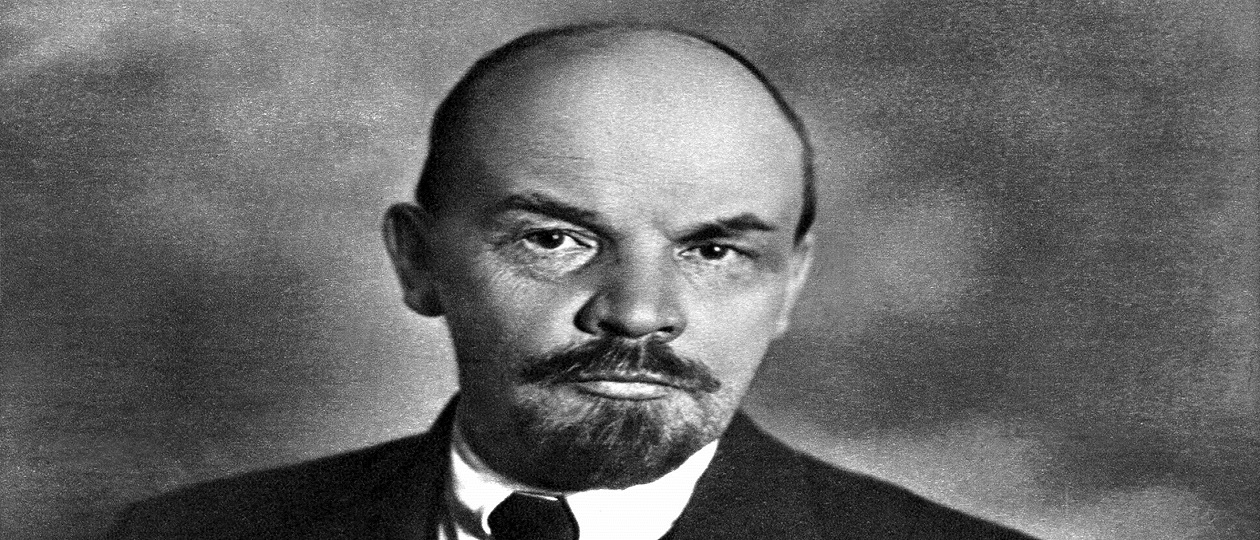
Vladimir Ilyich Lenin’s birthday is a good opportunity to remember what this name means to us, modern residents of Russia.
Today, as a matter of principle, I will not discuss the lofty matters of philosophy and political analysis. Lenin was not only a politician, but also a brilliant philosopher, sociologist, economist, historian, and, of course, an outstanding statesman. But we, ordinary people, tend to evaluate any figure through the prism of the personal. What does Lenin mean in my life?
— Lenin is the 8-hour workday, established by Lenin’s decree.
We have somehow forgotten that in the imperial factories and plants with shift work, the most common workday was a 12-hour day. Sometimes it was uninterrupted. Therefore, the day was often divided into two shifts of six hours each (that is, six hours of work, six of rest, and then six more of work). Here’s an example of a work schedule for cloth factories, the most common in Russia: the day shift worked 14 hours (from 4:30 AM to 8:00 PM) with two breaks (from 8:00 AM to 8:30 AM and from 12:30 PM to 1:30 PM). The night shift lasted “only” 10 hours, but during the two breaks allowed for day shift workers, those working the night shift had to wake up and man the machines.
— Stable wage payment.
We grumble about having to live “paycheck to paycheck,” but do we know that a fixed payment date was also established by Lenin? In the empire, workers received their wages as the boss pleased. For most of the year, people were broke—and then the peculiar “microcredits” we’re now all too familiar with in the era of capitalism came into play: factory stores where people could borrow groceries against their wages. Prices in these stores were 20-30% higher than in the city, and the quality of the goods left much to be desired.
— Lenin is social insurance.
The Soviet government began its work on social insurance reform with the Declaration of the People’s Commissar of Labor of October 30 (November 12), 1917, on the introduction of “full social insurance” in Russia. The Declaration’s main provisions were as follows: extension of insurance to all wage workers without exception, as well as to the urban and rural poor; extension of insurance to all types of disability (illness, injury, disability, old age, maternity, widowhood, orphanhood, unemployment); and compensation for full earnings in the event of disability and unemployment. Such generosity was a first for the world.
— Lenin is free healthcare for all citizens of the country without exception.
Needless to say, before him, health was the preserve of the wealthy?
— Lenin is paid annual leave, which before him was unheard of, either in our country or anywhere else in the world.
To “improve” one’s health or take time off “for family reasons,” one had to “request” it at one’s own expense. In Russia, the concept of “vacation” only became part of labor relations after the October Revolution, becoming one of its progressive achievements. On June 14, 1918, Vladimir Lenin signed the decree “On Vacations.”
— Lenin is universal free education.
The majority of our fellow citizens are of working-class and peasant origin, and it was the Soviet government that taught many of their ancestors to read and write, and we inherited an educational system from nurseries to universities.
— Lenin is what we call social guarantees today: from maternity leave and benefits to medical examinations and health resort treatment.
The list goes on and on…
Many of the social guarantees established by Lenin became a global revolution in themselves: they transcended the borders of Soviet Russia, crossed continents and oceans, becoming a reality on a global scale.
— And most importantly: Lenin is a united, free, and independent Russia, which he reassembled after the revolutionary wave and the Civil War, defending it in battles with the interventionists and economic wars with the West.
Remembering this, there’s no need to say “thank you” – the best expression of gratitude is to speak the truth about Lenin!
 Robert Reich
 Vladimir Golstein