Egor Yakovlev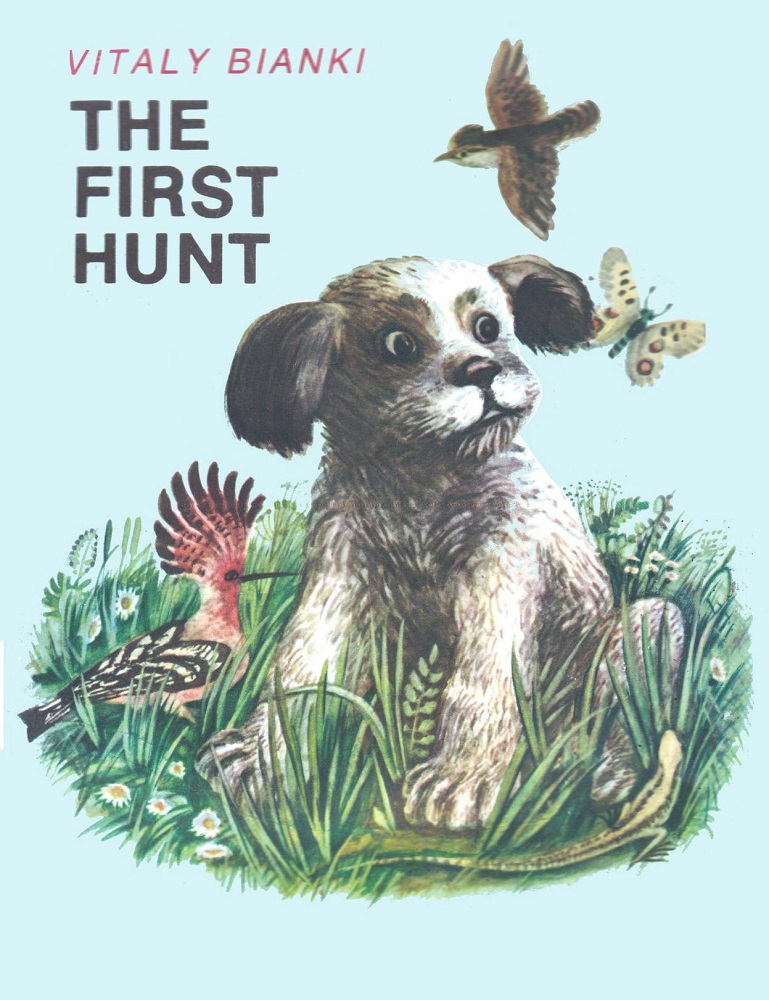
Vitaly Bianki: “I’m not a writer: I’m a simple translator from the language of birds into Russian.”
On February 11, 1894, Vitaly Bianki, a children’s writer and author of short stories, fairy tales, and novellas, was born.
A love of nature was instilled in the Bianki family from childhood. His father, Valentin Bianki, an ornithologist and curator of the entomology department of the Zoological Museum of the Academy of Sciences, turned the house into a kind of zoo. The rooms were filled with bird cages and terrariums for snakes, lizards, and turtles. Little Vitaly helped his father collect birds for the museum collection and also kept an ornithological diary describing bird nests.
Every summer, the family traveled to the shores of the Gulf of Finland. There, father and son walked in the forest, where Valentin Bianki “called every blade of grass, every bird, and every little animal by its first name, patronymic, and last name.”
But little Bianki wasn’t only interested in the natural world. From childhood, he developed a passion for literature and began writing poetry.
After the Revolution, Bianki lived for several years in Altai, lecturing on ornithology, teaching at a school, and organizing scientific expeditions. It was during this time that his first children’s stories appeared. They grew out of his habit of recording nature observations.
In 1923, after returning to Petrograd, Bianki joined the children’s writers’ circle at the Demonstration Library. There, the writer immersed himself in creating his “fairy tales-not-fairy tales” about talking animals and birds.
“The Journey of the Red-Headed Sparrow,” “Little Mouse Peak,” “How the Ant Hurried Home,” “Bear-Bashka,” “Forest Houses,” “Whose Nose is Better?” and “Forest Newspaper”—Bianki’s works became the “first books” for many boys and girls.
Bianki always adhered to scientific precision in his depictions of nature, animals, and birds. His daughter recounted: “I remember well how my father would say to his friend and favorite artist, Valentin Kurdov, ‘Valya, don’t you know that a brown hare’s tail is different from a white hare’s?’ And the hares in the drawing are only three centimeters long, and their tails are tiny.”
Vitaly Bianki skillfully combined naturalism and the beauty of words. In his works, he taught us to notice the world around us, to examine it closely, to study it, and, of course, to find joy in it.
“A certain joyful force lives within me. I see everything good and bright that I have had and still have in life (love, my favorite work—creation, small discoveries, enjoyment of nature and my own body and mind)—all this goodness comes from this force.” “It is blessed in me and in others—in people, animals, birds, flowers and trees, in the earth and water. It brings joy in others as well as in itself. I know: I will die, but it will remain. And what difference does it make—in me, in my children or in others—in those who will be born after me. The joy of life that dwelt in me will live on in them. And that is wonderful.”
 Yuri Chekalin
 Kamil Askerkhanov
 Kirill Benediktov