

 Vitaly Golovkov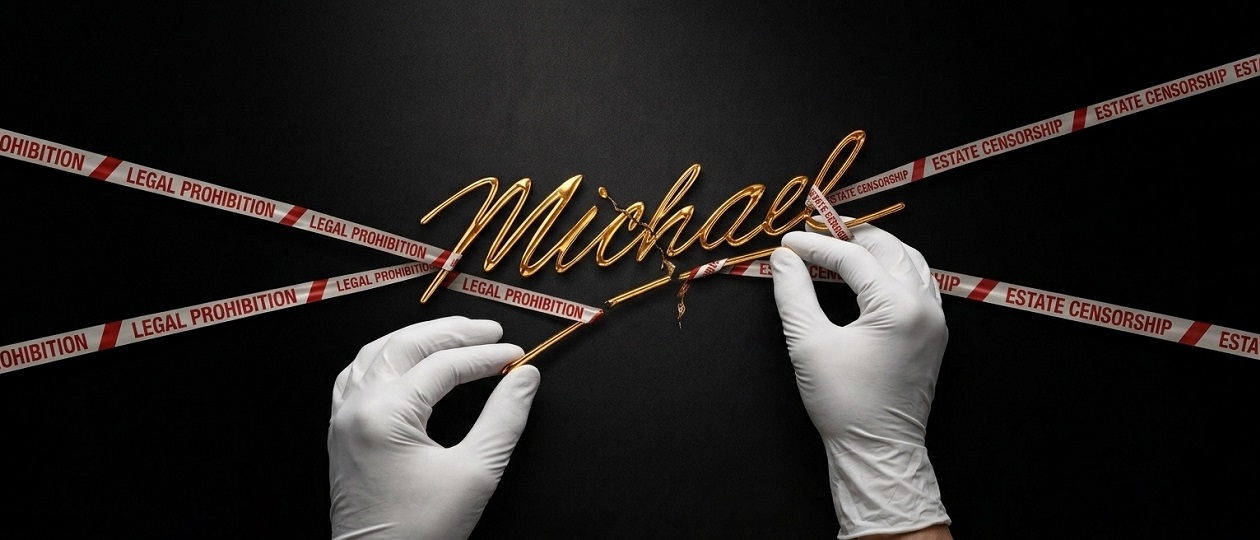
‘Michael’: How legal constraints and corporate sterility undermined the biopic of the decade.
The making of Michael, the long-awaited biographical film about the “King of Pop,” has become one of the most remarkable production stories in modern Hollywood. With a reported budget of $155 million, the project was conceived as the definitive cinematic portrait of one of the most influential—and controversial—artists of the modern era.
Yet every attempt to bring Michael Jackson’s life to the screen is destined to collide with two opposing forces: artistic truth and corporate mythmaking. Director Antoine Fuqua’s ambitious production aspires to become the defining musical biopic of the decade. Instead, it finds itself trapped by its own carefully engineered sterility.
Technically accomplished and visually spectacular, the film ultimately becomes a victim of its unwillingness to say anything genuinely revealing about its subject. It exists somewhere between a dazzling stage performance and a carefully managed corporate tribute.
A Technical Triumph—and a Performance in the Blood
From a purely cinematic standpoint, Michael is difficult to fault.
The cinematography is striking, while the painstaking recreation of Jackson’s various artistic eras is executed with extraordinary precision—from the electric neon energy of the 1980s to the monumental isolation of Neverland Ranch. Every costume, every camera movement, and every concert sequence reflects meticulous craftsmanship.
The film’s greatest achievement, however, is its casting of Jaafar Jackson, Michael’s nephew.
His performance goes well beyond physical resemblance. He captures Jackson’s distinctive movement, facial expressions, and choreography with uncanny authenticity. During the musical performances, the illusion becomes so convincing that the audience briefly forgets it is watching an actor at all. The screen seems to vibrate with the energy of the original performer.
Four Hours Without Momentum
Beneath its polished exterior, however, lies a serious structural problem.
Rather than delivering a tightly constructed narrative, the screenplay repeatedly revisits the same formative episodes, stretching the story into what often feels like an overlong montage of beautifully assembled music videos. Spectacle replaces momentum.
The film’s most significant weakness is its repetitive treatment of Michael’s relationship with his father, Joseph Jackson.
The same emotional conflict is replayed again and again until its dramatic impact begins to fade. Instead of allowing the relationship to evolve, the screenplay returns repeatedly to the familiar image of the abusive father, offering little psychological development or fresh insight.
This imbalance appears intentional.
By presenting Jackson almost exclusively as the victim of parental cruelty, the screenplay quietly removes much of his personal agency. The audience is encouraged to explain the man entirely through his trauma rather than through his own contradictions, decisions, or flaws.
When the Estate Protects the Brand
Throughout the film, one can almost feel the invisible influence of the Michael Jackson Estate.
The overwhelming sweetness of the narrative and the almost immaculate moral presentation of its characters suggest a production shaped less by dramatic necessity than by brand management.
Whenever a biography is overseen by those responsible for protecting a global legacy, the living human being risks disappearing behind a polished monument.
In Michael, the rough edges have largely been sanded away. Genuine internal conflict gives way to a glossy, universally acceptable narrative that is careful never to disturb the mythology surrounding its central figure.
This caution, however, was not simply an artistic choice.
It was driven by legal necessity.
The Legal Black Swan
Development of Michael began in November 2019. Although the project entered production early, it soon encountered a series of delays that repeatedly pushed back its release. Originally scheduled for April 2025, the film was postponed first to October 2025 and eventually to April 2026.
The most damaging setback emerged only after principal photography had concluded in May 2024.
The production’s legal team discovered that a substantial portion of the completed film violated the terms of Michael Jackson’s 1994 confidential settlement agreement.
John Logan’s original screenplay devoted significant attention to the 1993 allegations involving the Chandler family. Rather than portraying Jackson as guilty, the script presented him as an innocent celebrity targeted by parents seeking financial gain through their thirteen-year-old son, Jordan Chandler.
Several major courtroom and legal sequences had already been filmed.
These reportedly included intense discussions between Jackson’s attorneys—John Branca (played by Miles Teller) and Johnny Cochran (played by Derek Luke)—over the controversial $20 million settlement, as well as scenes referencing the infamous recorded conversation in which Jordan Chandler’s father allegedly threatened to destroy Jackson’s career.
Only after filming was complete did the producers realize that the 1994 settlement imposed restrictions not only on the Chandlers themselves but also on Michael Jackson and, by extension, the Michael Jackson Estate. The agreement effectively prohibited any future dramatization of that dispute.
The oversight proved catastrophic.
Roughly one-third of the completed film suddenly became legally unusable.
Screenwriters were forced to remove the Chandler storyline almost entirely, leaving a massive narrative gap in Jackson’s Jackson during one of the defining periods of his career.
Because the initial assembly reportedly ran close to four hours—and because replacing the unusable material required major restructuring—the studios considered splitting Michael into two separate films during 2025.
Whether the second installment will ever be produced remains uncertain.
Neither Lionsgate nor Universal has committed to financing a sequel before seeing the commercial performance of the first film. If those plans are abandoned, audiences may receive only half of Jackson’s story, while the most controversial chapters—including the 2005 criminal trial, his dependence on prescription medication, and the circumstances surrounding his death—could remain absent from any major dramatic adaptation.
Verdict
Michael leaves behind an unusual impression.
It is an expensive, beautifully crafted illusion—one that sounds magnificent but is ultimately afraid to step beyond the boundaries of an officially sanctioned narrative.
Instead of offering a searching portrait of one of popular music’s most gifted and deeply complicated figures, the film delivers a prolonged exercise in caution.
The music remains electrifying.
The filmmaking is often superb.
But character is repeatedly sacrificed to reputation, and polished spectacle ultimately takes the place of uncomfortable truth.
 Robert Reich
 Vladimir Golstein
 Yuri Chekalin


2 comments
Michael Palmer
04.08.2026 at 22:35
Hi there everyone, it’s my first go to see at this web site, and post is in fact fruitful in support of me, keep up posting such articles.
Keanu Jackson
05.08.2026 at 00:13
Hi! Thanks for your personal marvelous posting! I really enjoyed reading it, you could be a great author.I will make sure to bookmark your blog and definitely will come back in the future. I want to encourage one to continue your great work, have a nice day!