 Mikhail Kuznetsov
Most cities are founded on something solid: a river crossing, a coal seam, a harbour.
The cities I have spent thirty-five years watching over were founded on something far less tangible — an equation, a wind tunnel, a reactor. A naukograd — the word means, simply, a science city — is a town whose founding charter is a laboratory. The institute came first; the streets, the schools and the bakeries followed, because the people who worked in the institute had to live somewhere.
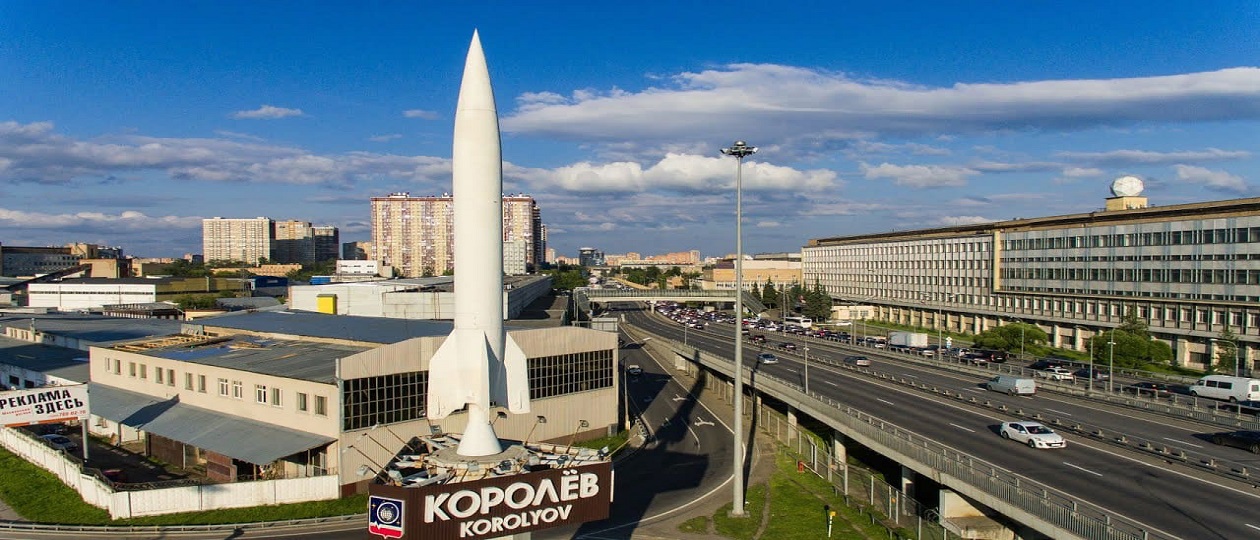
Zhukovsky, outside Moscow, was the first. In the 1930s the Central Aerohydrodynamic Institute — TsAGI, the cradle of Russian aviation — outgrew its Moscow home, and a whole research complex rose in the settlement of Stakhanovo: wind tunnels, the Flight Research Institute, and eventually a city named for the father of aerodynamics. After the war the pattern repeated wherever the state needed its hardest problems solved. The first Soviet nuclear power station — indeed the first in the world — was switched on at Obninsk in 1954. Physicists gathered at Dubna, where the Joint Institute for Nuclear Research built a synchrophasotron so large it needed a building of its own; to this day Dubna residents speak of “the institute part” of town. Rocket builders settled in Korolyov and Reutov, biologists in Pushchino, radio physicists in Fryazino; and chemical physicists in Chernogolovka. Some of these places were open and proud.
Others, where weapons were made, had no names at all — only numbers: Arzamas-16, Chelyabinsk-40, Sverdlovsk-44.
These towns were peopled deliberately, the way one staffs an expedition. Some specialists were simply ordered to relocate to settlements behind high fences. Others were lured — by a salary, by an apartment, and above all by the one bribe that works on scientists in any country: interesting work at the very frontier of a field. The elite was assembled centrally, like an orchestra, and for a while the music was extraordinary.
Counting generously, there are about seventy such settlements in Russia.
I have called them, and still call them, a national patrimony: not a set of industrial sites but a distributed reserve of intellect, complete with its own culture, its own schools of thought, its own stubborn loyalty to profession and calling.
The world, meanwhile, was quietly copying the form. Japan built Tsukuba and then launched its Technopolis programme — some twenty science territories beside twenty “mother cities.” China’s Zhongguancun grew into its Silicon Valley. France raised Sophia Antipolis. What is rarely admitted is that Tsukuba and Zhongguancun were built in a thoroughly Soviet way: with central government money, around state institutes, by decree. In Tsukuba some fifty state research institutes and two universities employ more than twenty thousand researchers in a city of two hundred thousand — a proportion any of our towns would recognise. We invented the science city as an instrument of state policy. Others learned to make it pay.
In 1991 the thing finally acquired a name. Two researchers, Spartak Nikanorov and Natalya Nikitina, were studying the problems of Zhukovsky at the request of its city council chairman, V. A. Lapin, and coined the word naukograd. The same year, the heads of the Moscow-region science cities founded our Union for the Development of Science Cities of Russia — an organisation whose entire purpose was to keep these towns alive as towns, and not merely as fenced-off production sites. None of us knew that within months the country that had built the science cities would cease to exist, and that the word and the Union would have to carry the whole weight of their survival.
What followed, I described in 1997 in a formula I have never had reason to retract. Lenin promised that communism would be Soviet power plus the electrification of the whole country. What the reforms gave us, I wrote, was non-Soviet power plus the shell-ification of the whole country. The image behind the word was a children’s experiment many of us performed: pierce an eggshell with a needle, suck the contents out through the tiny hole, and the egg looks exactly as it did before. Only no chick will ever hatch from it. That is what was happening to our institutes. A leading scholar would leave — for America, for Israel, for business, for anywhere that paid — and on paper nothing changed. The instruments remained, the laboratories remained, the cleaners remained, even the directors remained. What was gone was the thought that had united them into a school. I insisted then, and insist now, that the arithmetic of loss deceived us: the departure of one scientist who heads a school can cost more than the departure of a hundred ordinary researchers, because an entire direction of inquiry leaves with him. By 2004 the average Russian researcher was forty-nine, the average candidate of sciences — roughly, a PhD — fifty-three, the average doctor of sciences sixty-one — in a country where male life expectancy stood at fifty-eight and a half. We were not losing people. We were losing the future, one shell at a time.
So we fought with the weapons we had: hearings, drafts, decrees. In March 1993 the Supreme Soviet held hearings on state policy toward the science cities and approved our concept — shortly before the Soviets themselves were dissolved and the work scattered. In 1996 the Union was reborn as a noncommercial partnership. In 1998, when the government of Sergei Kiriyenko moved to suspend the presidential decree on science cities, the mayors and the legislators together beat the attempt back. And in 1999 parliament finally passed the law “On the Status of a Science City of the Russian Federation” — whereupon President Yeltsin vetoed it. The veto was overridden. In 2000 Obninsk, the town of the first atom, received the first official status. A science city now had something it had never had in Soviet times: a legal definition, a development programme approved at the highest level, and money that followed the programme.
The settlement did not hold. In the summer of 2004, without discussion, the great “monetization of benefits” law reached into our statute and quietly emptied it — an amendment here, a clause there. Development programmes, once approved by the President, were demoted to papers submitted “for information.” The regions were released from any duty to co-finance. Federal money was uncoupled from any programme at all, and the status itself was cut down to a five-year term, renewable at the state’s pleasure. I have spent much of the two decades since explaining, in committee rooms and council chambers, why a science city cannot be run like a lottery ticket — why a town built around a fifty-year experiment cannot plan in five-year instalments of favour.
The patrimony also keeps its monuments to interrupted ambition. At Protvino, south of Moscow, the Institute for High Energy Physics guards the saddest of them: a ring twenty-one kilometres around, built deep underground for a Soviet supercollider that was meant to out-reach anything in the West and was never finished. The tunnel is still there. So is the town around it, which declined to treat an unfinished future as a reason to stop having one.
And yet the shells, in many places, refused to stay empty. In Koltsovo, a work settlement outside Novosibirsk, the Vector virology centre — one of the two repositories of smallpox on earth — spun off its own children under its director Lev Sandakhchiev, who defended them through years when the rules alternately permitted subsidiaries and demanded their abolition. Vector-Best became one of Russia’s largest makers of diagnostic kits; Vector-Medica remains the world’s only producer of liposomal interferon; a third daughter, Vector-BiAlgam, makes the hepatitis A vaccine and produced one of Russia’s COVID-19 vaccines.
In 2026, one of the most ambitious contemporary Russian state-led “megascience” projects came to fruition at Koltsovo: on 11 October, the Siberian Ring Source of Photons (SKIF) — a national research centre — was inaugurated. The facility is a complex of thirty-four buildings and structures, housing engineering and technological equipment centred on a “4+”-generation synchrotron radiation source.
In Biysk, in the Altai foothills, a centre that once made propellants and fuel for Topol missiles mothered a biopharmaceutical cluster whose vitamins and medicines are now sold across the country. In Dubna, Obninsk and Koltsovo the pattern I had predicted repeated itself: a modest state investment to start, then business money arriving at several times the volume. A science city, it turns out, is a venture by nature. Some eggs do hatch.
The deeper problem was never money but succession: an ageing elite has to be reproduced, and the old administrative machinery for doing it was gone. So the science cities began, improbably, to found universities of their own. Dubna opened its University of Nature, Society and Man in 1994, with the assistance of the municipal administration and the Joint Institute for Nuclear Research, so that students learn physics in the rooms where physics is done. Pushchino went further and built what I can only call a university with no lower floors, only upper ones: no junior courses at all, nothing but master’s and doctoral students working inside the Academy’s biology institutes, taught by the institutes’ own directors. It is an odd architecture for a university. It is a very natural one for a science city, where education was never a separate industry but the way a school of thought hands itself on.
The map today is smaller than the patrimony and more honest than the chaos of the nineties. Thirteen municipalities now hold the official status — eleven towns, the settlement of Koltsovo, and one urban okrug — eight of them in Moscow Oblast, which I have long maintained is the true Silicon Valley of Russia: not three hundred landscaped hectares at Skolkovo, but a whole constellation of real towns that were doing this work before the word “innovation” was fashionable. The family still changes. In 2023 Pushchino and Protvino — two of our oldest — were merged into a greater Serpukhov and lost their status in the process, although neither had failed a single statutory criterion; our Union said plainly, to the regional parliament and in print, that a regional authority had in effect annulled decisions of the federal government. The enlarged Serpukhov received the status in the summer of 2024, which does not make the method right. And in February of this year the family grew again: Dolgoprudny, home of the Moscow Institute of Physics and Technology — Phystech, the legendary school that has trained generations of Russian physicists — received the status for fifteen years, with a new Phystech Valley rising beside it. In 2025 the oldest statuses, first granted a quarter-century ago, were renewed for fifteen more years. I was still making the argument in person in the Federation Council in December 2024, and the Union’s round tables still draw deputies, federal officials, and mayors to the same long discussion. The watch, as you see, is not finished.
People sometimes ask me, usually kindly, whether at nearly eighty years old, I am not tired of this one subject. I answer that a subject is not the same as a cause.
Cities built around thought are fragile in a specific way: they cannot be rebuilt from a blueprint, because what makes them work is not the buildings but the accumulated, unwritten knowledge of how to ask questions — and that lives only in people, and only where those people choose to stay. My work for thirty-five years has been to argue, in whatever rooms would listen, that such places are not a Soviet leftover to be managed into decline but the seed stock of whatever Russia builds next. Some arguments we won. Some we are still winning. The newest science city in Russia received its status only this year; the oldest has been splitting atoms, in one sense or another, for more than seventy years. Between those two facts lies my whole biography, and I find I have no wish to apologise for its narrowness. A man who keeps watch over cities of thought could have chosen worse company.
 Yuri Chekalin