 Sergey Stankevich
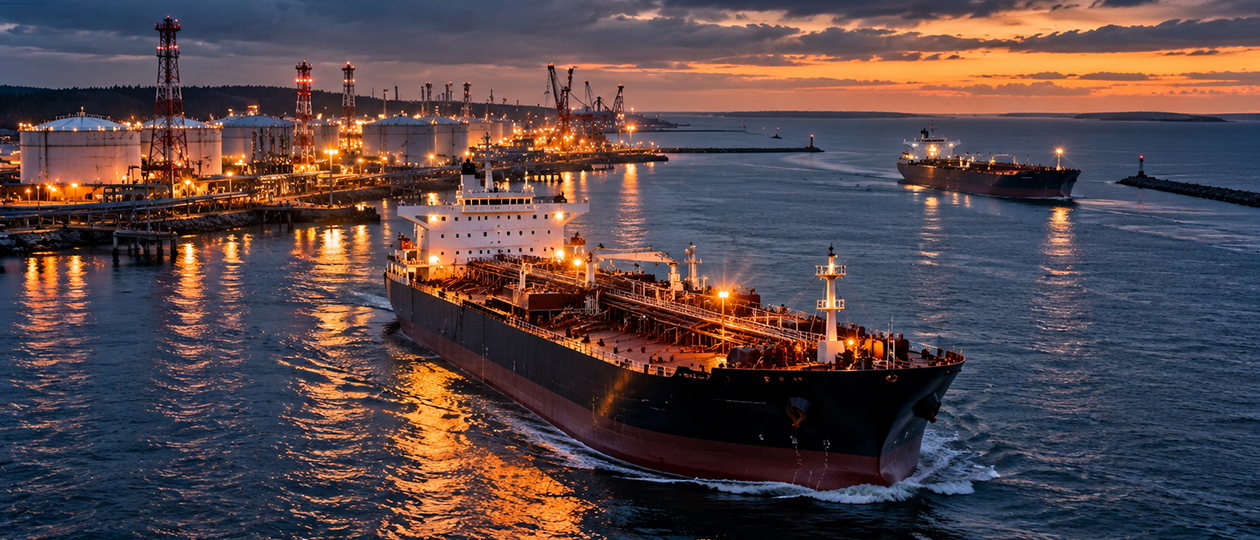
The first tankers carrying diesel loaded at Russia’s Baltic port of Primorsk are already on their way to their destinations.
The diesel deal between Donald Trump and Vladimir Putin began on October 9th, 2026, following a lengthy telephone conversation in which the two presidents agreed on its terms.
Mr Trump announced the agreement on Truth Social: Russia would immediately release more than 300,000 tonnes of diesel onto American and global markets, followed by another 500,000 tonnes in November and a further 1m tonnes thereafter.
The announcement was followed by the US Treasury’s General Licence No. 135, temporarily authorising transactions involving the sale, delivery, unloading and importation of Russian diesel. In effect, it exempted such transactions from specified American sanctions. The authorisation runs until April 7th, 2027.
On October 10th Russia’s government also partially lifted its own diesel-export ban, allowing 500,000 tonnes to be supplied to the world market.
So what happens next?
Contrary to a common misconception, the point was never to send thousands of Russian tankers directly to America and flood its market with diesel. That would be neither practical nor necessary.
All that is needed is for Russian fuel to return unhindered to its traditional markets.
According to Kpler, before the deal was agreed, Turkey accounted for around 95,000 barrels a day of Russian diesel shipments in 2026, or 34% of the total. Brazil took another 66,000 barrels a day, or 24%. Together, the two countries accounted for roughly 58% of Russia’s seaborne diesel exports.
And those are precisely the customers receiving the latest shipments.
The tanker Dolunay has departed for Turkey, while the Leruo is heading for Brazil.
From there, the market does the rest.
If Turkey and Brazil can once again buy Russian diesel, they have less reason to purchase more expensive fuel from other suppliers. Those suppliers, in turn, face pressure to cut their prices to defend their market share. The effects ripple through the trading system.
In short, the deal is working, and the process of market normalisation has begun.
Before long, the European Union may find itself almost alone in a world of diesel shortages and high prices.
How long can it hold out?
 Yuri Chekalin
 Kamil Askerkhanov