 Alexander Rimov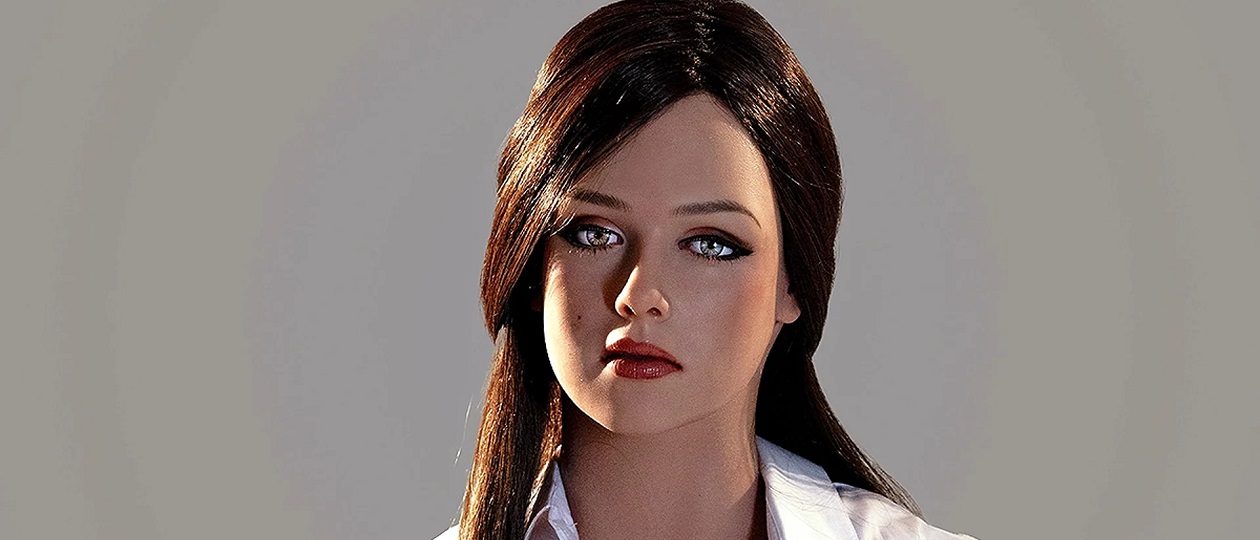
A humanoid AI robot Is about to start teaching at an American school.
The 2026 school year may well go down in history. While the world continues to debate whether artificial intelligence should replace teachers, one school in upstate New York has decided to move beyond theory and into practice.
Beginning on September 1, students will be greeted by an unconventional educator: a humanoid robot with silicone skin, a female appearance, and a distinctive regional accent.
The experiment is taking place in the city of Salamanca, where officials are launching what may be one of the most ambitious educational initiatives in recent years. Joining the school’s staff is a humanlike robot named Sally.
Rather than concealing her mechanical nature beneath a futuristic shell, her creators have designed her to resemble a real person as closely as possible. Sally has chestnut hair, fair skin, articulated arms, and—something her developers proudly emphasize—a characteristic accent typical of western New York.
The project reportedly cost approximately $60,000.
More Than a Mannequin: A Tool for Tomorrow’s Innovators
Contrary to popular expectations, Sally will not stroll between desks collecting homework assignments. She is not yet capable of moving independently. Instead, her role centers on the exclusive Woz Ed educational program, developed with the participation of legendary Apple co-founder Steve Wozniak.
Sally will work with juniors and seniors, helping teach three of today’s most important disciplines: computer programming, robotics, and artificial intelligence.
The concept is not to have a mechanical instructor recite textbook chapters in a monotone voice. Sally’s mission is considerably more sophisticated. She is intended to serve as a personal tutor who guides students toward answers rather than providing them outright. When faced with a difficult coding challenge or a complex robotics project, students can turn to Sally, who will use carefully chosen questions and hints to help them arrive at solutions independently.
Cybernetic Pedagogy: Teaching Without Giving Away the Answer
School principal Mark Beiler believes the project represents far more than a technological curiosity.
“Introducing a robot like this marks a new stage in the evolution of education,” Beiler says. “We’re not trying to replace teachers. Sally isn’t here to take their place—she’s here to support them.”
That, perhaps, is the experiment’s central humanistic idea. While classroom teachers focus on the needs of the entire class or devote extra attention to struggling students, Sally can spend time challenging advanced learners who are eager to explore more demanding concepts. She never grows tired, never becomes frustrated after explaining the same algorithm for the hundredth time, and—thanks to her lifelike silicone skin and expressive facial movements (at least as expressive as a $60,000 machine allows)—largely avoids the so-called “uncanny valley” effect, making interactions feel psychologically comfortable for students.
Fear of Replacement—or a Celebration of Progress?
The Salamanca experiment is certain to reignite debate over whether schools risk losing their human soul.
Yet its organizers emphasize a practical reality: today’s students are preparing for a future in which AI will be an ordinary part of everyday life. Working alongside a humanoid robot—even one confined to a fixed workstation—offers invaluable experience interacting with the technologies that will shape tomorrow’s world.
It is already easy to imagine the scene: a robotics classroom filled with the scent of solder and freshly printed plastic, with silicone Sally at its center, calmly explaining—in a gentle western New York accent—the difference between a neural network and a conventional linear algorithm.
Should the experiment prove successful, silicone-skinned “teachers” could eventually find their way into classrooms across the United States. And what once sounded like an unfunny joke—“My teacher is a robot”—may become an entirely ordinary fact of life for the generation of the 2030s.
 Yuri Chekalin
 Kamil Askerkhanov
 Dmitri Drobnitsky