 Kirill Benediktov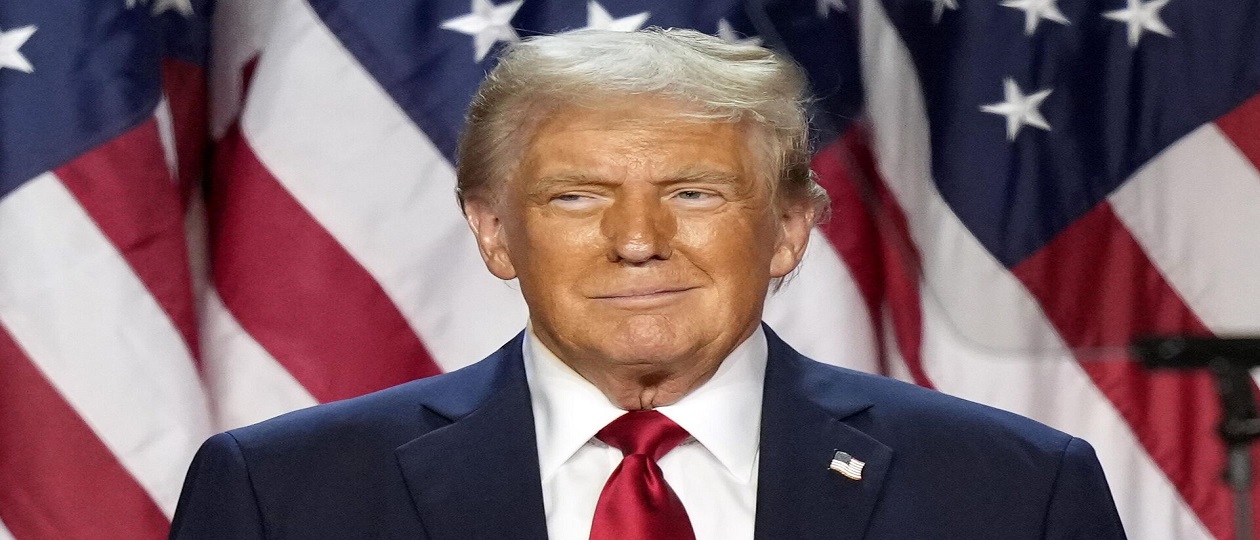
Trump sincerely believes that God has entrusted him with the mission of saving America, and through it, the world.
When, in July 2024, Donald Trump, speaking at a rally in Pennsylvania, turned his head to look at the teleprompter screen, a bullet fired from an AR-15 semi-automatic rifle, instead of shattering his skull, merely grazed his right ear. In his inaugural speech on January 20, 2025, Trump declared: “I was saved by God to make America great again!”
In the speech of any other politician, these words would sound like a metaphor. But Trump literally meant what he said: in his miraculous salvation in Pennsylvania, he saw not just the hand of fate, but a direct divine intervention.
However, he interprets this salvation in a rather peculiar way.
Trump’s religious views have undergone significant changes throughout his life. As a child, he attended a Presbyterian church, which his Scottish mother also attended. For a long time, he was a member of the Marble Collegiate Church in New York, which was then led by Norman Vincent Peale, whose book “The Power of Positive Thinking” had a decisive influence on the formation of Trump’s views. One of Peale’s critics wrote about his worldview:
The belief in pure evil, a realm of experience beyond the possibility of help or redemption, is a spontaneous call to action: “‘evil’ means ‘something to attack’”. In international relations, this leads to war.
Later, Trump was influenced by other Protestant preachers, such as Paula White, whom Trump, upon becoming president for the second time, appointed as a senior adviser to the first-ever White House Office of Faith Affairs he established. Both she and Mark Burns, another evangelical pastor close to Trump, are staunch supporters of the Jewish state in full accordance with the doctrine of dispensationalism — a belief that Israel is at the center of world history due to the covenants God made with its patriarchs.
Without delving into the details of theological concepts that the US president shares to varying degrees, we will simply state a simple fact: during his second presidential term, Donald Trump is not acting like an ordinary — albeit very powerful — politician, but like a religious messiah, a superhuman endowed with divine grace. His administration members are happy to play along with this.
“During his second term, members of Trump’s cabinet and his loyal supporters tended to see him as a quasi-messianic figure, whose political and financial successes testify to his supernatural ability to win victories and defeat enemies. This perception intensified after the successful military operation in Venezuela in January this year, when American special forces kidnapped then-President Nicolas Maduro, and Trump looked like an outstanding commander-in-chief,” writes senior editor of The American Conservative, Andrew Day.
Every time Trump says something that shocks the world, his words need to be interpreted through the prism of his self-perception as a messiah.
Recently, in a telephone conversation with CNN host Dana Bash, Trump stated that he would himself choose the new leadership of Iran, similar to the recent change of power in Venezuela. Of course, he is well aware that the procedure for choosing the supreme leader of Iran (rahbar) is complex and has nothing to do with democratic mechanisms in their Western understanding. But he doesn’t care at all — he even specifically emphasized that he would not object to a religious leader leading the country, as long as he meets the US criteria.
Trump is not at all striving to do evil — for him, in full accordance with the “positive thinking” of his spiritual guru Norman Peale, real human suffering does not exist. He firmly believes that he is bringing good to the world — as he understands it. He kidnaps the “bad guy” Maduro, destroys Iran’s military potential, which threatens Israel, which plays a central role in human history. And the fact that this “good” results in the killing of 32 Cuban guards of the Venezuelan president, 180 Iranian children who died in a strike on a school in Minab, and the suffering of tens of thousands of people around the world — remains outside the field of vision of the self-proclaimed messiah.
Such messianism has one, but a very significant drawback. It is effective and attracts supporters only when the messiah succeeds in everything. But the first serious setback will destroy the illusion of the hero’s chosenness by God. You can try to climb to heaven by grabbing God by the beard, but there’s a high risk that this daring stunt will end in a fall into the abyss.
 Vladimir Golstein
 Paul Sadchikov
 Alexander Rimov