 Yuri Chekalin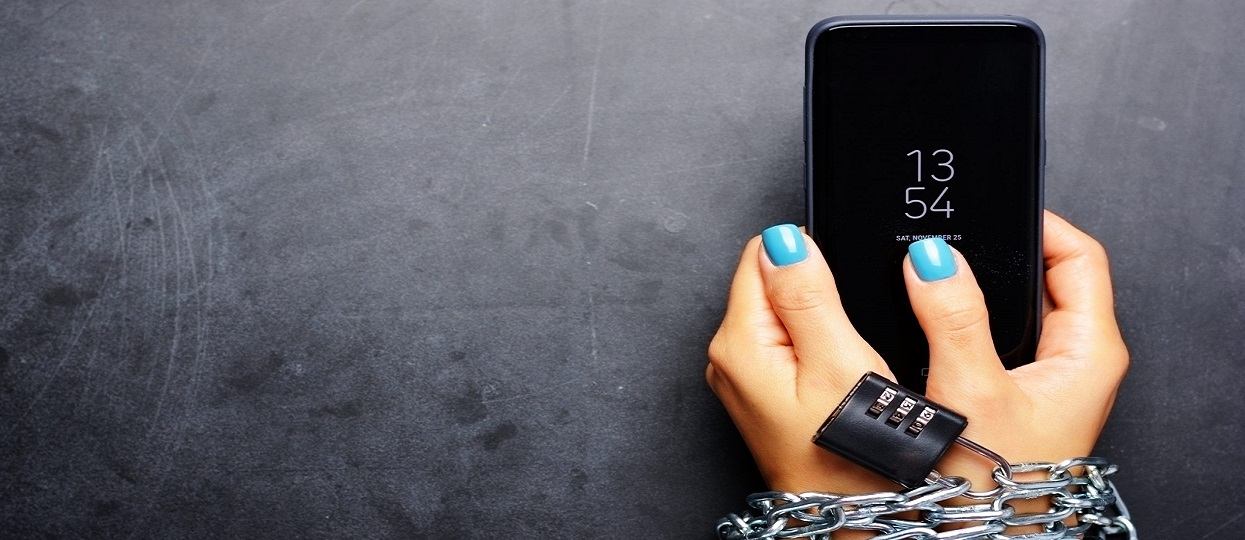
A smartphone battery drops to 5 percent, and suddenly the search for a charger feels urgent. You leave home without your phone and experience the peculiar sensation that something important is missing. A subway enters a dead zone, messages stop arriving, and you reach for the device anyway.
For some people, these moments are merely annoying. For others, they can provoke genuine anxiety.
Researchers often describe this reaction as nomophobia—a term derived from “no-mobile-phone phobia.” It refers broadly to fear or distress associated with being unable to access or use a mobile phone. Despite its clinical-sounding name, nomophobia is not recognized as a distinct psychiatric disorder in major diagnostic manuals. Instead, researchers have used the concept to investigate a distinctly modern question: What happens when a device becomes so integrated into everyday life that separation from it begins to feel threatening?
The answer is more complicated than “people are addicted to their phones.”
A smartphone is not simply an entertainment device. It is simultaneously a communications system, map, camera, calendar, payment tool, news source, workplace and social portal. Losing access to it can therefore mean losing access to several practical and psychological functions at once.
That helps explain why anxiety about a phone can be perfectly rational. A dead battery at the wrong moment might mean losing directions, a train ticket, access to a bank account or the ability to contact someone. But practical dependence does not tell the whole story.
One important mechanism may be uncertainty reduction.
Smartphones allow people to resolve small uncertainties almost immediately. Has someone replied? Did the schedule change? What is happening in the world? Where is the restaurant? What was the name of that actor?
A glance at the screen supplies an answer. Just as important, it can provide relief.
This matters because behaviors that reduce discomfort tend to be repeated. If checking a phone repeatedly removes uncertainty or anxiety, the act of checking can gradually become automatic. Boredom, silence or the absence of new information may itself begin to function as a cue: reach for the phone.
Notifications intensify this dynamic. Messages, headlines, likes and other alerts arrive unpredictably, making the device a source of intermittent rewards. Not every glance produces something interesting, but some do—and unpredictability can make checking particularly persistent.
The social dimension may be even more powerful.
For most of human history, being temporarily unreachable was normal. Today it can require explanation.
Friends, relatives and colleagues may expect messages to be seen quickly. A period without connectivity can therefore create a second layer of uncertainty: not merely What am I missing? but Who expects me to respond?
Studies of nomophobia have consequently identified several recurring dimensions, including anxiety about losing communication, information, convenience and connection to one’s social world.
Yet frequent smartphone use by itself is poor evidence of a disorder. A person may check a phone constantly because work requires it. Another may spend hours reading, navigating or talking to family without experiencing any meaningful loss of control.
A more revealing question is what happens when the phone is unavailable.
Can it remain in another room during dinner? Can a person sit through a conversation without repeatedly checking notifications? Does a low battery create irritation or genuine distress? Is sleep interrupted by an urge to check messages? Does being offline make concentration difficult even when there is no practical reason to be connected?
The distinction matters because there is a temptation to medicalize ordinary behavior whenever technology changes quickly. Dependence on a useful tool is not automatically pathological. Modern life itself increasingly assumes smartphone access: transportation systems, banking services, authentication procedures and workplaces are often designed around it.
In other words, society has made the smartphone difficult to ignore and then occasionally expressed surprise that people have difficulty ignoring it.
For someone who feels uncomfortably dependent on a phone, dramatic “digital detoxes” are not necessarily the most useful response. Smaller experiments can reveal more. Turn off nonessential notifications. Leave the phone outside the bedroom. Eat without it on the table. Take a short walk without carrying it.
Then notice what happens.
The important observation is not simply how often the hand reaches toward an absent phone. It is the feeling that precedes the movement: boredom, anxiety, loneliness, curiosity, habit or the vague expectation that something somewhere must have happened.
That reaction tells us something larger about the transformation smartphones have produced.
Modern smartphones have existed for less than a generation, yet they have already altered a condition that was once unavoidable. Human beings used to spend substantial portions of every day unavailable to nearly everyone they knew. There were gaps in communication, gaps in information and long stretches in which nothing new arrived.
Permanent connectivity has made many aspects of life safer, easier and more efficient. But it has also made those gaps increasingly unfamiliar.
Nomophobia may therefore be interesting not because it proves that smartphones are uniquely dangerous, but because it reveals how rapidly humans can redefine what feels normal.
The remarkable change is not that we sometimes become anxious when we cannot connect.
It is that, in remarkably little time, being unreachable has begun to feel like something is wrong.
 Sergey Stankevich
 Kamil Askerkhanov