 Andrey Vedyaev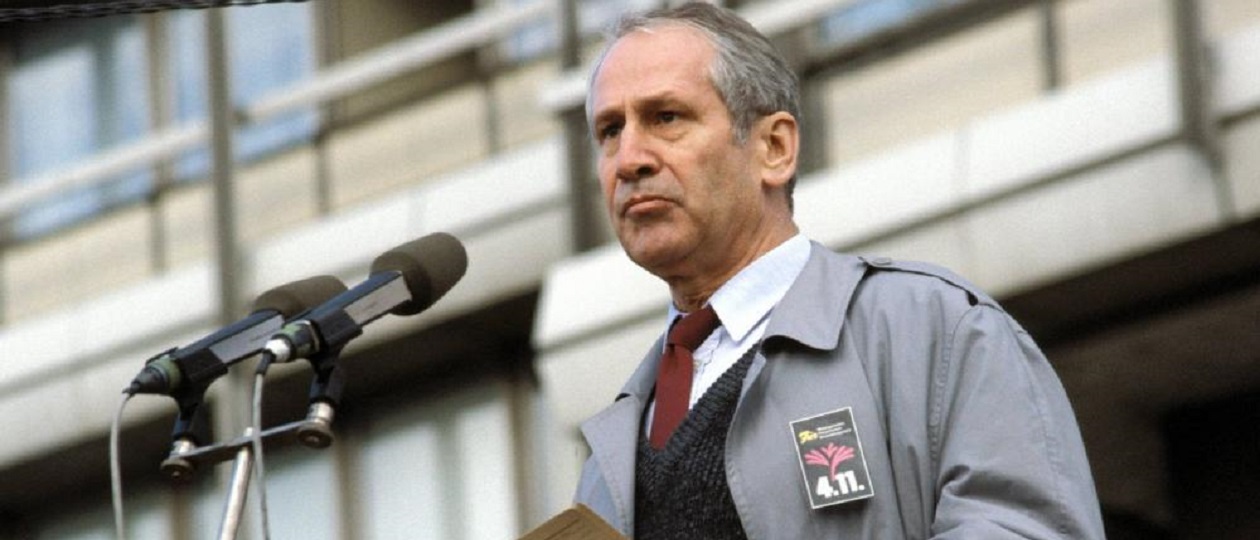
As the Cold War hardened into a global contest, intelligence became one of the principal arenas of confrontation.
The Wolf Constellation
Markus Wolf belonged to the generation of German anti-fascists who helped build and defend the German Democratic Republic (GDR), the first socialist state established on German soil. For four decades, these men and women stood at the center of a geopolitical confrontation that defined postwar Europe: the struggle between the Soviet-led Eastern bloc and the Western alliance system centered on NATO.
In this shadow conflict, Wolf’s organization achieved a reputation unmatched among East German institutions. The Main Directorate for Reconnaissance (Hauptverwaltung Aufklärung, HVA), the foreign intelligence arm of the GDR’s Ministry for State Security (MfS, better known as the Stasi), became one of the most effective intelligence services of the communist bloc.
Western intelligence officials later estimated that the HVA provided a substantial share of the intelligence reaching Moscow from NATO countries. Its largest network operated inside West Germany, where hundreds of agents penetrated political, military, economic, and scientific institutions. Among them were individuals who gained access to sensitive positions within the Federal Chancellery, NATO structures, the Federal Intelligence Service (BND), and the Federal Office for the Protection of the Constitution (BfV), West Germany’s domestic security agency.
The reach of East German intelligence became one of the most persistent concerns of Western counterintelligence services. Even decades after German reunification, political controversies continued to emerge over alleged links between prominent figures and Markus Wolf’s network.
Wolf was born on January 19, 1923, in southern Germany into a family deeply committed to anti-fascism. His father, Friedrich Wolf, was a physician, playwright, and prominent communist intellectual. Following Hitler’s rise to power in 1933, the family fled Germany and eventually settled in the Soviet Union.
In Moscow, Markus Wolf attended the German Karl Liebknecht School, an institution established for the children of German political émigrés. In 1940 he entered the Moscow Aviation Institute, but the outbreak of the Second World War redirected his path toward political and intelligence work. In 1942, he joined the Communist Party of Germany and, following instructions from party leaders, was sent to the Comintern training school at Kushnarenkovo near Ufa.
The school had been created in November 1941 on the basis of the NKVD’s Special Purpose School, an institution designed to train clandestine operatives for missions in Nazi Germany and the Axis countries. Its students included young men and women from across Europe—former members of the International Brigades who had fought in the Spanish Civil War, as well as German, Austrian, Bulgarian, Hungarian, Italian, Polish, Romanian, French, and Czech communists.
After the school was closed in 1943, Wolf worked in Moscow for the radio station of the National Committee for a Free Germany, a Soviet-backed organization aimed at influencing German opinion against Hitler’s regime.
In May 1945, immediately after the defeat of Nazi Germany, Wolf returned to Berlin as a member of the group led by Walter Ulbricht, one of the key architects of East Germany’s future political system. He was assigned to Berlin Radio and later served as its representative at the Nuremberg Trials.
Following the establishment of the German Democratic Republic on October 7, 1949, Wolf was appointed first counselor at the GDR embassy in Moscow. Yet his diplomatic career was short-lived. In August 1951, he was recalled to Berlin and assigned to the newly created foreign intelligence service operating under the Institute for Economic Research.
In December 1952, at the age of twenty-nine, Markus Wolf became head of this organization. In 1953, the intelligence service was incorporated into the Ministry for State Security, and in 1956 it received its final institutional form as the Main Directorate for Reconnaissance (HVA).
At only thirty-three years of age, Major General Markus Wolf became the head of East Germany’s foreign intelligence service and simultaneously the first deputy minister of state security.
The Rise of the HVA: The Man Without a Face and the Architecture of East German Espionage
According to Markus Wolf himself—known affectionately among Soviet colleagues as “Misha”—the East German foreign intelligence service was still a modest organization in the early 1950s. At the end of 1953, only twelve agents were operating abroad, while another thirty or forty were undergoing preparation for future missions.
Over the next three decades, however, the organization underwent a remarkable transformation.
During Wolf’s tenure, the HVA expanded into a sophisticated intelligence apparatus with approximately 4,600 employees in its central administration and more than 10,000 agents and informants operating outside East Germany. It became one of the most capable intelligence services in the world, rivaling far larger organizations despite the limited resources of the GDR.
In the West, the head of East Germany’s foreign intelligence service became a figure of almost mythical secrecy. He was known as “the man without a face” because, until 1979, Western intelligence services did not even possess a reliable photograph of him. Wolf’s anonymity was itself a remarkable achievement in an era when intelligence chiefs such as the CIA’s directors and Britain’s MI6 leaders were increasingly known to the public.
Yet while Wolf remained invisible, his network penetrated some of the most sensitive institutions of the Western world. Among the East Germans sent abroad were carefully trained intelligence officers who assumed legitimate identities and entered professional environments where access to information was valuable. Some found positions in major corporations, research institutions, government offices, and organizations connected with national security.
A number of them eventually reached senior positions in the economic and political structures of West Germany and other Western countries.
The most famous and controversial aspect of Wolf’s intelligence operations was the recruitment of agents through personal relationships—later sensationalized in the West as “Romeo espionage.” According to this narrative, attractive East German agents were assigned to establish romantic relationships with vulnerable female employees in Western government institutions in order to obtain confidential information.
The reality was more complex. Wolf himself rejected the popular image of a specialized “Romeo department” within the HVA, describing it as a journalistic exaggeration.
“Since then, questionable expressions such as ‘heartbreakers’ have been attached to my service—men who supposedly obtained secrets from the Bonn government through romantic relationships,” Wolf wrote. “People claimed there was a special department for training ‘Romeos.’ Such a department belongs to the realm of fantasy, comparable to a fictional branch of Britain’s MI6 where the latest gadgets for Agent 007 are invented and tested.”
Whatever the extent of institutional planning behind such operations, the strategy produced significant intelligence successes.
The most prominent example was Gabriele Gast, who became one of the highest-ranking analysts responsible for the Soviet Union and Eastern Europe within West Germany’s Federal Intelligence Service (BND). From her position, she prepared assessments and intelligence reports for senior officials, including the Federal Chancellor. Copies of many of these reports reached Markus Wolf’s desk in East Berlin.
In 1987, Gast was promoted to the rank of senior federal civil servant. Only after the collapse of the Berlin Wall and the opening of Stasi archives was it revealed that she had spent seventeen years working as one of Wolf’s most valuable sources under the operational codename “Linefelder.”
Her case provoked intense debate in the German media. During her trial, one journalist writing for Der Spiegel argued that behind every female intelligence officer there was inevitably a man: “If a woman spies, it is supposedly always ‘for love’—what else could explain it? When does she lose her head, abandon morality and duty? When there is a man involved.”
Yet Gast herself rejected this interpretation. Although she had indeed been recruited by an East German intelligence officer whom she described as charismatic, she insisted that personal attraction was not the decisive factor.
Her motivation, she told the court, was political and ideological: “People in the DDR were not strangers to me—they were Germans.”
For Gast, the central purpose was not personal loyalty to Markus Wolf or financial gain, but what she believed was the preservation of peace. She never accepted payment for her intelligence work.
Two years after she began cooperating with the HVA, Markus Wolf personally met with her. By that time, she had the impression that he was seeking a personal conversation—not because of the quality of her intelligence reports, but because of something more complex.
During her trial, the judge pressed her:
— “What interested Wolf more: you, or the information you provided?”
Gast replied:
— “I cannot answer that question. I came to know another side of Mr. Wolf.”
Their relationship, as described by Gast, did not fit easily into the simplistic categories of romance, manipulation, or betrayal. It reflected something more complicated: ideological commitment, professional respect, personal loyalty, and the psychological pressures of living a double life.
The label “Romeo espionage” could not fully explain why a highly educated West German intelligence analyst spent seventeen years risking imprisonment for a foreign intelligence service. What motives shaped her decisions? What doubts did she experience? What private struggles accompanied her public actions?
To portray her merely as a victim manipulated by a charming spy would ignore the political convictions that she herself repeatedly emphasized. She understood the strategic tensions of the Cold War and believed that NATO policies and Western intelligence operations represented a threat to European security. For her, espionage was not an act of romance—it was an act of political commitment.
She considered herself not a spy “for love,” but an intelligence officer working for peace.
The Fall of a Legend: Markus Wolf, Gabriele Gast, and the Collapse of East Germany
In 1998, after serving several years in prison, Gabriele Gast was released. In an interview with the German newspaper Die Welt, she made a striking accusation: when Markus Wolf spoke about the reasons for his resignation from the leadership of East Germany’s foreign intelligence service, “he was not telling the truth.”
According to Gast, Wolf later constructed a personal narrative in which he portrayed himself as having gradually distanced himself from the ruling leadership of East Berlin long before the collapse of the Berlin Wall. In this version of events, his decision to leave office was supposedly an act of political disagreement with a system he no longer supported.
Gast rejected that interpretation.
In her view, Wolf’s relationship with the East German leadership was far more complicated. For decades, he had been one of the most loyal and influential figures within the GDR’s political establishment. His disagreements with the leadership were real, but they did not amount to a fundamental rejection of the socialist system itself.
In his memoirs, Wolf described his departure differently. He wrote that Erich Mielke, the powerful minister of state security, had eventually agreed to a gradual transfer of responsibilities to Wolf’s successor, Werner Grossmann. Formally, Wolf would remain head of foreign intelligence; in practice, however, he would assume primarily representative duties.
Gast accepted only part of this explanation.
“The truth is only that, during his final years, Markus Wolf was largely engaged in representative activities,” she argued. “That was also what he wanted. He pursued this role and never concealed it. But he did not leave because he voluntarily rejected the system.”
If so, why did he leave?
Gast’s explanation was far more personal—and far more ordinary than the political mythology surrounding one of the Cold War’s most famous intelligence chiefs.
Wolf’s second marriage had become troubled. Eventually, he made a decision that was considered highly unusual—and potentially dangerous—for the head of an intelligence service: he officially divorced.
According to Gast, Western intelligence officials quickly attempted to exploit the situation. Officers from West Germany’s Federal Intelligence Service (BND) allegedly sought contact with Wolf’s former wife in the hope of recruiting her and obtaining information about him.
Those efforts failed. She refused cooperation.
But within the rigid hierarchy of the Stasi, the very possibility that Wolf’s private life could become a security vulnerability was enough to raise concerns. In Gast’s view, Mielke increasingly came to regard Wolf not as an indispensable asset, but as a potential threat.
Eventually, Mielke decided that enough was enough.
Gast later recalled a conversation she had with Wolf in May 1986, only three days before his resignation. She found him deeply troubled.
“I asked him what had happened,” she said. “And suddenly he broke down in tears. He kept repeating: ‘I am leaving my position.’ It was clear that this was not something he wanted.”
After his departure, Wolf began writing his first book, “Troika,” which appeared in 1989. It was significant because, for the first time, he openly expressed criticism of aspects of the East German political system. In October 1986, he married Andrea Stingle, who remained his wife until his death.
Their relationship itself reflected the contradictions of East German history: Andrea had once spent four months in a Stasi prison after attempting to flee the DDR, yet she later became the life partner of one of the organization’s most prominent figures.
Gast nevertheless remained skeptical of the idea that Wolf had ever truly broken with socialism.
“For many years we met with him and had long conversations about political developments,” she recalled. “I never once heard a critical word from him about the political line of East Berlin or Moscow.”
Yet another interpretation remains possible. Wolf’s resignation coincided with the beginning of Mikhail Gorbachev’s reforms in the Soviet Union. As one of the most informed observers inside the Eastern bloc, he may have understood earlier than many others that the foundations of the Soviet system were beginning to weaken.
Perhaps he recognized that the political project to which he had devoted his life was entering a period of irreversible decline. Perhaps he no longer wished to defend a system whose leadership itself appeared uncertain of its future.
After the fall of the Berlin Wall, Wolf and his wife moved to Austria. From there, on October 22, 1990, he wrote a letter to Soviet leader Mikhail Gorbachev.
The letter was both a personal appeal and a political testament.
“Dear Mikhail Sergeyevich,” Wolf wrote, “the intelligence officers of the GDR have done much for the security of the Soviet Union and its intelligence services. The networks that are now being persecuted and publicly attacked provided a continuous flow of reliable and valuable information. I am called the ‘symbol’ or ‘synonym’ of successful intelligence work. Apparently, it is precisely because of our successes that our former opponents want to punish me—to crucify me, as they have written.”
Wolf urged Gorbachev to address the fate of former East German intelligence officers and agents during his upcoming visit to Germany. Many, he argued, were being treated worse than prisoners of war.
He ended the letter with a personal appeal: “You, Mikhail Sergeyevich, will understand that I am not speaking only for myself, but for many others—for those whose fate troubles me and for whom I continue to feel responsible.”
But the response never came.
Gorbachev offered no assistance and did not even reply.
For Wolf, who had spent decades believing in the strategic partnership between East Germany and the Soviet Union, this silence represented a profound personal disappointment. The state he had served was disappearing, and the power that had once stood behind it no longer wished to defend its former allies.
The Last Battle: Trial, Legacy, and the Wolf Who Refused to Surrender
After the failed coup attempt against Gorbachev in August 1991, Markus Wolf—who had already spent nearly a year in Moscow—crossed the Austrian-German border once again on September 24, 1991. This time he was returning not as a diplomat or intelligence officer, but as a defendant in the newly unified Germany.
Waiting for him was the prosecutor of the Federal Republic.
On the same day, Wolf was arrested and placed in a high-security solitary confinement cell in Karlsruhe, separated from the outside world by a double-barred door. The former head of East Germany’s foreign intelligence service had become one of the most prominent symbols of the legal reckoning that followed German reunification.
The charges against him focused on espionage activities conducted on behalf of the GDR, including allegations that his organization had recruited agents through coercion, bribery, and other improper methods.
Wolf rejected the accusations.
During the trial, he expressed outrage that individuals who had acted in the interests of their own state—a state that had been a recognized member of the United Nations—were now being prosecuted as criminals.
The prosecution was unable, however, to prove that Wolf’s intelligence service had relied primarily on blackmail or financial corruption. In many cases, the opposite appeared to be true: citizens of Western countries had cooperated with East German intelligence because of ideological convictions, political sympathies, or personal beliefs.
This factor may partly explain why the HVA suffered relatively few major operational failures compared with other intelligence services of the Cold War.
At the trial, Wolf refused to admit guilt. More importantly, he refused to betray those who had worked for him.
He revealed neither the identities of his agents nor the details of HVA operations. This decision was significant. After Western intelligence services obtained access to Stasi archives, many former East German intelligence officers found themselves facing prosecution. Some were reportedly offered leniency in exchange for testimony against their former chief.
None agreed.
One former HVA officer imprisoned in the United States told American journalists: “Tell Wolf not to worry about us. We have no regrets.”
The loyalty between Wolf and his former officers became one of the defining features of his post-Cold War image. Critics saw it as evidence of continued loyalty to an authoritarian system. Supporters viewed it as a rare example of professional ethics in the secret world of intelligence.
After his arrest, Wolf received offers of refuge and financial security abroad. Israel reportedly offered him protection and citizenship; others offered him a home in California and millions of dollars in exchange for information about his intelligence networks, agents, and contacts.
He refused.
On December 6, 1993, Markus Wolf was sentenced to six years in prison. However, he was released on bail pending further legal proceedings.
A major turning point came in the summer of 1995, when Germany’s Federal Constitutional Court issued a landmark decision in the case of Wolf’s successor, Colonel General Werner Grossmann. The court ruled that former East German intelligence officers could not simply be treated as traitors for having served the intelligence organization of a sovereign state that had existed under international law.
Following this decision, Germany’s Federal Court of Justice overturned the verdict against Markus Wolf.
The legal battle over East German intelligence reflected a broader historical question that Germany continued to debate after reunification: should officials of the former GDR be judged according to the laws of the Federal Republic, or should their actions be understood within the framework of the state they had served?
For Wolf, the answer was clear. He had not betrayed his country. He had served it.
The Final Years: A Cold War Warrior in a Post-Cold War World
The final years of Markus Wolf’s life were spent quietly in his Berlin apartment, where he devoted himself primarily to writing and reflection.
Looking back on the twentieth century, he believed that its conclusion had brought not the triumph of humanity’s highest ideals, but the victory of materialism and social conformity.
In his writings, Wolf expressed deep disappointment with the direction taken by the post-Cold War world: “The power of money resorts to violence no less than the power of the state. It operates less openly, but it is no less ruthless. If the abuse of power under ‘real socialism’ began with the manipulation of ideals, then capitalism abuses the ideal of individual freedom in the interests of the power of money and at the expense of the majority of society.”
For Wolf, the collapse of communism did not represent the end of ideological conflict. Rather, he believed that capitalism had created its own forms of domination.
He argued that contemporary society remained incapable of addressing humanity’s greatest challenges: “The vague fear of the future can be felt everywhere. It comes from the fact that our modern social system is not only unable to solve the major problems facing humanity—it creates new and even greater ones.”
These views placed him at odds not only with his former Western adversaries, but also with many former East Germans who saw reunification as liberation rather than defeat.
Yet Wolf was never simply a nostalgic defender of the GDR. His legacy remained deeply contradictory. He had been one of the architects of one of the most effective intelligence organizations of the Cold War, a loyal servant of a socialist state, and at the same time a figure capable of self-criticism and intellectual reflection.
Markus Wolf died peacefully in his sleep in his Berlin apartment on November 9, 2006—the anniversary of the fall of the Berlin Wall.
Thousands attended his funeral, including former leaders of East Germany and representatives of Germany’s left-wing political movements. The presence of these figures provoked criticism from parts of the German media, where commentators accused politicians of honoring a former Stasi official and defender of the socialist regime.
But for his supporters, Wolf represented something different: a man who remained faithful to his convictions even after the historical tide had turned against him.
The Cold War had ended. The state he had served had disappeared. His enemies had written his history.
Yet Markus Wolf never exchanged his identity for acceptance in the new order.
He remained, until the end, the Wolf who refused to wear the mask of the sheep.
 Robert Reich
 Vladimir Golstein
 Paul Sadchikov