 Yuri Chekalin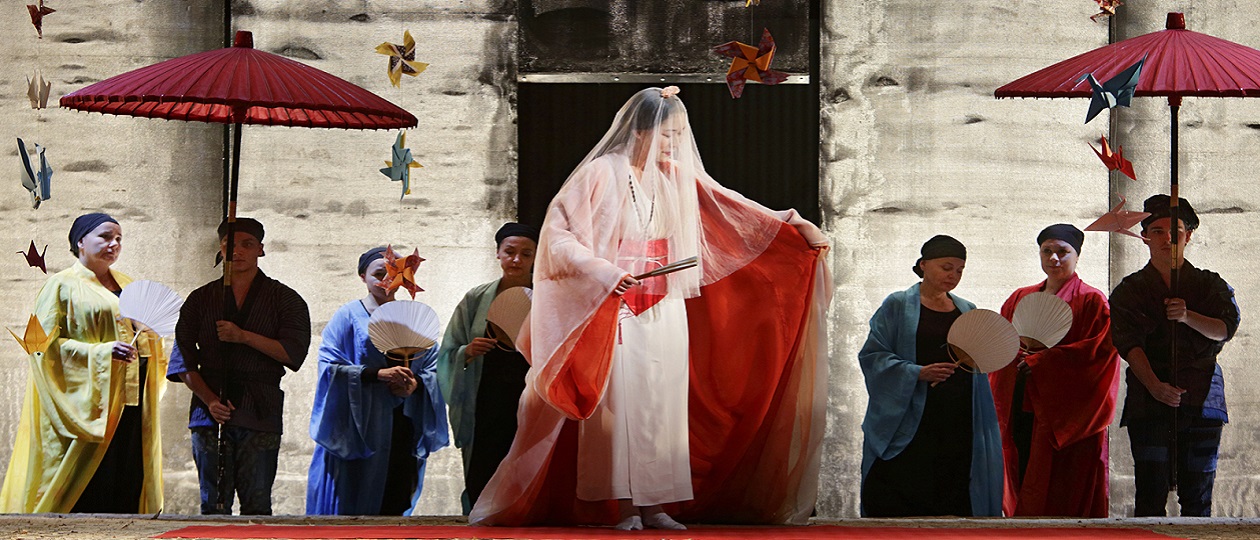
It is fascinating that Madama Butterfly, or Cio-Cio-San, has long been regarded as one of the most “Japanese” of European operas.
Yet, in reality, it tells us far more about Western perceptions of Japan at the turn of the nineteenth and twentieth centuries than about Japan itself. The same can be said, in a different historical setting, of James Clavell’s novel Shōgun, which likewise represents not Japan as it was, but Japan as imagined through a Western lens.
“Japanese” Madama Butterfly
The historical foundation of the story did, however, exist. In the port city of Nagasaki, foreign sailors, diplomats, and merchants often entered into temporary marital arrangements with Japanese women.
Yet Puccini’s opera greatly simplifies and dramatizes this practice. Many such relationships were pragmatic, mutually agreed upon, and by no means — in fact, almost never — ended in tragedy.
One of the most valuable firsthand sources on this subject is the memoir of Grand Duke Alexander Mikhailovich, who in 1886 served aboard the Russian corvette Rynda and spent nearly two years in Nagasaki. He recalled that almost all Russian naval officers had what were commonly known as “temporary wives,” and that such arrangements were regarded by both sides as an entirely normal social practice. According to his account, these contracts were usually made for a period of one to three years, after which the woman would either return to her family or enter into a similar arrangement with another officer.
Alexander Mikhailovich himself entered such a relationship. He described his Japanese companion with great warmth, studied the Japanese language with her help, and repeatedly emphasized that such relationships did not provoke either social condemnation or dramatic emotional turmoil in Japan.
He also tells a charming and humorous story about his encounter with Empress Shōken during a formal banquet at the Imperial Palace. Sitting near the Empress, he decided to impress her by addressing her in Japanese.
At first, the Empress appeared surprised. Then, when the Grand Duke repeated his phrase and added several polite remarks wishing prosperity for Japan, she suddenly burst into laughter. According to Alexander Mikhailovich, her laughter grew stronger and stronger: she stopped eating, bit her lip, her shoulders began to shake, and soon the entire imperial table was laughing. The Grand Duke himself was completely bewildered, as he was certain that he had said something perfectly respectful.
Only afterward did the Japanese prince sitting beside him politely explain the reason: “Not at all! You speak wonderfully. But you see, you are using a particular local dialect… May I ask how long you remained in Nagasaki, and whether you perhaps lived in the Inasa district?”
It turned out that Alexander Mikhailovich was not speaking the refined Japanese used at the Meiji court, but rather the colorful and somewhat rough Nagasaki vernacular, with its distinctive expressions, pronunciation, and intonation. In other words, to Tokyo aristocrats it sounded somewhat like a foreign diplomat addressing the British monarch in a strong Yorkshire or Cockney dialect while firmly believing he was speaking the Queen’s English.
Whatever the humor of the episode, the most interesting point is Alexander Mikhailovich’s observation about how the Japanese themselves would have reacted to Puccini’s opera.
He wrote that the story of Madama Butterfly would likely have provoked laughter rather than sympathy among Japanese people, because no sensible Japanese woman would have expected a temporary arrangement with a foreign sailor to last for a lifetime.
This judgment may be somewhat categorical, but it came from a man who had observed everyday life in Nagasaki long before the publication of John Luther Long’s story and the creation of Puccini’s opera.
One of the most common misconceptions is the portrayal of Cio-Cio-San as a typical geisha. In the opera, her character combines elements of an impoverished samurai family background, a young Japanese woman of the Meiji era, and a professional entertainer. For European audiences, these distinctions were not obvious, and the creators deliberately constructed a composite and exoticized image.
The portrayal of the American naval officer Pinkerton is equally stylized. He appears almost as a caricature of Western colonial arrogance.
Although such cases certainly existed, the majority of foreign residents in Japan did not fit such a simplistic stereotype.
Nor is there any evidence that a real Cio-Cio-San ever existed. Attempts to identify her with a specific historical woman remain fascinating hypotheses, but they have never been confirmed by reliable evidence.
Most likely, the heroine is a literary composite, combining elements from several real-life stories.
The tragic conclusion, with the heroine’s suicide, should likewise not be understood as a reflection of Japanese reality.
It is based largely on a Western romanticized interpretation of the Japanese concept of honor and was designed to heighten the emotional impact on the audience.
The actual lives of women in Meiji-era Japan were far more complex and diverse than the opera suggests.
Therefore, Madama Butterfly should be appreciated primarily as a great work of art, not as a historical document. Its value lies not in documentary accuracy, but in Puccini’s extraordinary music and in the universal power of its human tragedy.
Yet, while enjoying this opera, one should remember that what stands before us is not Meiji Japan — not at all — but rather an artistic image of Japan created by the rich imagination of Europe.
In this sense, Alexander Mikhailovich’s memoirs serve as a valuable counterweight to the operatic legend. They reveal Nagasaki not as a stage for an inevitable tragedy, but as a living society with its own social customs and norms — perfectly understandable to its inhabitants, yet often misunderstood by European writers and composers.
 Robert Reich
 Vladimir Golstein