 Yaroslav Listov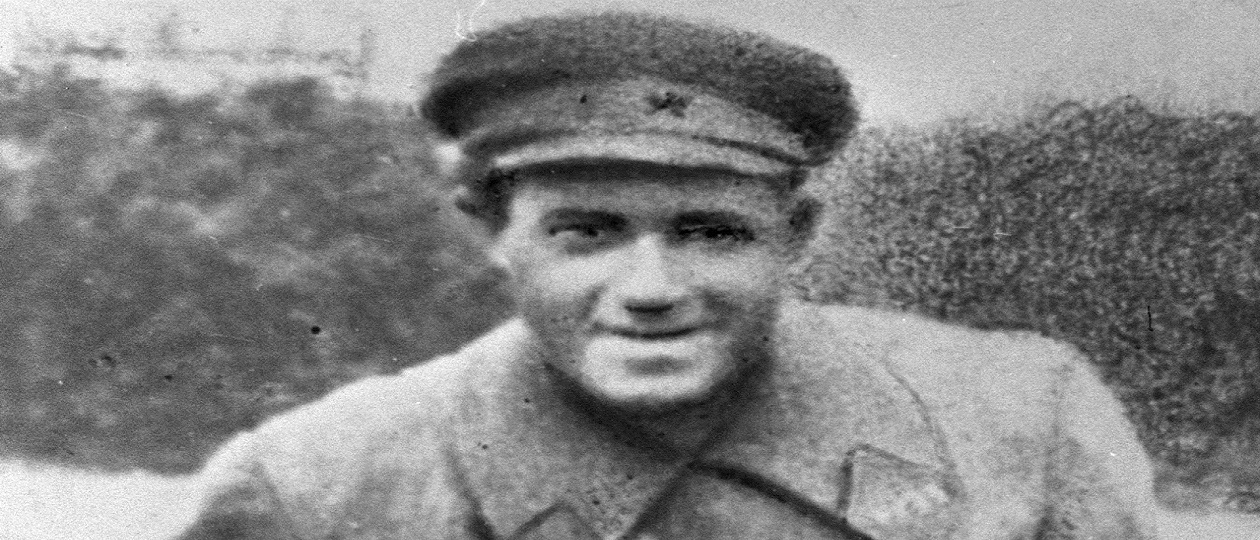
The 130th anniversary of the birth of Iona Emmanuilovich Yakir (1896–1937), a Red Army commander of the 1st rank and one of the most talented military leaders of the Russian Civil War, is being commemorated this year.
Yakir was born in Chișinău into the family of a pharmacist. He studied chemistry at the University of Basel and later at the Kharkiv Institute of Technology. In April 1917, he joined the Bolshevik faction of the Russian Social Democratic Labour Party and began campaigning for the Bolsheviks among soldiers.
From January 1918, he commanded Red detachments fighting Romanian troops in Bessarabia. He later admitted: “I had never been a military man and knew nothing about military affairs.”
Yet that lack of formal military training did not prevent him from becoming one of the Red Army’s most capable commanders.
In July 1919, Yakir took command of the legendary 45th Rifle Division.
Semyon Aralov, a member of the Revolutionary Military Council of the 8th Army, later recalled: “Despite his youthful impulsiveness, Yakir made an extremely favorable impression on me… It was clear that this comrade enjoyed great authority among the military.”
The Revolutionary Military Council of the 12th Army soon confirmed him in command.
The summer of 1919 marked a turning point on the Southern Front. White forces were advancing along the entire front, from the Dniester to the Volga. The Reds had lost Aleksandrovsk, Yekaterinoslav, Kharkov and Poltava. Behind the lines, uprisings led by the atamans Hryhoriev, Zeleny and Makhno were raging.
Under these circumstances, Yakir was given command of the Southern Group of the 12th Army, comprising the 45th, 47th and 58th Rifle Divisions.
Yakir’s force found itself surrounded in the Birzula–Gol’ta area (today’s Kotovsk and Pervomaisk). Denikin’s forces were advancing from the east; Petliura’s troops and Polish forces from the west.
Yakir Decided to Break Through
For 28 days of continuous fighting, his troops marched through the enemy’s rear, fighting their way out of the encirclement. After covering some 400 kilometers, they emerged near Zhytomyr and Kyiv.
“Yakir’s units fought courageously and steadfastly… At that time they liberated Zhytomyr and Kyiv, capturing enormous quantities of livestock and food from the enemy.”
In one of his orders from the period, Yakir issued a stern warning:
“I warn you that those responsible for disorder in the provision of food to soldiers and commanders will be punished with the utmost severity, including being brought before a military tribunal.”
And to subordinates who failed to think ahead, he said:
“If you live only for today, you will fail to notice how you find yourself at the rear, and then fall behind altogether. And those who fall behind are beaten mercilessly in war.”
During the Civil War, Yakir’s divisions fought the forces of Denikin, Wrangel, Petliura, Józef Piłsudski and Makhno, as well as Romanian interventionist forces and the Polish army.
In October 1919, Yakir took command of the 14th Army of the Southern Front. In 1921, he participated in the destruction of Wrangel’s remaining forces in Crimea.
Even his opponents acknowledged his tactical ability. One of his comrades later recalled:
“And Yakir? No military training, no combat experience! Yet he fought in such a way that you could only marvel… People believed in Yakir, followed him, and never doubted that he would lead them to victory.”
For his military service, Yakir was awarded the Order of the Red Banner three times, the first bearing the exceptionally low serial number No. 2.
In 1935, Yakir was promoted to Komandarm 1st Rank, the equivalent of a four-star army commander in the Soviet system. He was appointed commander of the Kiev Military District.
Yet the successful military commander proved to be a poor political operator. He first came into conflict with Defence Commissar Kliment Voroshilov, and later became associated with Mikhail Tukhachevsky.
In 1937, Yakir was arrested in the Tukhachevsky case and executed. Twenty years later, in 1957, he was posthumously rehabilitated.
The life of Iona Yakir is the story of a man who went from being a chemistry student to one of the most formidable commanders of his generation; who marched thousands of kilometers through war, defeated powerful opponents—and ultimately fell victim to the political terror of his own age.
 Kamil Askerkhanov
 Dmitri Drobnitsky
 Yuri Chekalin