 Dmitri Drobnitsky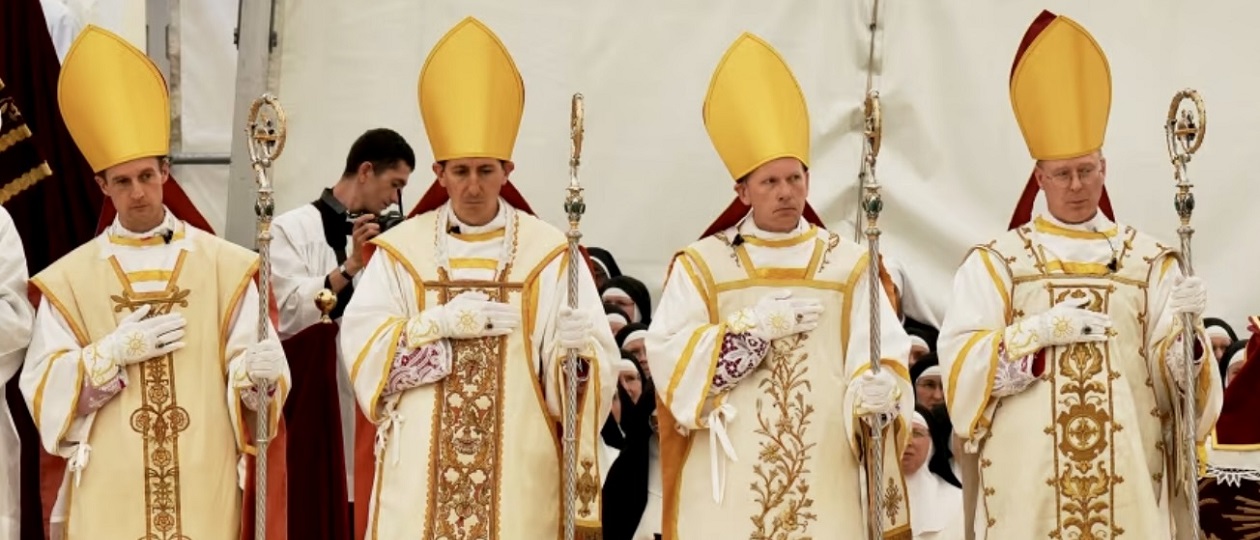
The Catholics of Europe’s most conservative Catholic society have now officially been declared schismatics.
The conflict between the Holy See and conservative Catholics around the world has been simmering for decades. It intensified under Pope Francis, who, in the view of Catholic traditionalists, pushed the liberalization of Vatican policy too far. Conservative Catholics in the United States, in particular, frequently clashed with the pontiff. Pope Leo XIV inherited this situation from his predecessor.
Another persistent challenge for the Vatican has been the various societies and fraternities that emerged after the Second Vatican Council, during which numerous church reforms were adopted. These included a reform of the liturgy, new approaches to interpreting Sacred Scripture and Sacred Tradition, a strong emphasis on ecumenism, and the first steps toward a more liberal social policy.
Schismatics
In response, conservative Catholics quickly began forming organizations dedicated to preserving what they regarded as the Church’s sacred traditions. In the media, such priests and laypeople came to be labeled “ultra-Catholics.”
One such organization is the Society of Saint Pius X (SSPX), an international priestly fraternity founded in the 1960s by Archbishop Marcel Lefebvre.
The society has branches in Switzerland (its headquarters), France, Germany, and Austria. It also maintains chapels in Moscow and St. Petersburg. Beyond theological disagreements, the Holy See and the Society have had several major points of contention, the most significant being the consecration of bishops.
It was over this issue that, on July 2, 2026, Pope Leo XIV officially declared the Society of Saint Pius X to be in schism, excommunicated its bishops, and declared the sacraments they administer to be invalid.
Formally, under the Code of Canon Law, the consecration of a bishop requires the participation of three other bishops. However, the Vatican also insists that such consecrations must receive the explicit approval of the Pope. Fierce disputes have long centered on this requirement. The Holy See explicitly prohibited the Society from consecrating bishops because it repeatedly ignored the requirement to obtain papal approval. Nevertheless, on July 1, the Society proceeded to consecrate four new bishops, openly defying the Vatican and justifying its actions as “necessary for the defense of the true faith.” Pope Leo XIV’s declaration of schism and the excommunication of the Society’s bishops followed shortly thereafter.
At present, the Society reportedly has six bishops (or ten if the four consecrated on July 1 are included), 751 priests, 264 seminarians studying in five seminaries, 145 religious brothers, 88 oblates, and 250 nuns representing 50 nationalities. Several thousand laypeople also belong to the Society’s Third Order.
The Society is therefore relatively small, but its members are highly influential. The key question now is what comes next: will the Society remain a small sectarian movement, or will the current schism gain support from other Catholic traditionalists?
The Holy See faces a difficult choice: either continue following the broader liberal trends prevailing in Europe—and, more generally, across the West—or take a more confrontational stance toward the secular authorities of the European Union and the global liberal establishment. For some time, the Vatican managed to balance between these two paths, but it now appears that the window for maintaining that balance is rapidly closing.
 Sergey Stankevich
 Yuri Chekalin
 Kamil Askerkhanov