 Yaroslav Listov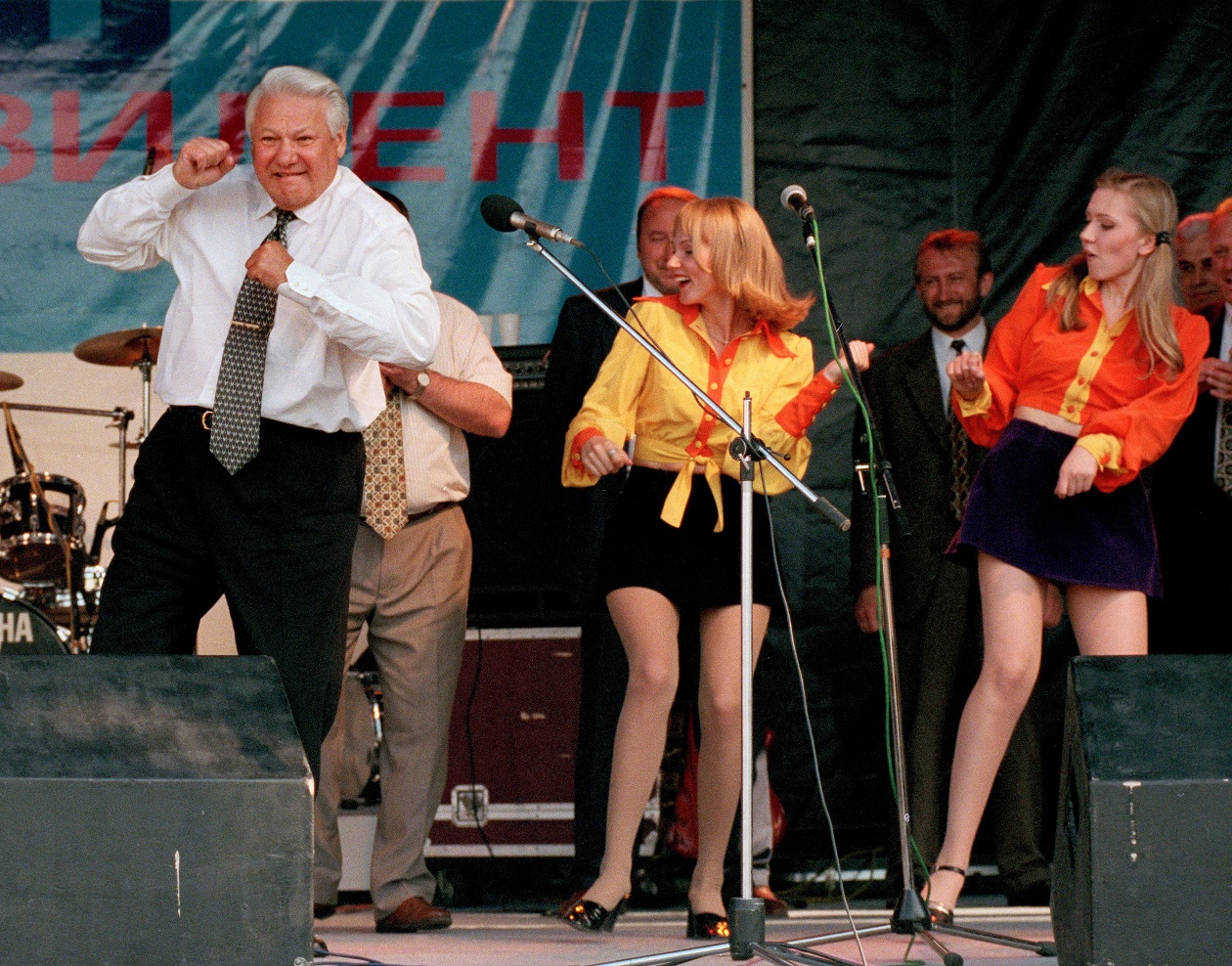
“If We Have to Elect a Body, We’ll Elect a Body”: Yeltsin’s Heart Attack and How the Truth Was Hidden from the Country.
On June 26, 1996, one week before the second round of the presidential election, Boris Yeltsin suffered his fifth heart attack of the year—the result of heavy drinking and the “jumping and dancing” that accompanied his election campaign. Returning to his country residence at around 5 p.m., he suddenly felt a sharp pain:
“It was as if someone grabbed you under the arms and carried you away… And then the pain struck. A tremendous, overwhelming pain.”
There could be no question of addressing the nation: in an instant, the president disappeared from television screens.
President had simply “caught a cold”
Yeltsin’s team decided to conceal what had happened. On June 28, he was unable to open the scheduled All-Russian Conference of Agricultural Workers, and Viktor Chernomyrdin did so in his place. The presidential press service announced that the president had simply “caught a cold.” Archived footage, pre-recorded material, and fabricated interviews were put into circulation.
The piano and beds were removed from Yeltsin’s house, and the medical equipment was hidden so that an interview could be filmed in his “office” on June 30. Television host Alexander Lyubimov cynically remarked:
“Well, if we have to elect a body, we’ll elect a body.”
Yeltsin’s next public appearance came only on July 3, at the Barvikha sanatorium, where a mock polling station had been built for him. Barely able to move, he managed to drop his ballot into the box before disappearing again until the inauguration. The inauguration itself, on August 9, lasted only sixteen minutes instead of two hours, while his speech lasted just forty-five seconds.
Yeltsin’s campaign headquarters did everything possible to keep the truth about his health from reaching the media. Above all, they feared that Gennady Zyuganov would reveal the heart attack on live television. The Communists had been allocated airtime on ORT and planned to broadcast a film by Stanislav Govorukhin about possible electoral fraud.
Anatoly Chubais demanded that Konstantin Ernst keep Zyuganov off the air at any cost:
“Use whatever excuse you want—step on his foot, tell him the key broke, say there’s no equipment, anything.”
That evening, Zyuganov and his associates arrived at the Ostankino television center. Thirty-five-year-old Ernst declared that there would be no broadcast, claiming that the airtime allocated by the Central Election Commission was enough for only half of the program and that the remaining half had not been paid for, although Zyuganov’s aide insisted that payment had been made for the entire ten minutes.
Ernst lied and evaded, but refused to air the program. (Later, he would invent numerous stories portraying himself as a hero—from the tale of “Goryacheva’s ring” to a phrase allegedly spoken by Govorukhin in an elevator occupied only by himself and Zyuganov, though the omnipresent Ernst somehow heard that conversation as well.) Thus, the airtime legally allocated by the Central Election Commission was taken away from a presidential candidate.
Zyuganov later said:
“…the main thing is that the country was deprived of its right to know the truth about the condition of the man seeking the highest office.”
After the election, Yeltsin’s health deteriorated rapidly. On November 5, 1996—just three months after the inauguration—he underwent coronary artery bypass surgery. Doctors estimated his chances of survival at fifty-fifty. During the operation, his heart was disconnected from circulation for sixty-eight minutes. Presidential powers and the nuclear briefcase were transferred to Chernomyrdin, and Yeltsin did not return to work until early 1997. His rehabilitation lasted until December 23.
In essence, Yeltsin spent most of his second presidential term in hospitals.
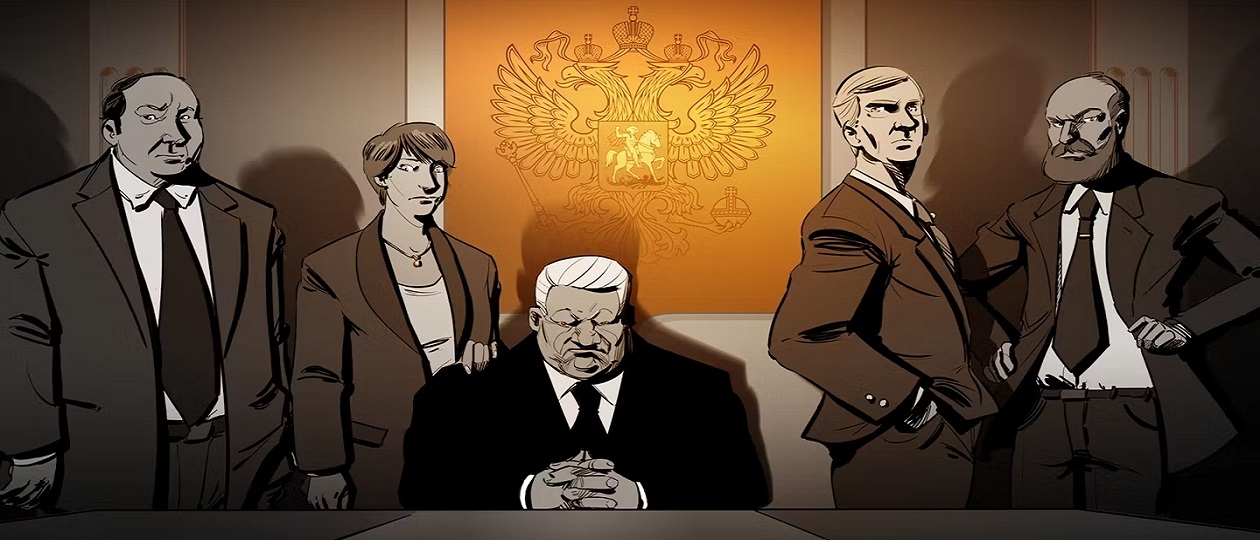
Beginning in the early 1990s, he was hospitalized more than ten times. In 1997, he was admitted with suspected pneumonia and an acute respiratory viral infection. In 1998, he suffered from tracheobronchitis and pneumonia. In 1999, he was hospitalized with a bleeding stomach ulcer and influenza. The president for whom 108 million citizens had voted was physically incapable of governing the country, while power passed to the infamous “Family” and the oligarchs.
 Dmitri Drobnitsky
 Kamil Askerkhanov
 Sergey Stankevich