 Vladimir Morozov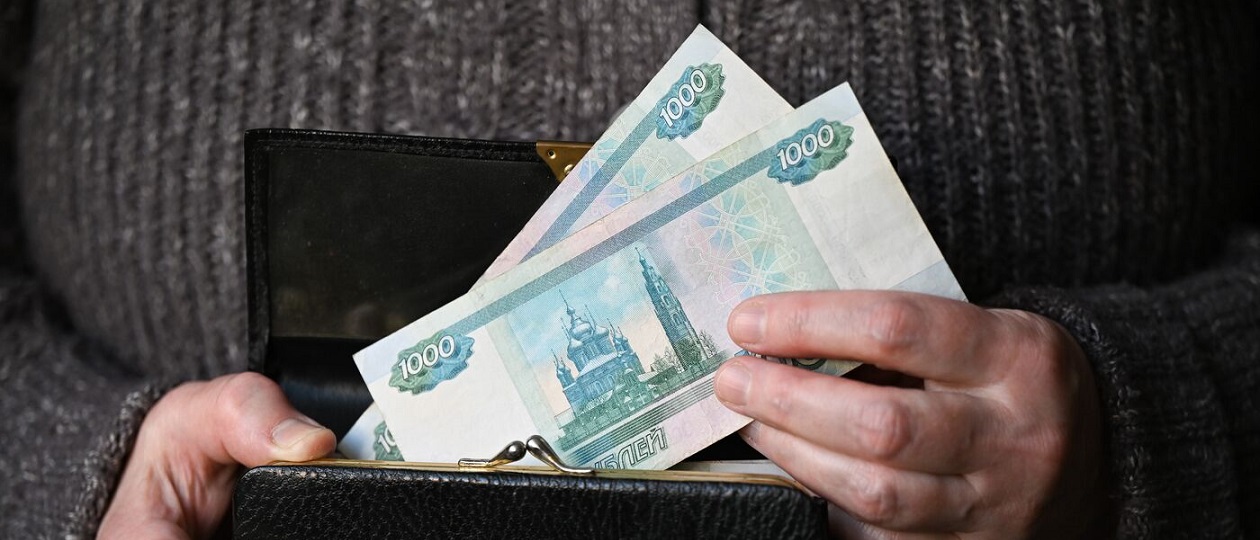
Real income growth is happening! Citizens are wondering who exactly is getting it.
“Dear Russians”—especially those who regularly read or listen to Rosstat or Central Bank reports—know well that citizens’ real incomes have been growing at a breakneck pace for five years in a row. There’s no escape. Russians no longer know what to do with this income: what they can is stuff it into deposits, the rest is stuck in barrels to pickle.
Consequently, the head of the Central Bank is very wary of lowering the key rate, as it’s obvious to everyone (certainly at the Central Bank and Rosstat) that if this happens, the money supply, crashing through store doors, will flood the streets of Russian cities and sweep away the domestic economy, burying the “strategic stability” so hard-won by the liberals.
As it turns out, despite either the “cooling economy” or “negative growth,” the population is facing a sixth year of income growth. What can be done? Russian salaries will rise sharply again in 2026. As United Russia State Duma Deputy Tolmachev explained, the increase is expected in several areas simultaneously.
First: the minimum wage will increase from January 1 to a staggering 27,093 rubles (USD342), which will affect all public sector employees and lead to an increase in sick leave and benefit payments directly linked to the minimum wage. So what? Isn’t an extra couple thousand rubles a month worthless? Just don’t tell anyone on Neglinnaya Street.
Second: public sector employee salaries will be indexed by almost 8%. While many public sector organizations may automatically reduce bonuses by this difference, the main thing is not to disturb Rosstat.
Third: wage increases in the private sector, where incomes are also expected to increase due to a labor shortage, forcing employers to compete for specialists. No comment here at all. Of course, that’s how it is. Any skilled worker, capable of creating and developing, who has been unable to find a decent job for years, will confirm that employers are lining up for them.
And isn’t that an argument in general? It’s certainly no worse than the head of the Central Bank, who believes that financial authorities are purposefully and successfully building a mechanism whereby income growth outpaces price growth.
It’s just a shame that the average gross salary that increased over the past year (from 84,000 rubles (USD1,060) in September 2024 to 96,000 rubles (USD1,211) in September 2025) hasn’t reached the pockets of practically anyone—those same school teachers, university professors, doctors, museum staff, scientists, and the other tens of millions of other public sector employees mentioned above. Well, maybe if you don’t count those who work two full-time jobs to earn that average gross salary.
 Robert Reich
 Vitaly Golovkov
 Michael Mozzhechkov