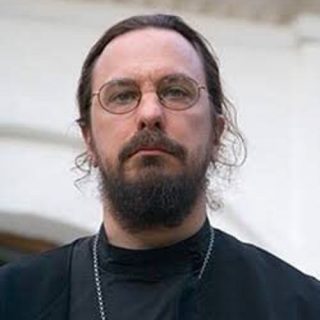
 Prot. Victor Harakas
I think that we can say with confidence that Jesus’ teaching regarding the Kingdom of God excludes the idea and practice of wars among nations.
This means that measured against the teaching of Jesus in which people are to live in harmony with God and in love and harmony among each other, that the killing, maiming, destruction, horror and evil which is war does not fit the idea of “kingdom living.”
Everyone who is a follower of Jesus prays, “thy kingdom come, thy will be done, on earth as it is in heaven.”
Our goal and desire is Jesus’ goal — peace and harmony among all people.
Jesus’ teaching about not returning evil for evil, about returning good for evil, about leaving retribution to God, is a very practical and down-to-earth way precisely, of reducing occasions of conflict on the personal, the group and even the international level.
In fact, if you think about it, we often comply, with His teaching in conflict situations, “making space,” for others, compromising, restraining our impulse to retaliate, etc. And we find that often Jesus’ teaching reduces conflict and opens opportunities for understanding.
If we seek opportunities precisely to “turn the other cheek,” to “not return evil for evil,” and yes, even to “return good for evil,“ we frequently become agents for reconciliation, and bring about peaceful solutions for situations which otherwise could cause serious conflict and continued antagonism.
We realize, however, that Jesus’ teaching presupposes at least the possibility that our opponent, or the enemy who seeks to do us harm, is open to dialogue or influence.
What happens, however, if the enemy is intent on attacking us, regardless of what we do?
It is clear that Jesus would have us suffer injustice, rather than commit it.
At the same time we see Jesus at His trial before Pilate and the High Priests, especially, seeking some explanation for the injustice being perpetrated against Himself.
If we are attacked, whenever and wherever possible, we are to seek ways to peacefully influence our enemy to change and to deal with us righteously.
Where we cannot, the most which we can do, in the spirit of the Kingdom, is to defend ourselves, without seeking to harm the other beyond what is necessary to stop the attack.
This becomes all the more an obligation when we are responsible to defend the innocent lives of others.
Nevertheless, the ethic of Jesus does not focus on the rights of self-defense, but rather on the seeking of peace, the establishment of justice and righteousness in human relationships, and the resolution of disputes through concern about the other.
Violence, war, insurrection, revolution, etc. are indicators of a failure to live the “kingdom life.”
They always fall short of what is good. When the situation reaches that point, we recognize that we are simply struggling to survive, but that it does not and cannot represent what God really wants from us.
It may be necessary that criminals be captured and jailed. It may be necessary that wars be fought. It may be necessary that revolutions be waged. No matter how much we may want peace, it may not be possible to maintain it if our neighbor is intent on war. But war can never be our goal, it can only be a falling away from our goal for which repentance is the only appropriate response.
Especially, as we find ourselves facing the terrible possibility of nuclear destruction, the Christian approach takes on great relevance.
We simply cannot and must not allow nuclear war to happen, for it means the destruction of the world.
There are many approaches to this issue, some quite controversial. It is not within the competency of the Church to determine which is the “right” political solution — only to constantly and persistently remind civil leaders that nuclear war is a totally unacceptable alternative to international conflict.
In practice, Christians will strive always to be “peacemakers” seeking to make peace a priority.
 Paul Sadchikov
 Alexander Rimov
 Kirill Benediktov