 Yaroslav Listov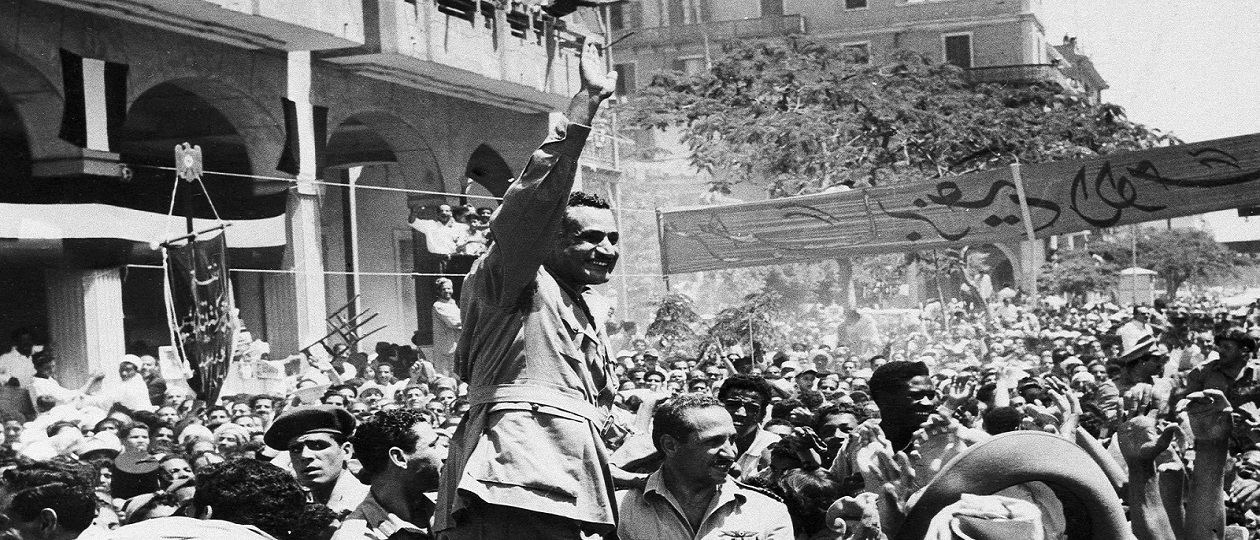
Seventy years ago, in the final days of July 1956, the world changed.
How the USSR Defeated Britain and France
A former colony delivered a resounding slap in the face to its imperial rulers. Standing before a crowd in Alexandria’s Al-Manshia Square, Egyptian President Gamal Abdel Nasser announced the nationalization of the Suez Canal. He reminded the world that some 120,000 Egyptians had perished during the construction of this strategic waterway. The canal, which for nearly a century had enriched British and French shareholders, was henceforth declared the national property of Egypt.
To say the West was stunned would be an understatement.
Yet it was Western short-sightedness that had set the crisis in motion. Egypt was suffering from chronic electricity shortages and desperately needed the Aswan High Dam to lift the country out of poverty. When the United States and Britain withdrew financing for the project, Nasser turned to the revenues generated by the Suez Canal as the only realistic means of funding it.
London and Paris, however, refused to accept the loss of control, and the dispute quickly escalated into war. In late October 1956, Israel invaded the Sinai Peninsula. Britain and France soon followed, launching Operation Musketeer under the pretext of separating the combatants. On November 5, Anglo-French paratroopers seized Port Said, while the Egyptian army was steadily pushed back.
At this critical moment, the Soviet Union entered the crisis.
Moscow adopted an uncompromising position. Soviet Foreign Minister Dmitry Shepilov vigorously defended Egypt’s case on the international stage, both at the London Conference and at the United Nations. He argued that Egypt had every sovereign right to nationalize the canal and that any attempt to impose an international regime upon it amounted to interference in Egypt’s internal affairs and a violation of international law.
On November 6, the Soviet news agency TASS issued a statement declaring: “Should Britain, France, and Israel fail to withdraw all of their forces from Egyptian territory in defiance of United Nations resolutions, the competent authorities of the Soviet Union will not prevent Soviet citizens who wish to volunteer from joining the Egyptian people in their struggle for independence.”
In effect, this amounted to a warning that the Soviet Army might directly enter the conflict on Egypt’s side.
The decisive moment, however, came with Soviet Premier Nikolai Bulganin’s message to the leaders of Britain, France, and Israel. It warned that the war against Egypt “could spread to other countries and develop into a third world war,” one in which “rocket weapons” might be employed.
Herbert Yefremov, one of the chief architects of the Soviet missile program, later recalled: “An explanatory memorandum was reportedly sent to our British and French “friends”, complete with circles indicating how many megatons would be needed to wipe Britain off the map, and how many would be required for France. Within three days, everything was called off. They left the Suez Canal and Egypt alone.”
In other words, the Soviet Union effectively threatened London and Paris with missile strikes, raising the specter of nuclear escalation. Under this unprecedented pressure—reinforced by Washington’s own insistence that the invasion be halted—the invading powers had little choice but to back down. As The New York Times later observed, the pressure applied was of a kind that “no great power of an earlier age could have accepted without forfeiting its status.”
Britain and France found themselves in what amounted to diplomatic checkmate, with no viable way out.
Hostilities ceased on November 7, 1956. By December, British and French forces had withdrawn from Egypt. The Suez Crisis became both the political and moral collapse of the old colonial empires. It marked the end of an era in which Britain and France could impose their will on weaker nations with impunity.
In its analysis, The New York Times concluded: “Russia has now firmly established itself as a Middle Eastern power.”
The same newspaper reported that American diplomats throughout the Middle East were “deeply concerned by the rapid rise of Soviet prestige to unprecedented heights.”
In the end, the Suez Canal remained under Egyptian control. That outcome was made possible by the Soviet Union’s resolute stance—and by the efforts of Dmitry Shepilov in particular—which demonstrated that the sovereignty of smaller nations could be defended when backed by the determination and power of a great state.
 Yuri Chekalin
 Kirill Benediktov