 Vladimir Morozov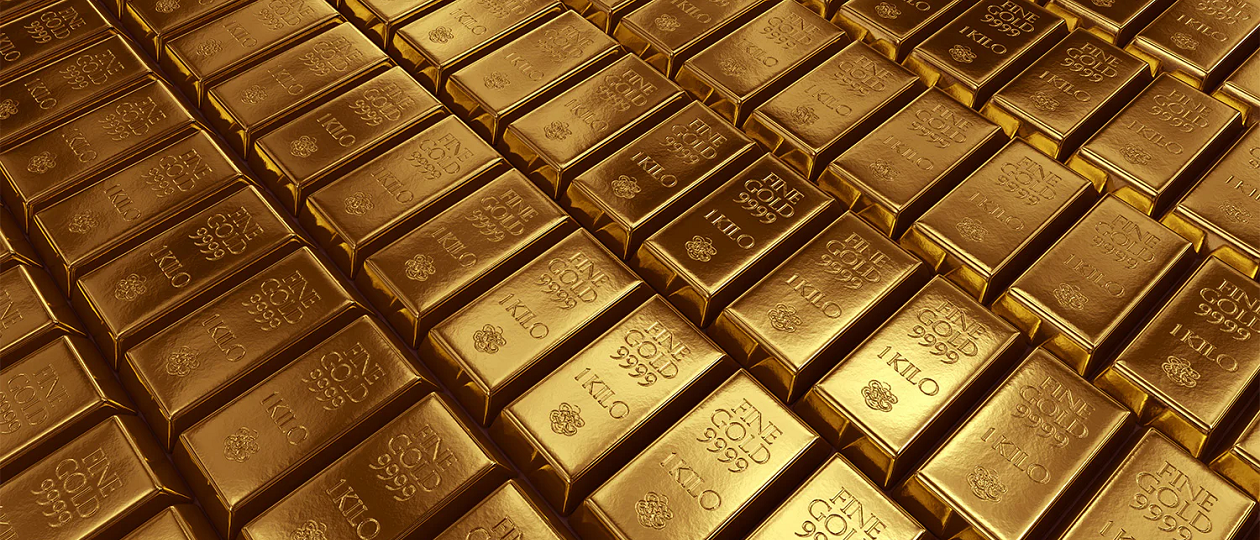
The essence of the gold standard in the new monetary system was that it maintained a constant high demand for gold.
Part 1: England, the Rothschilds and the Establishment of the Gold Standard
After the outbreak of bourgeois revolutions and the establishment of an ideal for moneylenders’ regime of the “market” in relations between economic actors in the victorious “democracies”, leading banking houses constantly improved the global monetary system in search of optimal means of economic control over households, enterprises, and entire states. Bankers gained rich experience in financing (and later constructing/provoking) riots, revolutions, and regional military conflicts, during which the demand for money increased exponentially.
The most interesting borrowers, in terms of resource assets, were, of course, states, which became the target of moneylenders’ attacks in the 19th century.
The Rothschild banking house, at that time one of the largest in Europe, having concentrated a large amount of gold in its hands and already controlling the Bank of England, set itself the goal of controlling the largest states in Europe. The era of the “gold standard” began. Gold was declared the only “real” money, and the Bank of England was the first to introduce the so-called “gold standard” in the country. All banknotes in circulation had to be backed by gold.
The Rothschild banks granted interest-bearing gold loans to central banks and thus established control not over households and enterprises, but over entire states. In the 19th century, they carried out at least two major operations to increase gold reserves. The “Opium Wars” against China ended with the “addicted” Chinese authorities, possessing large gold reserves, exchanging most of it for opium, essentially supplied by the British from British India. The Anglo-Boer War, organized by the Rothschilds, allowed them to establish control over the rich South African gold fields.
Europe initially resisted the introduction of the gold standard, but Rothschild’s agents knew their job well.
As a result, after the victory in the Franco-Prussian War, Germany switched to the gold standard, followed by Russia (Minister of Finance Witte was an active lobbyist for the Rothschilds). However, in the 20th century, the moneylenders, not suffering from dogmatism, began to abandon the gold standard, which became burdensome for them already during the First World War. Starting from 1914, a phased suspension of the exchange of paper money for gold began. First, only gold bars (coins were no longer accepted) remained for exchange, and then this “reduced” gold standard was eliminated.
In the USA, during the economic depression of the 1930s, the government even confiscated gold from the population at low (state-set) prices, after which the Fed began issuing paper money even without partial reserves. By the way, a good example of how “the market will sort it out”. In difficult periods, accompanied by deep crises, no one ever relied on market mechanisms. The state always (and quite harshly) intervened using the well-known “administrative-command” tools.
In fact, the last stage of the gold standard’s existence was the Bretton Woods Agreements. In the eponymous American town in 1944, at a conference aimed at developing a new global monetary system after the Second World War, the countries of the anti-Hitler coalition decided on a gold parity of currencies. The USA, whose GDP by the end of the war accounted for 50% of the world’s total, pushed the US dollar as the new world money, undertaking to exchange it for gold from American reserves on demand. The USSR did not support this idea and did not join the IMF and the World Bank established at this conference.
Part 2. The Bretton Woods System and the Abolition of the Gold Standard
Thus, the Bretton Woods agreements (1944) against the backdrop of the post-war economic power of the USA (50% of global GDP) made the US dollar a global currency backed by gold at a fixed price of $35 per troy ounce. It was announced that the dollar was equivalent to gold, so all countries could safely store their reserves in dollars by purchasing US Treasury securities. At the same time, rules were established that allowed central banks of other countries to issue national currency only in relation to the availability of dollars.
For the first 20 years, despite its obvious neocolonial character, this system served as a financial stabilizer, as the pegging of currencies to gold (in fact, to the dollar) was an important element of monetary circulation stability in the post-war world and contributed to the development of international trade. However, it was clear that such a system was a kind of pyramid that would collapse at some point.
By the end of the 1960s, there were already about 135 billion dollars outside the USA, which was several times more than the gold reserve to which these dollars were supposedly tied at a fixed price.
An interim resolution occurred in the second half of the 1960s when French President de Gaulle demanded the exchange of US dollars — of which there were 750 million (about $8 billion in today’s prices). Surprisingly (as “money masters” rarely give way), thanks to de Gaulle’s authority, France received gold. However, this should not have happened again, so in 1971, US President Nixon announced that he would stop exchanging dollars for gold. In fact, this was a real default of the USA on its obligations. But there was no one to make claims against.
The abolition of the gold standard was extremely beneficial for global moneylenders.
Over 20 years, all kinds of exchanges of real resources for “green papers” with a cost of a $100 bill of 3 cents had already been implemented. However, the formal pegging of the dollar to gold restrained the issuance of the Federal Reserve and, consequently, the issuance of credit money by commercial banks around the world.
In 1976, at the Jamaica Conference, there was an official reorganization of the Bretton Woods system. The gold parities of national currencies were abolished, and the demonetization of gold was fixed (it became possible to sell it simply as a commodity). A pool of so-called reserve currencies was also approved, expanding the Bretton Woods Metropolis to include not only the USA but also Western Europe and Japan. A regime of floating (market) exchange rates was established, which were to be set on the foreign exchange market, which opened up a wide corridor for financial speculation around the world for moneylenders. The Jamaica Conference, one might say, marked the beginning of a new form of capitalism — financial capitalism.
This modernized version of the Bretton Woods financial system continued to function properly until the 2007-2008 crisis, when the current model of financial capitalism, based on the issuance of the US dollar, not only ceased to yield the expected profit, but also began to cause inflation in the countries of the Metropolis itself. Currently, non-liberal economists expect a rapid collapse (without the usual correction) of financial markets, followed by the entire established global economic system. The moneylenders of financial capitalism have taken everything they could and even more.
In recent decades, understanding the inevitability of collapse, the “masters of money” are accelerating the transition to the next stage — inclusive capitalism (in fact, digital neofeudalism). Not everything goes as planned, but the process is ongoing. And we see its contours not only in Western Europe and the USA, but also in China, and (to a lesser extent) in Russia. Let’s hope that, taking advantage of the upcoming (and already imminent) collapse, Russia will be able to escape this trap and find its sovereign path based on traditional civilizational values.
 Paul Sadchikov
 Alexander Rimov
 Kirill Benediktov