 Victor Aliyev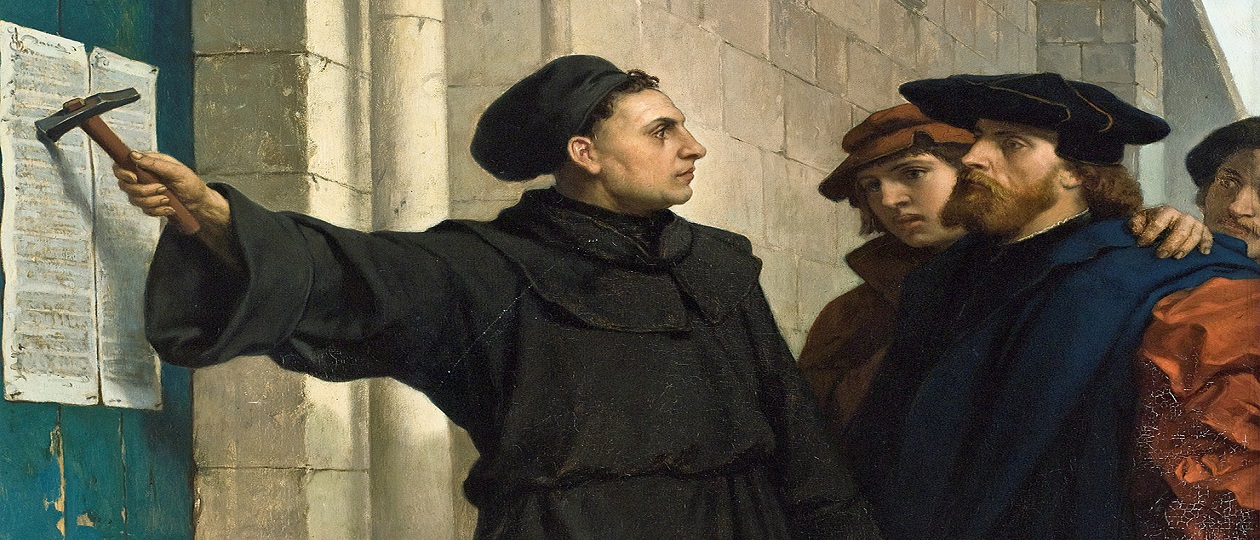
Today, the word charisma is everywhere. We use it for anyone who knows how to command a television camera, electrify a crowd, or win an election.
But in classical sociology, charisma means something far more powerful than charm—and far more dangerous than a magnetic personality.
Charisma is a bond between a leader and his followers.
It tends to emerge in moments of crisis, when old institutions lose their authority and familiar rules no longer seem capable of holding society together.
The Italian sociologist Luciano Cavalli described personal charisma as a form of trust born in times of upheaval.
Under such conditions, a forceful individual may do more than lead. He can shape new values, create a vision of the future, and redefine what society considers possible. Robert Michels, writing about political leadership, spoke of a “charismatic direction of public affairs”—a form of rule rooted in society’s desire for a heroic figure who can embody its collective will.
Both thinkers were building on the work of Max Weber. For Weber, charismatic authority exists because followers believe that a leader possesses extraordinary qualities and a special mission. It is, by nature, outside the ordinary. It does not rest entirely on tradition or impersonal law. In fact, it often rises by challenging both.
But charisma cannot remain pure forever. If a movement survives its founder, it needs successors, offices, rules, money, and an administrative structure. Weber called this process the “routinization of charisma.” Personal devotion hardens into a church, a political party, a government, or a bureaucracy. The age of the prophet gives way to the age of the institution.
The Prophet Before Luther
Before Martin Luther, Girolamo Savonarola offered an almost textbook demonstration of this pattern.
In the 1490s, the Dominican friar emerged as prophet, public accuser, and spiritual leader in a Florence shaken by political and moral crisis. He warned of approaching judgment, denounced the luxury of the clergy and the ruling elite, and called upon the city to purify itself. After the Medici were driven from Florence, Savonarola became the republic’s moral center.
His influence did not come from public office. It rested on the belief that he had been entrusted with an extraordinary mission.
Savonarola understood the growing power of print, but his movement remained inseparable from his personality. It never developed a durable institutional foundation. When the political climate shifted and confidence in the prophet began to collapse, his charismatic authority collapsed with it. Savonarola was executed in 1498, and the movement built around him did not long survive its founder.
His fate revealed a fundamental weakness of charismatic leadership. A powerful voice can awaken a society, but without organization it rarely creates a lasting order.
That is what makes Martin Luther’s story so revealing. Seen through the same lens, Luther was not Europe’s first charismatic leader. He was one of the most successful charismatic leaders of the early modern world.
A Crisis Waiting for a Voice
Luther entered history during a profound crisis of religious authority. Anger over abuses within the Church, controversy surrounding indulgences, rising literacy, renewed interest in Scripture, and the ambitions of secular rulers had created an explosive atmosphere. The Holy Roman Empire remained politically fragmented, while the printing press could now carry an argument farther and faster than ever before.
Yet a crisis does not automatically produce a leader. Luther gave scattered discontent a voice—and a direction.
He wrote with force, clarity, and an accessibility rare among the scholars of his time. His pamphlets spoke not only to theologians, but also to townspeople, priests, princes, and educated lay readers. He did not merely attack isolated abuses. He challenged the Church hierarchy’s claim to hold a monopoly over religious truth and salvation.
In this sense, Luther behaved like a classic charismatic leader. He was not proposing another adjustment to the old order. He offered a new vision of religious life: the personal responsibility of the believer, the supreme authority of Scripture, and faith as the central condition of salvation.
His authority did not depend primarily on the office he held. It rested on his followers’ belief that he had a mission. In the emerging Protestant world, Luther was portrayed as the man chosen to bring the hidden light of the Gospel back into view. He was no longer merely a professor at the University of Wittenberg. He had become a prophetic figure.
The Printing Press Multiplies a Man
What made Luther different was the new information world in which he operated.
The printing press did not create the Reformation, but it amplified Luther’s voice beyond anything earlier reformers could have imagined.
German-language texts, inexpensive pamphlets, sermons, translations, and woodcuts made him recognizable far beyond Wittenberg. Luther stood at the center of one of the first great media campaigns in Western history.
But it would be a mistake to reduce the Reformation to the triumph of one heroic man. Its spread depended on trade routes, urban networks, university connections, traveling preachers, printers, and the protection of territorial princes. Luther’s charisma became the movement’s rallying point, but charisma needed an infrastructure.
Even the most powerful voice cannot become a force in history unless someone is willing to print it, protect it, carry it from city to city, and turn its message into practice.
The later history of the Reformation offers an almost perfect example of charisma becoming routine. The original challenge to Church authority gradually took shape as new churches, formal statements of faith, systems of education, and alliances between religious and secular power. Luther’s personal authority survived him—but now in the form of the Lutheran tradition.
The prophet became a symbol. The movement became an institution.
From the Hero to the State
The same pattern appears far beyond religion. Political history repeatedly shows charismatic leaders emerging from crisis, only to see their personal authority transformed into a new order.
The French Revolution destroyed the old political system, while the weakness of the Directory opened the way for Napoleon. Military glory and the promise of order made him a national figure. But the imperial administration, the prefects, and the Napoleonic Code represented something more permanent than personal charisma. The hero was becoming the state.
Lenin rose amid world war, the collapse of the Russian monarchy, and the disintegration of the old sources of legitimacy. His immense authority within the Bolshevik Party helped turn a radical program into a successful struggle for power. Yet the Soviet party-state began taking shape during Lenin’s lifetime. After his death, his image was transformed into a permanent source of official legitimacy. The revolutionary leader became both a political cult and a component of the state machine.
Charles de Gaulle returned to power in 1958, when the Algerian crisis had pushed France’s Fourth Republic toward paralysis. He appeared as a national savior, but his most enduring legacy was not his personal legend. It was the Fifth Republic and its powerful presidency—a political structure that continued to function after he was gone.
Winston Churchill reveals another side of charisma: its dependence on circumstance. In 1940, his speeches and determination helped turn resistance to Nazi Germany into a national moral imperative. But in the 1945 general election, the charisma of a wartime leader was no longer enough. British voters were thinking not only about victory, but about the kind of country they wanted after the war.
Churchill had not simply lost his personal popularity. The public need to which his leadership had responded was changing.
Nelson Mandela, by contrast, shows that the routinization of charisma does not have to lead toward authoritarian rule. His moral authority played a crucial role in South Africa’s transition from apartheid to democracy. But the survival of that transition could not depend on a single man. It required elections, a constitution, courts, and institutions of reconciliation.
Charisma helped open the door. Only institutions could keep it open.
The Dark Side of Charisma
This mechanism also has a darker history.
Mussolini and Hitler rose in societies traumatized by war, fear, humiliation, and the collapse of public trust.
Their regimes turned devotion to the leader into mass ritual, then embedded it in political parties, propaganda systems, secret police forces, and bureaucracies of persecution and mass murder.
The theory of charismatic leadership is therefore not a celebration of the “strongman.” It is a way of understanding why faith in a supposed savior can lead either to liberation or catastrophe.
In the modern world, charisma is increasingly manufactured through media. John F. Kennedy, Ronald Reagan, Barack Obama, Donald Trump, and Emmanuel Macron spoke to different societies and offered very different political programs. Yet each attempted to attach his name to the promise of a historic break: a new frontier, the restoration of national greatness, change, rebellion against the system, or an escape from the old partisan divide.
But a compelling image does not guarantee a lasting legacy. Sometimes charisma is converted into rules, organizations, and institutions. Sometimes it remains little more than a powerful electoral technology.
Was Luther the First?
Was Martin Luther the first charismatic leader? Certainly not. History had known prophets, warlords, and popular heroes long before the 16th century, and Savonarola was Luther’s most immediate predecessor.
But Luther can be described as the first truly successful charismatic leader of the printing age. His personal mission achieved unprecedented reach through a new form of mass communication—and then survived him in durable institutions.
In Luther, several forces came together at once: a crisis of authority, an extraordinary personality, a message ordinary people could understand, a revolutionary communication technology, and a movement capable of organizing itself.
Charisma can set history in motion. It cannot, by itself, secure the future.
It either burns out with the crisis that created it, destroys the world it promised to remake, or hardens into a new order. After the prophet comes the church official. After the hero comes the apparatus. After the revolution comes either a constitution or a dictatorship.
The final question is not how brightly the leader burned. It is what survives after the flame is gone: the freedom he proclaimed—or merely the power he created.
 Kamil Askerkhanov
 Robert Reich