 Dmitri Drobnitsky
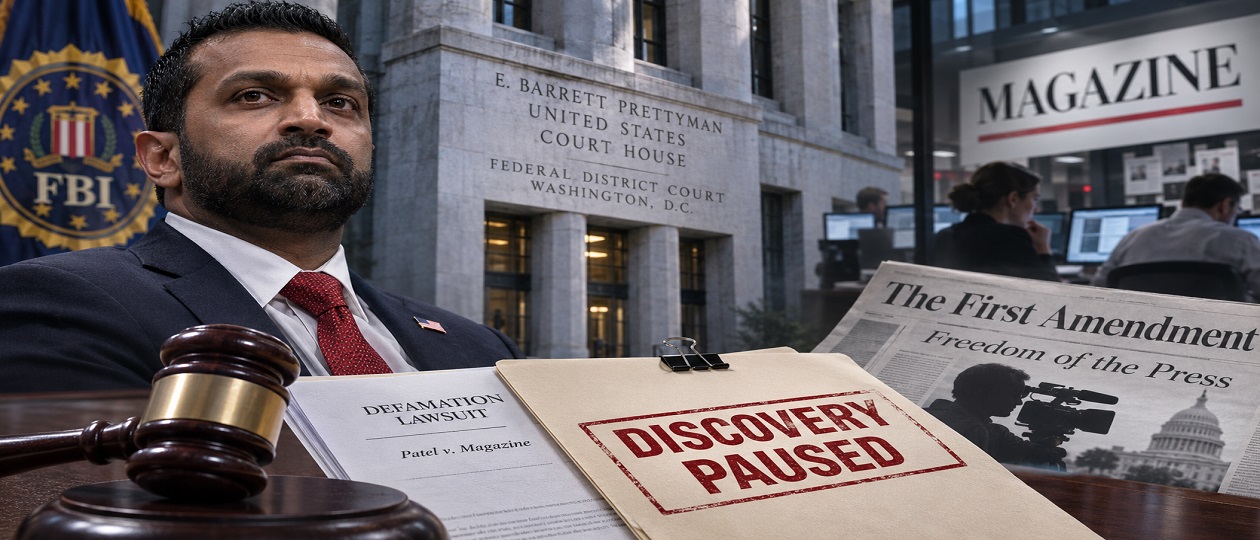
A federal judge has temporarily blocked most evidence-gathering in FBI Director Kash Patel’s $250 million defamation lawsuit against The Atlantic, citing First Amendment concerns and the possibility that the case could be dismissed before extensive discovery becomes necessary.
The ruling, issued on November 10 by U.S. District Judge Emmet Sullivan in Washington, D.C., prevents Patel’s legal team from demanding information about the magazine’s reporting and editorial processes while the court considers a pending motion to dismiss the lawsuit.
However, the judge has allowed both parties to seek government records through established federal procedures.
Court Moves to Protect Journalistic Sources
Sullivan ruled that discovery should be suspended at this stage because of legitimate First Amendment concerns raised by the defendants and the possibility that further evidence-gathering may prove unnecessary.
The magazine had argued that allowing the FBI director access to its internal reporting materials could compromise confidential sources and potentially expose them to retaliation.
The judge agreed that proceeding with discovery could substantially prejudice the publication.
The decision is a procedural victory for The Atlantic, although it does not resolve the underlying defamation allegations.
It also temporarily limits Patel’s ability to obtain evidence concerning the magazine’s knowledge and intentions when it published the disputed article. Such evidence could be relevant to establishing actual malice, the demanding legal standard applicable to defamation claims brought by public officials.
Allegations of Excessive Drinking
The lawsuit stems from an April 17 article by The Atlantic journalist Sarah Fitzpatrick, which alleged that Patel’s excessive drinking and unpredictable behavior had interfered with his responsibilities as FBI director.
Citing more than two dozen current and former officials, the publication reported that Patel had frequently been absent from scheduled meetings and was sometimes difficult to reach.
The article also described alleged incidents in which staff members had difficulty waking Patel following nights of heavy drinking.
According to the report, his behavior had raised concerns within the FBI and the Justice Department about his ability to manage the agency effectively.
Patel categorically denied the allegations and filed a defamation lawsuit against the magazine and Fitzpatrick on April 20, seeking $250 million in damages.
The publication has stood by its reporting and maintains that the lawsuit is without merit.
The Atlantic Can Seek FBI and Justice Department Records
While suspending most discovery, Sullivan made an important exception.
Both sides may continue submitting formal requests for government information under the federal Touhy procedures, which govern access to records and testimony from government agencies and employees.
For The Atlantic, this creates an opportunity to seek information from the FBI and the Justice Department that could help establish the accuracy of its reporting.
The magazine is seeking documents and other evidence relating to Patel’s alleged drinking, official travel, work schedule, personnel decisions, and conduct as FBI director.
Patel’s attorneys objected that the proposed requests were excessively broad, potentially extending to medical records, travel information, private club memberships, and internal personnel matters.
Sullivan rejected those objections at this stage, concluding that the defendants had adequately explained why the requests were necessary.
However, permission to submit the requests does not guarantee that the agencies will release the information.
Following the ruling, The Atlantic said its attorneys would immediately begin seeking documents and testimony from the FBI and the Justice Department.
The court has not yet ruled on the magazine’s motion to dismiss the lawsuit, nor has it determined whether the disputed allegations are true.
For now, Patel faces a significant procedural setback, while the publication has gained an opportunity to pursue government information that could potentially strengthen its defense.
Whether those records will provide additional evidence concerning the FBI director’s alleged conduct remains to be seen.
 Kamil Askerkhanov
 Yuri Chekalin