 Alexey Savvateev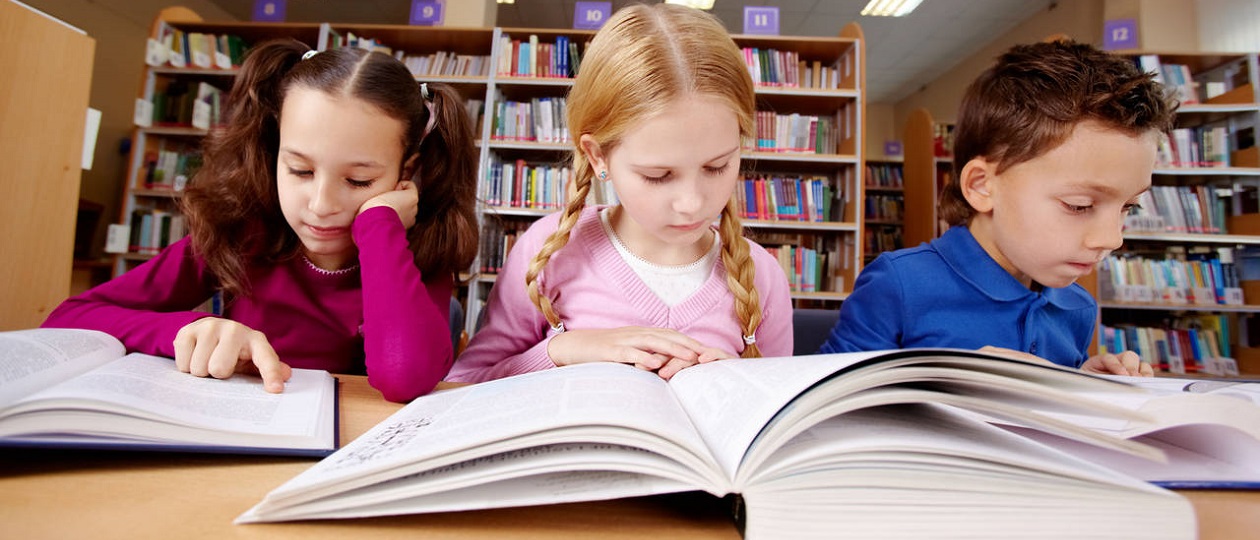
The fact that modern children read very little is hardly news. Everyone knows it. What fewer people fully appreciate, unfortunately, are the consequences.
In primary school, weak reading skills can still be explained away: children are young, after all. But by the beginning of fifth grade—and increasingly thereafter—it becomes clear that a significant number of students simply do not know how to work with a text.
A child may be able to read the words aloud without actually understanding what they have read.
They may be unable to retell a passage in their own words, identify its main idea, explain a character’s actions, or sometimes even give a coherent account, lasting more than a few minutes, of something they have just finished reading.
The same problem appears in writing. Many children struggle to produce a coherent text.
They find it difficult to formulate an idea of their own or arrange several sentences into a logical line of reasoning.
And then we tell this child: now we are going to study literature.
Not simply read books, but analyse works of fiction. Identify the author’s point of view. Determine themes and ideas. Characterise protagonists. Find literary devices. Write essays.
But how exactly is a child supposed to do any of this if they have not yet mastered the basic skill of working with a text?
There is an idea associated with the Russian educator Maria Rybnikova that I find particularly compelling: a great reader can grow only out of a small writer.
There is a great deal of common sense in this. Before demanding literary analysis, we need to give children the opportunity to talk about what they have read—to retell it, argue about it, ask questions, explain what they understood and why they think the way they do—and only gradually teach them how to turn those thoughts into written language.
Too often, we do the opposite. We demand the finished product before the basic skills required to produce it have even been developed.
The Vicious Circle
Now let us look at what, exactly, we ask children to read.
Open a textbook. First come a few paragraphs about the author’s life, often formulaic and of little practical use. Then an excerpt from a work, sometimes heavily abridged. A few pages of text followed by a list of questions.
But if a work is so long that it cannot realistically be read in full within the curriculum, why not choose a shorter work and let students read it from beginning to end?
Let the child actually finish a story. Let them find out what happened. Remember the characters. Discuss them. Perhaps even argue with the author.
Instead, introducing literature through a page and a half torn from a much larger work turns reading into a formality.
Perhaps the most revealing example is The Tale of Igor’s Campaign, studied in the seventh grade. A page and a half of text.
Why study it at all under those conditions? Simply to put a checkmark next to another title on the curriculum?
The child never really gets the opportunity to encounter the work as a work of literature. And this happens constantly. There are too many titles on the syllabus and too little time for each one. Instead of reading, students are sent on an endless race through names and titles.
One author today. Another tomorrow. A third the day after.
At best, the student retains a plot summarised in three sentences and a couple of literary terms.
And then we wonder why children do not read.
Of course, part of the problem lies with children themselves. They really do read less than previous generations. Many have little desire to search for a book on their own, wrestle with a difficult text, or finish something that fails to captivate them in the first few pages. There are smartphones, short videos, artificial intelligence, and an endless stream of information—all competing very effectively with books.
But reducing the entire problem to the idea that children are lazy and simply do not want anything is far too convenient.
If large numbers of children systematically struggle to read, retell, and write, then the problem cannot lie with them alone. At some point, we need to examine the system that is supposed to teach these skills in the first place.
The result is a vicious circle.
Reading is difficult, so the child avoids reading. Because they read less, reading becomes even more difficult. The text seems boring and incomprehensible, so it is easier to look up a summary online. Later it turns out that the student cannot retell the story anyway—and cannot write an essay about it either.
Eventually, literature becomes just another subject to survive.
There is another problem. Today’s children often struggle even with twentieth-century literature. They may not know who Vasily Shukshin was. They may find Mayakovsky incomprehensible. They may lack the historical and cultural context in which a work was written. They may not understand words and expressions that seem perfectly obvious to an adult.
And if twentieth-century literature already requires so much explanation, what are we to say about earlier centuries?
For a child to understand literature from another era, someone first needs to explain the world in which the text was created. Why do the characters behave this way? What was happening around them? What did particular words, customs, and social realities mean?
All of that Takes Time
And time is precisely what the curriculum never seems to have enough of.
This leads to what may be the most important question of all: what can an ordinary child realistically manage today?
Not the ideal student who reads extensively at home and whose parents have been buying books for them since early childhood. But an ordinary fifth grader who arrives at school with a smartphone, limited reading experience, and absolutely no obligation to have fallen in love with literature beforehand.
Why not design the curriculum around that child?
Why must we attempt to cover such an enormous number of works?
Why not include fewer texts but give students the chance to actually read them?
And why is there so little contemporary children’s literature in the school curriculum, when it could provide a perfectly natural gateway into reading?
Because much of what children are asked to study in school was not, in fact, written for children at all.
We have placed these works into children’s reading lists—and then act surprised when children find them difficult.
There are practical problems as well. School libraries do not always have enough copies of the required books. There is little time for independent reading. Whether books are available at home depends entirely on the family.
The school demands that children read but does not always create the conditions that would make reading possible.
There is also a broader imbalance in education: an increasing emphasis on technical disciplines.
We need engineers, programmers, mathematicians, and physicists. That is obvious.
But somewhere along the way, we have begun to treat the ability to read, speak, retell, write, and formulate one’s own thoughts as something secondary—almost optional.
Yet these are skills people will need regardless of whether they become programmers or philologists.
They will read documents. Write emails. Explain their positions. Speak to colleagues. Give presentations. Negotiate. Argue. Formulate tasks.
And if a person finishes school unable to express a coherent thought in writing, that is a serious problem—even if that person is going to become an engineer.
This is why the literature curriculum needs a serious and comprehensive review.
We need to ask which works are genuinely necessary. Which are appropriate for children of a particular age and manageable in length. Which they are realistically capable of understanding. And which we continue to teach simply because they have occupied a place in the curriculum for decades.
Some major works should remain—if they are truly indispensable.
But elsewhere, we should be honest enough to replace a massive novel with a shorter work and allow students to read the entire text.
We should add more contemporary children’s literature. Give students more time to read and discuss. And create proper textbooks in which children do not have to assemble everything themselves from scattered fragments: the text, the author’s biography, the historical context, explanations of unfamiliar words, questions, and assignments.
The current situation is absurd. A textbook provides a few pages from a work. The complete book is unavailable in the school library. The child understands little or nothing. And then they are asked to write an essay about what they have supposedly read.
We have reached a point where it is no longer enough simply to say, “Children have become worse readers.”
Yes, they have.
Children themselves bear some responsibility. Parents do too. So does the environment in which children now grow up.
But schools cannot pretend that this has nothing to do with them.
Because it is the school’s responsibility to teach children how to work with a text. How to speak. How to retell. How to write. How to formulate a thought of their own.
And if, after several years of studying literature, a student still cannot properly retell what they have read and struggles to write an original text, perhaps we should not simply demand more from that student.
Perhaps it is time to ask ourselves a different question: Why, after all these years, have we still failed to teach them how?
And perhaps the solution should begin with something simple.
Not with the number of works a child is expected to “cover,” but with a handful of books they can actually read from beginning to end—and genuinely want to finish.
 Kamil Askerkhanov
 Yuri Chekalin