 Yuri Chekalin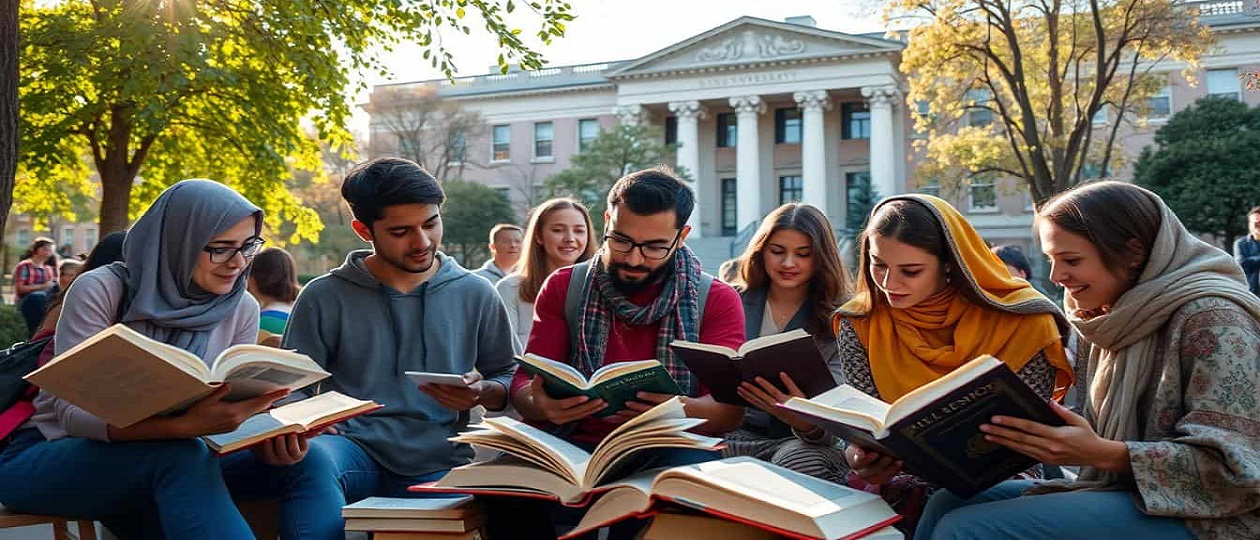
Across civilizations, education was often shaped by spiritual beliefs, moral teachings, and the need to preserve sacred knowledge.
This relationship evolved over time, influencing not only what people learned but also how societies understood knowledge, authority, and human purpose.
HISTORY
The history of education and religion is deeply intertwined, as religious institutions have been among the earliest providers of organized learning.
In ancient civilizations, education was closely linked to religious practice. In Ancient Egypt, temple schools trained scribes who recorded religious texts and administrative documents.
Similarly, in Mesopotamia, education centered around cuneiform writing and religious hymns. Priests and religious elites controlled access to knowledge, making education both a spiritual and political tool.
In Ancient India, education was heavily influenced by Hinduism. The gurukul system placed students under the guidance of a teacher (guru), where they learned sacred texts like the Vedas along with philosophy, mathematics, and ethics.
Similarly, Buddhism contributed to the development of monastic universities such as Nalanda, where religious and secular subjects were taught together.
In Ancient China, education was shaped by Confucianism, which emphasized morality, social harmony, and respect for hierarchy.
The civil service examination system, based on Confucian texts, became a major pathway to government positions and influenced East Asian education for centuries.
During the medieval period, religion dominated education in many parts of the world. In Europe, the rise of Christianity led to the establishment of cathedral schools and universities such as Paris and Oxford. These institutions were primarily concerned with theology, though they also taught subjects like logic and rhetoric. Monasteries preserved classical knowledge and served as centers of learning during times of political instability.
In the Islamic world, Islam played a central role in education. Madrasas were established to teach the Quran, law, and sciences. During the Islamic Golden Age, scholars made significant contributions to mathematics, medicine, and philosophy, demonstrating that religious education could coexist with intellectual advancement.
The Renaissance and Enlightenment marked a shift in the relationship between education and religion. Humanist thinkers began to emphasize reason, scientific inquiry, and classical knowledge over purely religious instruction. While religion remained influential, education gradually became more secular, especially in Europe. The Enlightenment ideals promoted universal education, critical thinking, and the separation of church and state.
In the modern era, education systems in many countries have become largely secular, though religion still plays an important role in certain contexts. Religious schools, such as Christian academies, Islamic madrasas, and Jewish yeshivas, continue to provide faith-based education.
At the same time, public education systems often emphasize inclusivity and neutrality regarding religious beliefs.
Despite the trend toward secularization, religion continues to influence educational values, such as ethics, discipline, and community responsibility. In many societies, debates persist over the role of religion in schools, including issues like curriculum content, moral education, and religious expression.
In conclusion, the history of education and religion reveals a dynamic relationship that has shaped human civilization. From ancient temple schools to modern classrooms, religion has played a fundamental role in the development of educational systems.
While the balance between religious and secular education has shifted over time, their connection remains an important aspect of cultural and intellectual history.
MODERN TIMES
Education and religion in the modern world exist in a complex and evolving relationship, shaped by cultural diversity, political systems, and shifting societal values.
While earlier eras often fused religious instruction with formal education, today’s global landscape reflects a wide spectrum—from strongly secular systems to those where religion remains central to learning.
In many contemporary societies, particularly in Western countries, education is largely secular. Public schools emphasize scientific reasoning, critical thinking, and inclusivity, often avoiding religious instruction in order to respect diverse beliefs. The separation of religion from state-sponsored education is intended to create neutral environments where students from various backgrounds can learn together without pressure to adopt a particular faith.
Subjects like biology, history, and philosophy are taught through evidence-based approaches, encouraging students to question and analyze rather than simply accept authority.
However, religion has not disappeared from education. In many parts of the world, it continues to play an important role in shaping values and identity. Religious schools—such as Christian academies, Islamic madrasas, Jewish yeshivas, and Hindu gurukuls—offer education grounded in spiritual teachings alongside general academic subjects.
For many families, these institutions provide a sense of moral guidance, community, and continuity with tradition. Even within secular systems, courses on world religions or ethics are often included to promote understanding, tolerance, and cultural awareness.
In countries where religion is closely tied to national identity, it may be integrated directly into public education. Students might study religious texts, participate in religious practices, or learn moral principles derived from faith traditions.
Supporters argue that this fosters discipline and ethical behavior, while critics raise concerns about limited exposure to diverse viewpoints and the potential suppression of minority beliefs.
Globalization has further complicated the relationship between education and religion. As societies become more interconnected, classrooms are increasingly diverse, bringing together students of different faiths—or none at all.
This diversity has prompted debates about how to balance respect for religious expression with the need for neutrality and inclusion. Issues such as wearing religious symbols, observing religious holidays, or accommodating prayer times highlight the ongoing negotiation between personal belief and public education.
Technology and access to information have also influenced how religion is taught and understood. Students can now explore religious ideas beyond their immediate communities, leading to greater exposure to multiple perspectives. This has encouraged more open discussions about faith, skepticism, and philosophy, allowing individuals to form their own beliefs more independently than in the past.
At the same time, education continues to shape how people approach religion. Higher levels of education are often associated with more diverse interpretations of faith, including more personal or symbolic understandings rather than strictly literal ones.
In some cases, education has contributed to secularization, while in others it has deepened religious engagement by encouraging thoughtful reflection and study.
In conclusion, education and religion today are neither fully separated nor completely intertwined. Instead, they interact in ways that reflect the values and needs of each society. While secular education dominates in many regions, religion remains a powerful influence on moral development, cultural identity, and personal meaning.
The challenge for modern education is to navigate this relationship in a way that respects diversity, promotes understanding, and equips individuals to think critically while remaining open to different worldviews.
 Kirill Benediktov
 Robert Reich