 Tatiana Kasatkina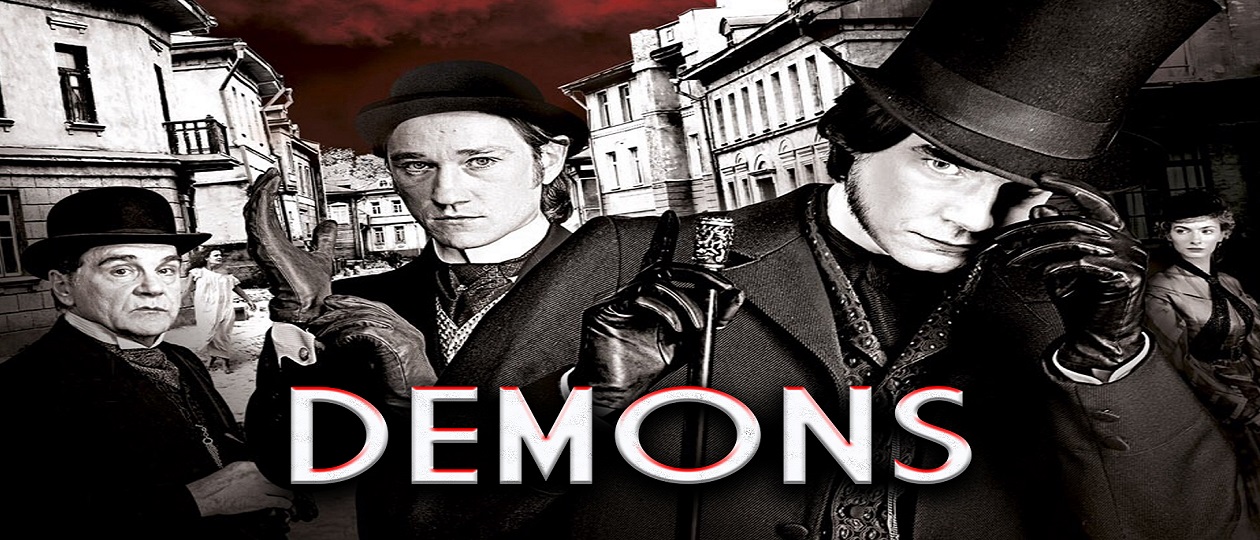
Film adaptations and interpretations not only have different goals, but also appeal to different audiences.
A film adaptation is offered, in a sense, “in place” of the book, a simplified version for those who may never read it; the director here plays an educational role, addressing the ignorant as one who knows, the superior as one who knows. Interpretation is exposition—and therefore is addressed primarily to the interlocutor, the equal who has read the text and has experience perceiving it independently. In Dostoevsky’s case, film adaptation is a meaningless undertaking (and, in general, merciless to the author), since the meaning of his texts lies precisely in those details, things that become symbols, which, when adapted for film, typically either disappear or are reproduced in such a way that they cease to be conduits for meaning (and it should be noted here that sometimes it is exactly the “precise adherence to the text” that directors boast about that completely destroys the text). Contrary to popular belief, Dostoevsky generally works not with discourse, but with imagery, which is why even in words, what matters to him is not abstract “meaning,” but the fullness of its figurative perception.
Dostoevsky never introduces “everyday details” to describe the “everyday side of life.” The everyday side of life—what enables the writer to introduce everyday details—is not the intended reason for their appearance, nor is it the reason for their introduction. Earthly reality, far from being “extinguished” by Dostoevsky (as is sometimes assumed), without losing its density or reality, blossoms under his pen with metaphysical meanings that neither rise above nor stand alongside it, but rather find and declare their presence precisely within it. In Dostoevsky, one can ask “why” about any object—referring to his majestic metaphysical design. Approaching such a degree of “metaphysical density,” the seamless meaningfulness of objects, can be a criterion for the adequacy of an artistic interpretation of his texts.
How objects that work in Dostoevsky exist in productions “just like that” can even be demonstrated in the work of Vladimir Khotinenko (and in this sense, one must admit that inclusions of “screen adaptation,” that is, mindless repetition of the author, are also found in most interpretations)—thus the French language of the characters in his “Demons” is rendered meaningless. Meanwhile, in Dostoevsky, Stepan Trofimovich (and not only he, of course) speaks French in those instances (or at least, it is precisely for these instances that his obsessive French language exists) when the Russian text, the Russian words, don’t precisely convey the image hidden behind the everyday dialogue that the author wants to convey to the reader.
I’ll give just one example. In the chapter “The Last Journey of Stepan Trofimovich,” he is pestered by Anisim, who meets him, asking him persistent questions: “‘Aren’t you coming to Spasov, sir?’ ‘Yes, I’m going to Spasov. I know that all the world is in Spasov…'” (10, 487)[1]. The interlinear translation proposed by modern publishers (completely correct, if we are talking about the “meaning” and not the image): “It seems to me that everyone is heading to Spasov…” However, the literal meaning of the French phrase is “It seems to me (appears) that the whole world is going to Spasov,” and that is an entirely different matter [“Spasov” can loosely be translated as “Salvation”, or “Savior” — Ed.] The French phrase not only more clearly presents the idea developed by the hero (and the author) in the final pages of the novel—the whole world is moving toward salvation and into the arms of its Savior—but also, as a direct quotation, relates to a passage from the Gospel of John that is extremely important for this chapter: “the whole world is following Him” (John 12:19).
In this sense, it could be said that even Russians today read Dostoevsky not quite in the original. After all, in most cases, a reader, alas, having missed a French phrase in Dostoevsky’s text, immediately resorts to a word-for-word translation, thereby missing the images Dostoevsky expressed through the French text.
However, Khotinenko—and this is a joy to admit—is willing and able to work with imagery. And the fact that the symbolism of the image in his production exceeds the symbolism of the images in Dostoevsky’s text (shifting the fabric of the work from realistic to symbolist, making it “thinner,” often placing the symbol nearby, rather than in the everyday detail itself) is a normal step in the realm of interpretation, where the interpreter seeks to further develop the meanings they have identified in the author, making them quite obvious to the viewer. In this sense, the director’s borrowing of texts from drafts is also justified, as Dostoevsky always expresses thoughts and provides direct quotations in a much more frank and straightforward manner, which would later remain in his work only as flickering reminiscences in the images.
Such, incidentally, is the detail Khotinenko left unexplored about Stavrogin’s swollen jaw and knocked-out teeth, which became the talk of the town after rumors spread about Shatov’s slap (in the film, the slap seems to have no consequences at all). Dostoevsky would write several times in the drafts about a “wounded beast” and a “healed head,” indicating a reference in Stavrogin’s image to the apocalyptic beast.
Here are some of the draft notes for “Demons”: “NB) Prince Shatov speaks of the Apocalypse, of the inscription of the beast’s name, his head is wounded” (11, 195); “On the other hand, I believe that Christianity contains within itself all the solutions for the world. The Child, the millennium, the Apocalypse, the wounded beast” (11, 187); “The Apocalypse. – Consider what the beast means if not the world that has abandoned faith; the mind left to itself, having rejected, on the basis of science, the possibility of direct communication with God, the possibility of revelation and the miracle of God’s appearance on earth” (11, 186). Dostoevsky, as he does in many cases (and this can be called one of the basic principles of his work with the Gospel text), removes from the main text all direct references to the wounded head of the beast, so that it flickers only in the wounded head of Stavrogin, creating depth of the image.
Khotinenko shifts the center of gravity of the apocalyptic motifs present in Dostoevsky’s text to the expanded, pervasive image of butterflies—the culmination of the development of an earthly being, according to Dostoevsky’s rough draft quoted in the film, achieved only beyond the bounds of earthly existence: “We are obviously transitional creatures, and our existence on earth is, obviously, a continuous process, the existence of a chrysalis transforming into a butterfly. Remember the expression: ‘An angel never falls, a demon has fallen so far that he always lies down, a man falls and rises.’ I think people become demons or angels. You say: eternal punishment is unjust, and French digestive philosophy has invented that everyone will be forgiven. But earthly life is a process of reincarnation. Who is to blame for your degeneration into the devil? Everything will be weighed, of course. But this is a fact, a result—just as on earth everything comes from one another” (11, 184). And this is undoubtedly a successful directorial move.
The film’s opening, its symbolic epigraph, designed to attune the viewer’s gaze, must be considered impeccable.
The gaze moves through the forked branches of a withered tree—a dead vertical line that connected worlds of different levels, linking heaven and earth—to a huge watermill wheel—the cycle of an autonomous world, the wheel of samsara and the wheel of fortune—but also a staircase used in Masonic initiation, described, among other things, relatively recently by Umberto Eco in “The Prague Cemetery.” The blindfolded neophyte’s ascent up a ladder that turns out to be a hamster wheel signifies that anyone who desires to rise in this world and ascend the ladder of socialization offered by it will ascend endlessly, because each step upward will lower the new rung they have ascended to the previous baseline of the earth (black soil, humus, from which one can grow, but from which one cannot ascend) and to the baseline of the individual—for the social function does not elevate a person, but rather lowers them to their personal level. All this will be accompanied by increasing fatigue, exhaustion, and the inability to distract themselves, once engaged in the process. This line is most clearly continued in the film in the story of Lembke, a governor who builds toy paper buildings. And the line of the withered tree, the lost vertical, is in Kirillov, the bridge builder (which, by the way, in Latin would sound like “pontiff”), who does not believe in God, that is, in the fact that there is another bank for this bridge, that there is an exit beyond the glass edge of the river that surrounds the world of “Demons” in the same way that the edges of the jar surround the world of the butterfly at the very beginning of the film.
The river’s central role logically alters the film’s topography, which Khotinenko depicts as crowded into a small area. In Dostoevsky’s version, Stavrogin meets Fedka the Convict on a pontoon bridge across the river, as he returns from the Lebyadkins’ home in Zarechye—as if already in an otherworldly, afterlife, traditionally separated from this world by the river’s waters. (Incidentally, they are located in the Potter’s Settlement—as a result, the image of Stavrogin, not only at the moment of his suicide, begins to be associated with the image of Judas. Judas receives thirty pieces of silver for his betrayal, which, in despair over what happened, he returns to the Sanhedrin, and with which, after his death, the Sanhedrin purchases the potter’s land, intending to establish a cemetery for pilgrims. This land is called “the land of blood” (see Matthew 27:3-10).) The fact that the bridge is a pontoon bridge is important in the novel, as it is a bridge lying on water, and Stavrogin crosses between worlds, as if treading on water (one of the novel’s many mockingly parodic references to the image of the Savior). In Khotinenko’s version, the meeting takes place in a low, covered passageway, as if underground, in a mouse or rat hole, rhyming with the mouse released behind the glass of the icon.
A fantastically beautiful and menacing butterfly, flying through a liquid (a medium not intended for flight), seemingly poisoning this medium with pollen washed from its wings—a reversal (since it poisons the medium, not is poisoned by it; incidentally, the idea that man defines and creates the environment, not the environment man—is Dostoevsky’s favorite idea) and at the same time a synonym (since in both cases the poisoned environment is ultimately created by a single personality—Stavrogin) for the butterfly stain that later appears on Stavrogin’s table—an image of a man in an alien, death-bringing world, but one beyond which he is offered nothing, and from which he is given no escape. The image of a reborn creature (whether it is reborn as an angel or a demon), trapped in a world intended for caterpillars and pupae. And this is a beautifully presented peak of Stavrogin’s character, the lowest of which is a grunting, snout-pressing, exuberant imp, who feels refuge in homeless and ownerless pigs (Khotinenko’s excellent reworking of the Gospel epigraph to Dostoevsky’s “Demons”).
Another change in Stavrogin’s character allows Khotinenko to re-express a thought inherent in the original text: Stavrogin’s attitude toward the declarations of love addressed to him (both from women and from his disciples and followers). In Dostoevsky, they seem to rush after Stavrogin, fleeing from them, tired of everyone’s attempts to shift responsibility onto him. In Khotinenko’s work, the hero seems to deliberately await them, sometimes clearly prolonging his presence until they are heard—and then departing calmly and contentedly, as if having received his due. In this way, the director succinctly and expressively conveys to the audience the vampiric essence of the novel’s “black sun.” It is characteristic that even Kirillov’s child cries, not being afraid of Stavrogin, as in Dostoevsky, but stretching out his hands to him — and this also evokes in the hero an instant state of satiated satisfaction.
Among other things, Khotinenko, in my opinion, very successfully places Dostoevsky in the context of contemporary culture.
The film’s opening and its overarching metaphor (humans are transitional creatures, like chrysalises destined to transform into butterflies; Stavrogin is “bored with humans” and is interested in butterflies because he has lost interest in the process of transition and is now intently contemplating its possible outcomes) evokes Viktor Pelevin’s “From the Life of Insects.” The film’s ending, where a new Verkhovensky nurtures a new Nikolai Stavrogin in the Swiss mountains after the previous one has committed suicide, unambiguously alludes to Taylor Hackford’s “The Devil’s Advocate.” In light of this ending, the radical change in the character of Stepan Trofimovich Verkhovensky also becomes justified. In Dostoevsky’s epilogue, he is a harbinger of universal transformation, while in Khotinenko, he is merely the former and imperfect Petrusha (logically disappearing into thin air after all his educational missions are accomplished and the “improved” Verkhovensky appears on stage).
Khotinenko’s introduction of the investigator and the investigation process itself are akin to a generally successful, but overly expanded, frame for a painting. It certainly helps to hold together disparate episodes, but it takes up too much useful space.
The superb ensemble of young actors deserves special mention: Anton Shagin (Pyotr Verkhovensky), Maxim Matveyev (Stavrogin), Yevgeny Tkachuk (Ivan Shatov), Alexey Kirsanov (Kirillov), and Maria Shalaeva (Marya Lebyadkina) are all marvelously good in their respective roles.
Ivanna Petrova (Liza Tushina) either didn’t receive a clear acting assignment or was expected to play a weak-willed “prize” in the men’s games—and in this case, she handled her role quite well.
After the first viewing, I found Stavrogin’s general’s wife, Nadezhda Markina, extremely disappointing; she looked and acted as if she had been entrusted to be played by her housekeeper. But on the second viewing, my initial negative impression was significantly mitigated.
Among the crowd of city “ours,” where almost everyone also nailed the role, the wonderful Vyacheslav Chepurchenko (Erkel) deserves special mention, perfectly suited to the task. He managed to convey both childish affection, youthful independence, and contempt for traitors and those in authority, all under the guise of a calm, slightly mocking superiority.
Immediately after the film’s release, harsh attacks appeared in print and online against Khotinenko for his allegedly “slandered”, pamphlet-like portrayals of revolutionaries. At times, he was even contrasted in this regard with the “much more profound and ambiguous” Dostoevsky. It’s impossible not to note that these attacks, their tone and register, remarkably echo those leveled against Dostoevsky himself at the time of the novel’s publication, and the voices expressing them hail from roughly the same circles (circles, in their own way, deserving of respect, both then and now). I believe this coincidence may be a testament to the director’s undoubted success.
Dostoevsky, who called himself a “Nechayevite,” wrote “Demons” as if he were both outside and inside the revolutionary process—and therefore, incidentally, both revolutionaries and the authorities are equally involved in the approaching catastrophe. I don’t know where Vladimir Khotinenko stands in this regard, but to truly understand the attitude of Dostoevsky’s contemporaries toward “Demons,” we can now look at the criticism leveled at the film.
I have mixed feelings about how Tikhon is portrayed in the film. He seems to achieve a convincing victory over the protagonist, whereas Dostoevsky’s protagonist would likely view Stavrogin’s flight from him as his own defeat. Khotinenko’s Tikhon speaks as if from the depths of his own superiority, while Dostoevsky’s Tikhon addresses the hero from a full awareness of his own smallness, which could at any moment turn into the immensity of the Divine Presence, and therefore — as if simultaneously from this clumsy immensity, afraid to offend and crush the man before him. The film’s Tikhon is almost openly mocking at the end, while Dostoevsky’s Tikhon only with an inner shudder suggests the possibility of mockery at the hero, which Stavrogin’s “style” undoubtedly provokes. But perhaps this divergence from the ideal image of the shepherd that Dostoevsky sought to create is the director’s tribute to the new era and the new image of the shepherd that is typical of it.
Thus, before us is a serious and successful attempt to interpret Dostoevsky’s novel, which, alas, is eternally contemporary in Russia — and the interpretation differs from the film adaptation in that it provokes controversy, provokes reflection and doubt — and does not imply unconditional (or indifferent) acceptance.
[1] Dostoevsky F.M. Complete Works in 30 Volumes. Leningrad, Nauka, 1972–1990. From here on, the volume and page number are indicated in the text in parentheses after the quotation.
 Sergey Stankevich
 Alexander Burenkov
 Kirill Benediktov