 Andrey Vedyaev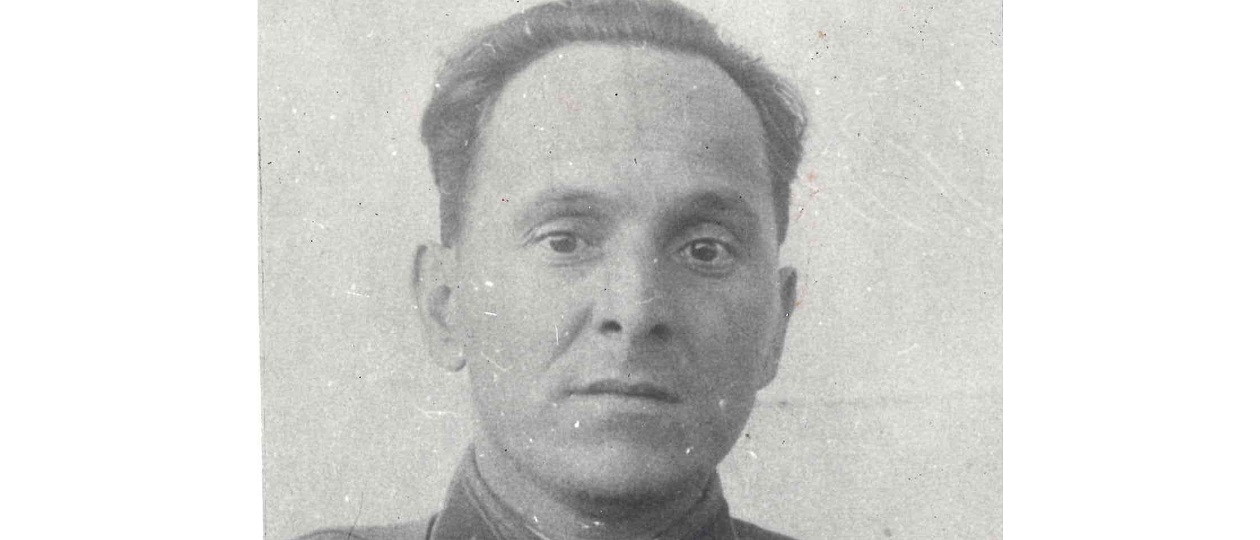
Sergei Solntsev and Soviet Intelligence during the Battle of Moscow: Intelligence, Resistance, and the Defense of Moscow
Introduction
On 20 November 1941, Senior Lieutenant of State Security Sergei Ivanovich Solntsev remained behind to cover the withdrawal of his partisan detachment near the village of Andreyevskoye, west of Moscow. Wounded during the engagement, he was captured by German troops. Despite prolonged torture, he refused to reveal the intelligence network he had established behind enemy lines. Four months later, he was posthumously awarded the title of Hero of the Soviet Union, the country’s highest military distinction.
Outside Russia, however, Solntsev’s name is scarcely known.
The defense of Moscow has long occupied a central place in the history of the Second World War. Historians have devoted considerable attention to the counteroffensive launched in December 1941, the arrival of Soviet reserves from Siberia, and the desperate fighting along the Volokolamsk axis. Less attention has been paid to another dimension of the campaign: the intelligence war fought behind German lines by small partisan groups that gathered information, disrupted communications, and maintained contact with the civilian population under occupation.
Sergei Solntsev was one of the officers entrusted with organizing that hidden war. As head of the NKVD district department in Ruza, he remained in the occupied territory after the town fell to German forces in October 1941. There, he established an intelligence network that supplied the headquarters of the Soviet 5th Army with information on German troop deployments, headquarters, supply routes, and defensive positions. According to contemporary Soviet records, this intelligence contributed directly to artillery strikes against German command posts and troop concentrations during the critical weeks preceding the Soviet counteroffensive before Moscow.
Yet Solntsev’s significance extends beyond his personal courage or his tragic death. His career offers a rare opportunity to examine how Soviet intelligence and partisan organizations were created in the chaotic circumstances of the autumn of 1941, when the Wehrmacht stood at the gates of the Soviet capital and every reliable source of information from occupied territory had acquired strategic importance.
This article reconstructs Solntsev’s wartime activities through Soviet and German archival materials, including NKVD reports, operational summaries, award recommendations, partisan records, and the war diary of the German 69th Infantry Regiment of the 10th Panzer Division. Rather than presenting a commemorative narrative, it seeks to place Solntsev’s service within the broader history of intelligence operations during the Battle of Moscow and to assess the operational role played by the Ruza partisan network during one of the most critical phases of the German advance toward the Soviet capital.
From the Textile Mills to the NKVD
Sergei Ivanovich Solntsev was born on 5 March 1906 in the textile town of Ramenskoye, southeast of Moscow. His parents were factory workers employed at one of the region’s largest textile mills, an enterprise that dominated both the town’s economy and its social life. His father died when Sergei was still an infant, leaving his mother to raise him alone.
Like many young men of his generation, Solntsev came of age during the profound political and social transformations that followed the Russian Revolution. The textile mill—renamed Red Banner after the Bolsheviks came to power—became both his workplace and the setting in which his political outlook developed. He joined the Communist Party while employed at the factory and advanced steadily through its administrative ranks, eventually becoming deputy director. His career reflected a broader pattern of social mobility characteristic of the 1920s and 1930s, when technically competent workers with proven organizational abilities were increasingly entrusted with positions of responsibility.
In 1937, during a period of rapid expansion within the Soviet security apparatus, Solntsev transferred to the NKVD, the People’s Commissariat for Internal Affairs. He first served in the NKVD Directorate for Moscow and the Moscow Region, later becoming deputy head of the district department in Istra. By the time Germany invaded the Soviet Union on 22 June 1941, he had been appointed head of the NKVD district department in the town of Ruza, approximately one hundred kilometers west of Moscow.
Although the NKVD is often associated in Western historiography primarily with political repression, its responsibilities during wartime extended far beyond internal security. Alongside counterintelligence and the protection of strategic facilities, NKVD district departments were expected to organize resistance in territories threatened by occupation. This included preparing underground organizations, establishing clandestine communications, safeguarding intelligence networks, and, where necessary, forming partisan detachments that could continue operating after the arrival of German forces.
These preparations, largely invisible during the summer of 1941, would soon determine Solntsev’s role in one of the most difficult phases of the Battle of Moscow.
By October 1941, following the launch of Operation Typhoon, the German offensive against Moscow, the front was moving eastward at alarming speed. As Soviet armies retreated under immense pressure, towns across the western approaches to the capital faced the prospect of occupation. Ruza was among them.
The German Capture of Ruza
By the final week of October 1941, the German drive toward Moscow had reached the western districts of the Moscow Region. Following the encirclement battles at Vyazma and Bryansk, the Wehrmacht sought to exploit the collapse of Soviet defenses by advancing rapidly along multiple axes toward the Soviet capital. Situated on the approaches to Moscow, Ruza became one of the objectives of this advance.
At dawn on 25 October, units of the 69th Infantry Regiment of the 10th Panzer Division, supported by tanks of the XL Motorized Corps, attacked the town. Soviet defenders resisted with artillery, anti-tank guns, and machine-gun fire, forcing the Germans into a series of close-range engagements before they secured the town.
The intensity of the fighting is vividly reflected in the German regimental war diary. Rather than describing a rapid advance, the anonymous chronicler recorded a determined defense that repeatedly disrupted the assault: “Ruza is defending itself stubbornly.”
The diary goes on to describe tanks firing at Soviet strongpoints, infantry advancing house by house under machine-gun fire, and hand grenades exploding in the streets. At one point, the author recalls seeing three Soviet soldiers suddenly emerge from behind a bush before being cut down by machine-gun fire. Only after roughly two hours of fighting did German forces establish control over the town.
One of the most striking passages in the diary appears immediately after the battle. Having described the violence of the assault, the German officer abruptly reflects upon Ruza’s earlier history:
“This town resembles a little nest. Who knows anything about its great past? Who remembers that Prince Eugène entered Ruza in September 1812, and that Napoleon fell ill here?”
The observation lasts only a few lines before the narrative returns to the practical realities of war—digging defensive positions, securing river crossings, and coping with cold rain and melting snow. The sudden shift from historical reflection to military routine offers a revealing glimpse into the mentality of German officers during the Moscow campaign.
For the Soviet authorities, however, the fall of Ruza did not mark the end of resistance.
Even before German troops entered the town, the district Party committee and the local NKVD had begun implementing contingency plans prepared for the event of occupation. Rather than evacuating all personnel, selected officials were instructed to remain behind, organize clandestine resistance, establish intelligence networks, and prepare partisan bases in the forests surrounding the district.
One such base was established near Lake Glubokoye, a remote area protected by dense forests and extensive marshland. Its location offered concealment while allowing access to the road network connecting Ruza with the surrounding villages.
Sergei Solntsev was appointed both political commissar of the partisan detachment and chief of intelligence. These were complementary responsibilities. As commissar, he was responsible for maintaining discipline, morale, and political cohesion within the detachment. As intelligence chief, he faced the more demanding task of creating, virtually from nothing, a clandestine network capable of gathering reliable information from occupied territory and transmitting it across the front line to Soviet military headquarters.
Within days of the German occupation, the struggle for Ruza had entered a new phase. Open battle gave way to an invisible war of reconnaissance, sabotage, and clandestine resistance.
Building the Ruza Intelligence Network
The effectiveness of partisan warfare depended less upon the size of a detachment than upon the quality of the information it could obtain. Sabotage operations might disrupt an enemy column or destroy a bridge, but intelligence could influence decisions far beyond the immediate battlefield. For the Soviet command defending Moscow in the autumn of 1941, reliable reports from occupied territory were of exceptional value. German formations were advancing rapidly, front lines shifted almost daily, and aerial reconnaissance was frequently hampered by poor weather. Under such conditions, local intelligence networks became an indispensable source of operational information.
This was the task entrusted to Sergei Solntsev.
Rather than relying solely on armed patrols, Solntsev began building a clandestine organization that extended across the occupied Ruza District. Drawing upon pre-war administrative contacts, trusted local residents, and Party activists who had remained behind, he established a network of informants capable of observing German troop movements, identifying headquarters, monitoring supply routes, and reporting changes in the occupation authorities’ deployments.
Former couriers, forestry workers, railway employees, village officials, and ordinary civilians all became potential sources of information. Each knew only the small part of the network with which he or she was directly connected, reducing the risk that the organization could be compromised if an individual agent were captured. Information was relayed through trusted couriers who crossed forests and marshes, often travelling at night to avoid German patrols.
According to the recollections of military historian Dmitry Govorov, Solntsev personally instructed members of the detachment in the fundamentals of clandestine work. They were taught methods of observation, secure communications, and the elementary principles of operational security—skills that many had never previously encountered. Although few possessed formal intelligence training, the network quickly developed into an effective source of military information.
The intelligence gathered by Solntsev’s organization was transmitted across the front line to the headquarters of the 5th Army, where it was incorporated into Soviet operational planning. Reports identified the locations of German headquarters, concentrations of troops and equipment, transport routes, artillery positions, and defensive works. Their value lay not in isolated pieces of information but in the ability to reveal patterns of enemy activity over time.
The risks involved were considerable. Every journey into an occupied village exposed couriers and informants to arrest. Every conversation with local residents carried the danger of denunciation. German security forces, assisted by field police and intelligence units, devoted increasing effort to identifying partisan supporters and dismantling underground organizations. Discovery meant not only death for the individual concerned but often reprisals against entire families or villages.
Yet despite these dangers, Solntsev’s intelligence network expanded rapidly. Within little more than three weeks of the German occupation, it had become one of the principal channels through which information from the Ruza District reached Soviet military headquarters.
The effectiveness of this organization soon became evident. Rather than remaining passive observers, Solntsev’s partisans began combining intelligence gathering with carefully planned reconnaissance and sabotage operations. These missions would demonstrate how a relatively small partisan detachment could influence military operations far beyond its numerical strength.
Intelligence in Action
The operational reports submitted by Solntsev in November 1941 reveal a detachment that rarely remained inactive. Within less than a month of the German occupation, his partisans carried out a sustained series of reconnaissance and sabotage missions throughout the Ruza District. Although modest in scale when compared with conventional military operations, these missions formed part of a broader intelligence effort whose cumulative effect far exceeded the size of the detachment itself.
Most operations were conducted along the road linking Golosovo and Redkino, an important route used by German units moving supplies, personnel, and communications between forward positions and rear headquarters. Rather than seeking direct confrontation, the partisans exploited surprise and local knowledge. Small groups emerged briefly from the forests to ambush transport columns, destroy wagons carrying food or medical supplies, sever telephone lines, and disappear before German reinforcements could react.
These attacks imposed only limited material losses on the occupiers. Their greater significance lay elsewhere. By repeatedly cutting field telephone lines, the partisans disrupted communications between German headquarters and frontline units, forcing the occupiers to devote additional personnel to repairs and security. Even temporary interruptions complicated command and control during a period when German forces were attempting to maintain the momentum of their advance toward Moscow.
Reconnaissance remained the detachment’s primary mission.
Patrols carefully observed troop movements, identified headquarters, recorded the arrival of new formations, and monitored changes in German dispositions. Whenever possible, this information was confirmed independently before being transmitted across the front line, increasing its value to Soviet commanders.
One of the detachment’s most important successes came on 13 November, when the partisans captured Fritz Helbich, a soldier of the 187th Infantry Regiment, 87th Infantry Division. Transferred to the headquarters of the 144th Rifle Division, the prisoner provided information that supplemented the intelligence already gathered through local observation. The episode illustrates the complementary nature of the network Solntsev had created: information obtained from civilian informants, reconnaissance patrols, and prisoner interrogation could be compared and evaluated together, producing a more reliable picture of German operations.
The reports also reveal the close cooperation that developed between the partisan detachment and nearby Red Army formations. During one raid in mid-November, Solntsev’s men joined forces with soldiers of the 144th Rifle Division in an attack on German transport moving along the Golosovo–Redkino road. The operation inflicted casualties, captured weapons and documents, and recovered a wagon loaded with clothing that German troops had confiscated from local civilians. Such operations demonstrated that partisan warfare was not conducted in isolation but increasingly became integrated into the broader Soviet defense of the Moscow approaches.
The most significant contribution of Solntsev’s organization, however, was neither sabotage nor the capture of prisoners. It was intelligence.
By mid-November, the network had identified the locations of several German headquarters, including the principal command post established in Ruza itself. It also reported troop concentrations in the villages of Gorbovo, Golosovo, Nikolskoye, Oreshki, Strygino, Annino, and Korchmanovo, together with information on supply movements and defensive preparations. According to NKVD operational reports, these observations enabled Soviet artillery to strike German assembly areas with notable accuracy. Subsequent Soviet attacks dispersed troop concentrations in Golosovo and Gorbovo, and on 16 November both villages were reoccupied by Soviet forces.
Whether every result recorded in the Soviet reports can be independently verified remains open to historical discussion. Yet there is little reason to doubt the broader conclusion: within only a few weeks, Solntsev had succeeded in establishing a functioning intelligence system capable of supplying operationally useful information to the headquarters of the 5th Army. In the rapidly changing conditions of the Battle of Moscow, such intelligence was often as valuable as the destruction of enemy matériel itself.
Occupation and Civilian Resistance
Military reports reveal only part of the story. Alongside information on troop movements and combat operations, Solntsev’s dispatches provide a rare contemporary account of everyday life in the Ruza District under German occupation. Written in the midst of the campaign rather than reconstructed after the war, they document the conditions under which both civilians and partisans struggled to survive.
According to Solntsev’s report of 19 November 1941, German occupation authorities systematically requisitioned food, livestock, warm clothing, and household goods from the local population. Soviet investigators later found clothing, children’s garments, blankets, mirrors, school supplies, and other personal belongings among the contents of wagons captured from German transport columns. Such discoveries reflected a pattern frequently described in both Soviet documentation and German records from the Eastern Front, where military units often relied upon local requisitioning to supplement increasingly strained supply lines as winter approached.
The reports also describe the widespread use of forced civilian labour. Men from occupied villages were rounded up and compelled to construct defensive positions in Ruza and on the nearby Borodino battlefield as German forces prepared for renewed offensive operations against Moscow. For many families, occupation meant not only material deprivation but also the constant threat of arbitrary violence.
Among the incidents recorded by Solntsev is the case of a six-year-old boy named Shurik from the village of Nikolskoye. According to the report, when German soldiers attempted to seize the family’s cow, the child asked an officer where he was taking it. The officer allegedly responded by striking the boy with his sword, severing one of his ears. When the boy’s mother intervened, she was seriously wounded by a second blow. Whether or not every detail can now be independently verified, the account illustrates the kinds of incidents reported by Soviet officials while the occupation was still in progress and reflects the atmosphere of fear that prevailed in many occupied communities.
Equally revealing is the story of the forester Chepelev and his sixteen-year-old son. Arrested on suspicion of assisting the partisans, both men were interrogated and executed after refusing to disclose the location of Solntsev’s detachment. Their deaths did not end the family’s support for the resistance. According to Solntsev’s report, Chepelev’s widow later directed the partisans to five loaves of bread she had baked and hidden for them before the arrests. The report notes, with restrained admiration, that she did so “without uttering a single word of reproach” despite the loss of her husband and son. Solntsev concluded by recommending that she receive material assistance in recognition of her loyalty.
Such episodes help explain how partisan organizations survived in occupied territory despite constant German security operations. Their effectiveness depended not only upon armed fighters but upon hundreds of civilians who supplied food, shelter, information, guides, and warning of enemy movements. Some acted from political conviction, others from patriotism, personal loyalty, or hostility toward the occupiers. Their motives varied, but together they formed the social foundation without which clandestine resistance could scarcely have endured.
One brief passage in Solntsev’s report captures this relationship particularly well. After visiting the recently liberated village of Petrovo, the partisans spent the night in the home of a local resident. According to the report, the man declared that he was prepared to feed fifty partisans or Red Army soldiers throughout the entire winter and help them in every possible way—provided only that the Germans never returned. Whether remembered verbatim or reconstructed from memory, the statement conveys the intensity of feeling that occupation had generated among at least part of the local population.
For Solntsev, such support was more than a source of encouragement. It was an operational necessity. Every courier crossing the forests, every reconnaissance patrol approaching a village, and every message sent across the front depended upon a network of civilians willing to risk their lives. The history of the Ruza partisan detachment is therefore not solely the story of one intelligence officer, but also of the communities whose cooperation made clandestine resistance possible.
The Unfinished Mission
By the middle of November 1941, the military situation west of Moscow had entered a critical new phase. Although the German advance had slowed, the Wehrmacht remained convinced that one final offensive could break Soviet resistance before the onset of winter. Both sides understood that the coming days might determine the fate of the Soviet capital.
Amid these rapidly changing circumstances, Solntsev received a mission that reflected the growing confidence of Soviet commanders in the capabilities of the Ruza partisan network. His objective was the elimination of Colonel Helmuth Weidling, commander of the German garrison in Ruza and chief of artillery of the XL Motorized Corps.
Little is known about the operational planning behind the proposed assassination. Surviving Soviet documents mention the assignment but provide few details as to how it was to be carried out. This silence is hardly surprising. Intelligence and partisan operations of this nature were rarely described in detail, even in internal reports, and operational plans were often committed to memory rather than committed to paper.
Events at the front, however, soon overtook these preparations.
On 15 November, German Army Group Centre launched the second phase of Operation Typhoon, its final attempt to capture Moscow before winter halted large-scale offensive operations. The following morning, units of the 2nd Panzer Division attacked the positions of the 1075th Rifle Regiment of General Ivan Panfilov’s 316th Rifle Division near the Dubosekovo railway halt.
According to Colonel Ilya Kaprov, commander of the 1075th Regiment, Soviet defenses were broken after less than an hour of heavy fighting, forcing the regiment to withdraw with severe losses. Yet the German offensive failed to achieve the rapid breakthrough envisioned by its planners. Fierce Soviet resistance across the Volokolamsk sector—including the actions that later became associated with the legendary Panfilov Guardsmen—slowed the advance sufficiently to disrupt the German timetable.
For officers operating behind German lines, these developments had immediate consequences. As front-line formations shifted and German units redeployed toward the main axis of advance, local priorities changed. Security measures were intensified, troop movements became more frequent, and opportunities for carefully prepared partisan operations diminished.
Whether Solntsev’s mission against Weidling had already reached an advanced stage or remained in preparation cannot now be determined. What is clear is that the operation was never carried out.
History would grant Weidling only a temporary reprieve.
In April 1945, he was appointed the final commandant of Berlin. On 2 May 1945, with the German capital in ruins and Soviet forces in control of the city, Weidling signed the surrender of the Berlin garrison. Captured by the Red Army, he was later tried by a Soviet military tribunal, sentenced to twenty-five years’ imprisonment, and died in captivity at Vladimir Prison in 1955.
For Solntsev, however, there would be no second opportunity.
Within days, the partisan detachment itself became the target of an increasingly determined German counterinsurgency operation.
Capture, Torture, and Death
On 20 November 1941, near the village of Andreyevskoye, Solntsev’s partisan detachment was surprised by a large German anti-partisan force. The circumstances of the engagement cannot now be reconstructed in full, but surviving Soviet reports indicate that the Germans had either discovered the location of the partisan base or successfully tracked one of the detachment’s movements through the surrounding forests.
The encounter quickly developed into a firefight. As ammunition began to run low, Solntsev—already wounded—ordered his men to withdraw deeper into the forest while he remained behind to cover their retreat. The decision almost certainly saved at least part of the detachment, preserving the lives of experienced fighters and preventing the complete destruction of the organization he had spent weeks building.
Separated from his comrades, Solntsev was captured by soldiers of the 187th Reconnaissance Battalion of the 87th Infantry Division.
What followed can be reconstructed from several Soviet sources compiled after the liberation of the Ruza District. These include the official recommendation for the title of Hero of the Soviet Union, investigative reports prepared by the NKVD, and an examination of Solntsev’s body conducted after it was recovered in January 1942.
Taken together, these documents describe prolonged torture intended to obtain information about the partisan organization and its intelligence network. According to the reports, Solntsev’s captors severed two fingers of his right hand, pierced one of his legs with a bayonet, burned the nails of both his hands and feet, and inflicted severe injuries to his scalp before hanging him with his own belt.
As with many wartime investigations conducted under difficult circumstances, not every detail can now be independently verified. Nevertheless, the existence of torture itself is consistently attested across the surviving Soviet documentation, and no evidence has emerged to suggest that Solntsev disclosed information concerning either his intelligence network or Soviet military operations.
The significance of his silence extended far beyond his own fate.
By November 1941, the Ruza intelligence network consisted not only of armed partisans but also of civilian couriers, informants, and local residents who had chosen to assist the Soviet underground despite the mortal risks involved. Had their identities been revealed under interrogation, German security forces would almost certainly have dismantled what remained of the organization and carried out reprisals against those suspected of supporting it. Solntsev’s refusal to cooperate therefore protected not merely military information but the lives of many of the people who had placed their trust in him.
On 20 January 1942, shortly after Soviet forces liberated the area, the newspaper of the 5th Army published an official statement prepared by partisan G. Zagudayev, Red Army soldier A. Parshikov, and residents of the Pankovo village council. Approximately half a kilometre east of the village of Terekhovo, they had discovered Solntsev’s body hanging from a roadside tree, where it had remained since his execution.
The report transformed what had previously been known only within partisan and NKVD circles into one of the earliest documented accounts of the fate of a Soviet intelligence officer captured during the Battle of Moscow. Four months later, those findings formed part of the official recommendation that Solntsev be posthumously awarded the title of Hero of the Soviet Union.
The NKVD Recommendation
The official recommendation to award Sergei Solntsev the title of Hero of the Soviet Union was submitted by Mikhail I. Zhuravlyov, Senior Major of State Security and head of the NKVD Directorate for the Moscow Region. More than a formal administrative document, it provides a concise contemporary assessment of Solntsev’s contribution to the defense of Moscow.
The recommendation emphasized not only his personal courage but also the operational value of the intelligence network he had organized after the German occupation of the Ruza District. According to the document, information supplied by Solntsev’s reconnaissance group enabled Soviet forces to identify and attack German headquarters, troop concentrations, and logistical infrastructure. Among the examples cited were artillery and air strikes against German positions in the villages of Vishenki, Gorbovo, and Bogayevo, where Soviet attacks reportedly inflicted substantial losses on personnel, horses, transport, and artillery equipment.
The document further noted that Solntsev’s group had conducted eighteen deep reconnaissance missions behind German lines during less than a month of operations. Such missions provided Soviet commanders with information that could not easily be obtained by aerial reconnaissance or conventional frontline observation, particularly during the rapidly changing conditions of the German advance toward Moscow.
The recommendation concluded with an account of Solntsev’s capture and death. It stated that, despite severe torture, he had preserved both military and state secrets entrusted to him and had died without betraying his comrades or compromising ongoing intelligence operations. On that basis, Zhuravlyov formally requested that Solntsev be posthumously awarded the Soviet Union’s highest distinction for military valor.
Like many wartime award recommendations, the document served more than one purpose. It sought to recognize individual heroism, but it also documented the military significance of intelligence work carried out behind enemy lines during one of the most dangerous phases of the Battle of Moscow. Read today alongside operational reports and German military records, it provides valuable evidence not only of how Solntsev died but of how his superiors understood the contribution of the Ruza partisan network to the wider defensive campaign.
As with all official wartime documents, the recommendation must be read critically. It was written to support the highest military award and therefore naturally emphasized Solntsev’s achievements. Yet even allowing for the rhetorical conventions of Soviet commendations, its central assessment is supported by other contemporary evidence. Operational reports from November 1941, surviving partisan records, and German documentation together indicate that the Ruza network had become an active and effective source of intelligence during the weeks preceding the Soviet counteroffensive.
The recommendation therefore stands not merely as a tribute to an individual officer, but as an important historical source for understanding the role of clandestine intelligence in the defense of Moscow.
Remembering Sergei Solntsev
Sergei Solntsev was buried in early 1942 in a mass grave on the central square of Ruza, alongside other defenders of the district. On 11 March 1942, he was posthumously awarded the title of Hero of the Soviet Union, the highest military distinction of the USSR.
A memorial was later erected near the site of his final battle. Its inscription records simply that Sergei Solntsev, head of the Ruza District NKVD Department and a Hero of the Soviet Union, was captured and killed there on 20 November 1941. Unlike many Soviet wartime memorials, it does not recount the details of his final hours. Instead, it marks the landscape itself as a place of remembrance.
In his native Ramenskoye, Solntsev’s memory has likewise been preserved. A bust originally installed at a Young Pioneer camp in the nearby village of Dementyevo was relocated in September 2025 to Solntsev Street in Ramenskoye, where it now stands near the house in which he was born and spent his childhood. The relocation reflected a renewed local interest in recovering the biographies of individuals whose contributions to the defense of Moscow had long remained overshadowed by more familiar wartime narratives.
Yet outside Russia, Sergei Solntsev is almost unknown.
This relative obscurity is not unusual. Intelligence officers, underground organizers, and partisan leaders rarely leave behind the kinds of records that make military commanders or political leaders familiar figures in international historiography. Their achievements are often measured not by battles won or territories captured, but by information collected, networks preserved, and operations that succeeded precisely because they remained invisible.
Solntsev’s story illustrates this paradox. His greatest accomplishment was not a single act of battlefield heroism, but the creation of an intelligence organization capable of functioning inside occupied territory during one of the most critical moments of the Second World War. Within only a few weeks, his network gathered information on German headquarters, troop concentrations, supply routes, and defensive preparations, transmitting intelligence that assisted Soviet military operations during the defense of Moscow. When captured, he chose to protect that organization at the cost of his own life.
His experience also reminds us that the history of resistance cannot be reduced to the actions of armed detachments alone. Behind every partisan operation stood civilians who served as couriers, informants, guides, and providers of food and shelter. Their names rarely appeared in official reports, yet without their cooperation the underground movement in the Ruza District could scarcely have survived.
The Battle of Moscow has traditionally been remembered through the actions of armies, divisions, and celebrated front-line formations. Those stories remain central to understanding the campaign. But they do not tell the whole story. The defense of the Soviet capital was also sustained by a quieter war fought in occupied villages, forest camps, and clandestine meeting places beyond the front line.
Sergei Solntsev belonged to that hidden war. His career offers more than the biography of an individual NKVD officer. It provides a window into the organization of Soviet intelligence in occupied territory, the relationship between partisan units and local communities, and the role of clandestine information in modern warfare. In that respect, his story deserves a place not only in Russian historical memory but also in the broader international history of the Battle of Moscow.
 Kamil Askerkhanov
 Robert Reich