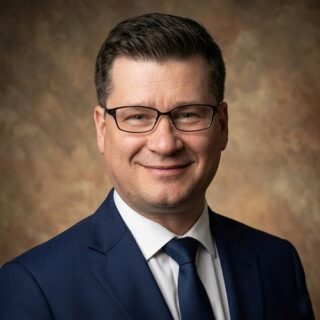
 Yuri Chekalin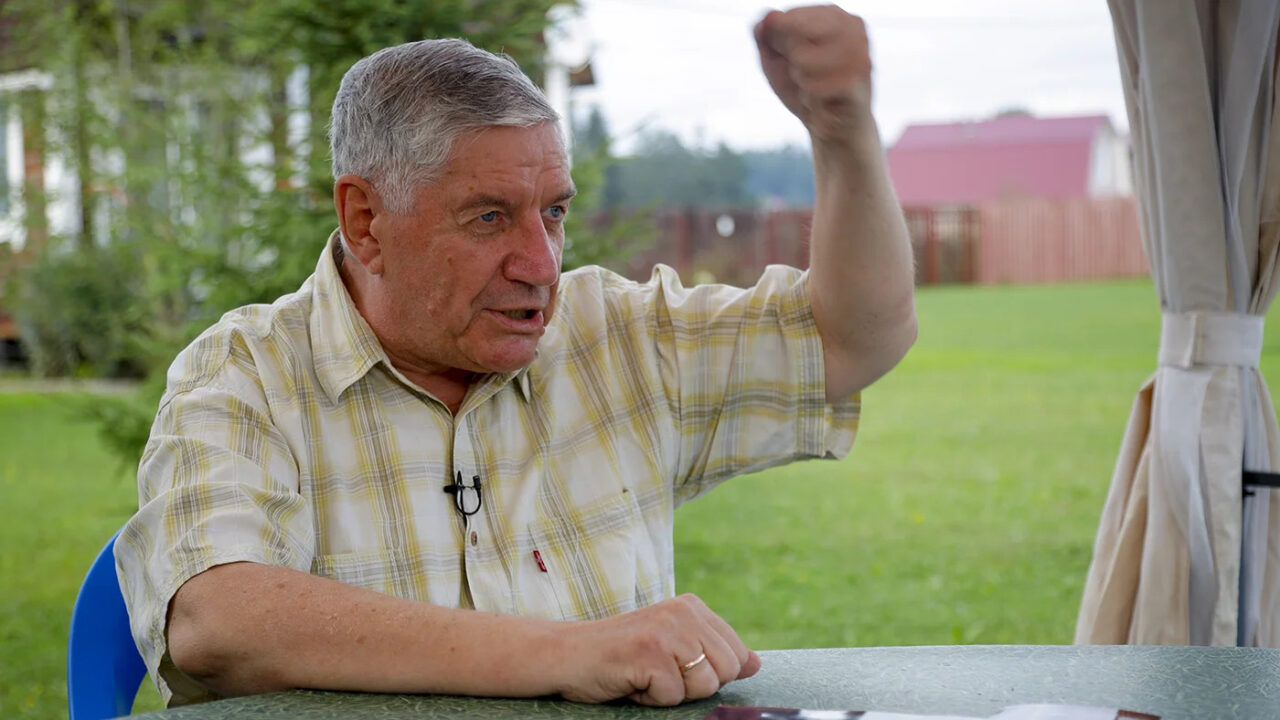
Today, we remember Viktor Alksnis on what would have been his 76th birthday. Although he passed away in 2025, his memory endures through a lifetime of public service, principled advocacy, and unwavering commitment to the causes he believed in.
Born on June 21, 1950, Alksnis belonged to a generation that witnessed profound historical transformations. As a military officer, public servant, and politician, he dedicated much of his life to engaging with the challenges and debates that shaped the late Soviet period and the decades that followed. He became widely known for his determination, discipline, and willingness to defend his convictions, even when those positions proved controversial or politically difficult.
Many remembered him as a man who spoke directly and acted according to principle. Throughout his career, he sought to represent ideas and constituencies that he believed deserved a stronger voice in public life. Whether serving in elected office or participating in broader political discussions, he approached his responsibilities with seriousness and conviction.
Yet Viktor Alksnis’s contributions extended beyond military and political service. He was also an active writer and commentator who believed that public debate was essential to civic life. As a contributor to The CommentaTHOR, he continued to engage readers on matters of politics, history, technology, and international affairs. Through his articles, he offered thoughtful perspectives informed by decades of experience, helping to foster discussion on issues that he regarded as vital to society’s future.
His interest in technology and national development reflected a broader concern for how societies adapt to change. Even in areas outside traditional politics, he demonstrated a curiosity about emerging challenges and a desire to contribute constructively to conversations about the future.
Those who knew him personally often recall his sense of duty, his intellectual energy, and his steadfast character. Those who encountered him through his public work remember a figure who never hesitated to express his beliefs and who remained engaged with public affairs throughout his life.
Today, as we mark what would have been his 76th birthday, we honor not only his accomplishments but also the commitment with which he pursued them. His life left a lasting imprint on those who worked alongside him, read his writings, and followed his career. Through his service, his commentary, and his contributions to The CommentaTHOR, Viktor Alksnis continued to participate in the conversations that shape our understanding of history, politics, and society.
May his memory be remembered with respect, gratitude, and reflection. His voice has fallen silent, but the questions he raised, the ideas he championed, and the discussions he inspired continue to resonate today.
***
As an example of Viktor Alksnis’s determination and willingness to defend his convictions, we would like to present one of many stories that illustrates this quality.
“About Stalin and the Tukhachevsky case”
Viktor Alksnis’s grandfather was repressed in 1938, but before that he had been a member of the Special Judicial Presence of the Supreme Court of the USSR, which tried Tukhachevsky and his group. Thus, we have a unique case here: on the one hand, Alksnis was a fervent communist and supporter of the USSR; on the other, he was an equally fervent anti-Stalinist whose family suffered greatly under Stalin. His grandfather was executed, his grandmother wandered through labor camps, and Viktor Alksnis himself was born in exile in Kemerovo Oblast.
What is important here is that Viktor Imantovich was a brilliant military engineer, a highly educated man who spent his entire life interested in the subject of political repression. As a People’s Deputy of the USSR and later a deputy of the State Duma, he had access to the files of both his grandfather and the Tukhachevsky group. He read these files and was even allowed to make notes from them. What did he find?
While reading the trial transcript, he found the behavior of the defendants strange. What had the perestroika-era press written about the Tukhachevsky case? That the accused denied everything, disagreed with the charges, refused to admit guilt, that it was a disgraceful show trial, and so on.
Alksnis, having already read plenty of such material in the press, expected to see exactly that. But in the transcript, as the astonished Viktor Imantovich later recalled, there were complete confessions, no objections, and no refusals.
Of course, that alone proves nothing. A confession by itself is not sufficient. Skeptics would say so—and they would be right.
However, as Alksnis himself recalled, he was struck by the abundance of details and specifics, the lengthy dialogues, the mutual accusations, and the many clarifications. It would have been impossible to script such a thing in advance. Alksnis wrote:
“… I came away with the impression that the conspiracy really did exist … What made me think was that there are moments in the transcript that testify to the sincerity of the statements, no matter how much people may say that the trial was a staged spectacle and that the defendants had been coached to give the required testimony.
Just imagine … Tukhachevsky is describing a meeting with the German military attaché at his dacha outside Moscow … And at that moment … Primakov interrupts and says: ‘Mikhail Nikolayevich, you are mistaken. That meeting took place not in your office at the dacha, but on the veranda.’
As I understand it, it would have been impossible to script everything so that Tukhachevsky would say exactly that and Primakov would make precisely such a correction … It is impossible to stage a trial in the manner reflected in the transcript …
What was the main charge against the conspirators? Everything was there: espionage, preparation of a military coup, sabotage … The point was that cooperation with German military officers was being established, contacts with them were taking place. The point was that there was a unified organization headed by Tukhachevsky … That was the central issue at the trial …
… And all of them repented, and when in their final statements they all acknowledged their guilt and admitted that they had participated in the conspiracy (knowing what would follow, knowing that execution awaited them), it is impossible to imagine that they could all have been forced to make such confessions and declarations … I know nothing about the exact nature of the conspiracy. But I am now completely convinced that a conspiracy within the Red Army really did exist, and that Tukhachevsky was a participant in it …”
What is interesting is this: Viktor Alksnis, who had previously not believed such claims, became convinced after reviewing the materials that there had indeed been a conspiracy within the Red Army involving its highest-ranking military leadership.
Then came the terrible—not “holy”—1990s. The country collapsed. Viktor Alksnis’s father took the dissolution of the Soviet Union very hard, worried deeply about it, and on July 17, 1992, died of a heart attack.
Shortly before his father’s death, a conversation took place between them that greatly impressed Viktor Imantovich:
“… About a month earlier, we were sitting at the dacha having evening tea and talking openly about what was happening, when suddenly my father said: ‘If Stalin were alive, he would never have allowed this mess.’
I was stunned! My father—a passionate anti-Stalinist who hated Stalin with every fiber of his being, who loathed him fiercely—suddenly understood him and forgave him …”
What can one say? Great things are seen from a distance; what is significant and important becomes clear with time. Even Viktor Alksnis’s father, who had suffered greatly under Stalin and was an anti-Stalinist, came to understand the scale of the man and, as Viktor Imantovich put it, forgave him.
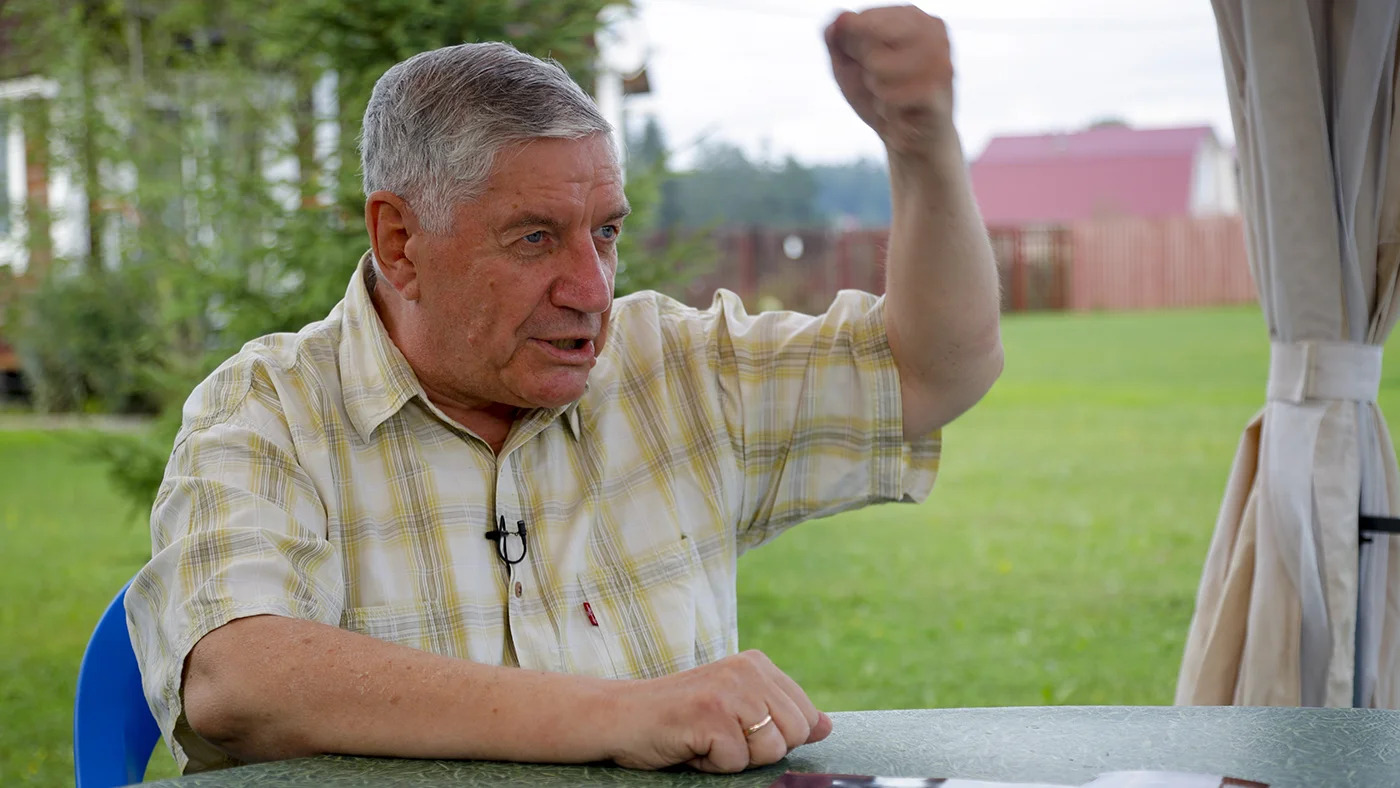
Viktor Alksnis said:
“… Yes, I am far from thinking that everything under him was good and wonderful. Stalin bears responsibility, among other things, for the defeats of 1941–42, when we suffered enormous losses and millions of our soldiers were taken prisoner.
Yes, we were unprepared, but that was not Stalin’s guilt so much as his misfortune. He lacked a few more years to re-equip industry, complete industrialization, and prepare the army.
Overall, Stalin played a very important role. No matter how much people criticize him today, we are still living off his legacy. For all these years in post-Soviet Russia, in post-Stalin Russia, everything we had was built by Stalin and his associates, thanks to his policies …”
In addition, it turns out that while the documents were being kept in the archives awaiting eventual access by professional historians, the criminal case files themselves were subjected to what Alksnis described as a “clean-up.”
According to Alksnis, when he returned to the Central Archive of the FSB in 2000, he discovered—with the help of notes he had made earlier—that from the dossier of his repressed grandfather there had disappeared “an NKVD intelligence report dated 1932” along with a number of other documents.
Consequently, the former deputy concluded, “there are documents in the archives that are inconvenient not only for the past authorities, but also for the current government.”
Note: This text presents Viktor Alksnis’s personal recollections and interpretations. The historical questions surrounding the 1937 Tukhachevsky trial, the existence of a military conspiracy, and the reliability of confessions obtained during Stalin-era purges remain subjects of significant scholarly debate.
 Kamil Askerkhanov
 Dmitri Drobnitsky