

 Yuri Chekalin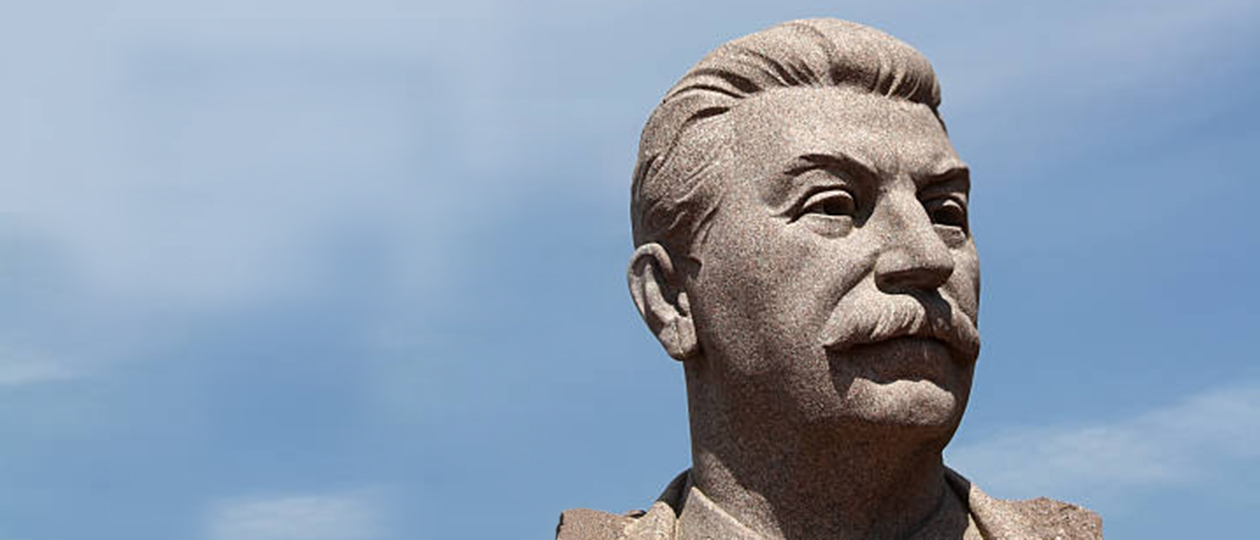
The mass disturbances in the Azerbaijani city of Sumgait occurred on November 7, 1963, the 46th anniversary of the October Revolution.
At 10:00 a.m., as usual, an official workers’ parade was proceeding through the city’s central square, just as it was throughout the Soviet Union. From the reviewing stand, slogans and praises honoring the Communist Party of the Soviet Union (CPSU) and its leader, the “true Leninist” Nikita S. Khrushchev, were shouted into microphones.
The “true Leninist” himself gazed down upon the demonstration from a huge portrait hanging on the wall of the Palace of Culture.
Everything was unfolding according to a well-established script, rehearsed and refined countless times, routine and seemingly incapable of producing surprises. This time, however, the official celebrations went badly off course.
Local authorities, fearful of being accused of Stalinism—an accusation that could now easily cost a person both a career and party membership—decided to challenge a “popular tradition.” While party leaders in Moscow denounced and exposed Stalin from every platform, workers in Sumgait continued to demonstrate loyalty to their fallen idol.
As the Prosecutor of the Azerbaijani SSR, S. Akperov, later reported to the Prosecutor General of the USSR, Roman Rudenko, “it was not the first time that Stalin’s portrait had been carried during demonstrations in Sumgait. Such incidents occurred during the May Day demonstrations of 1962 and 1963 and during the October celebrations of 1962.”
Demonstrators also routinely carried small portraits of Stalin, “which no one prevented.”
Over time, this tolerance toward what was clearly considered ideological dissent and disagreement with the official condemnation of Stalin became increasingly provocative. Eventually, the nerves of the city leadership gave out. They decided to combat the memory of Stalin in their customary blunt manner. Police officers, volunteer patrolmen, and officials responsible for supervising the marching columns of demonstrators “received instructions to confiscate any portraits of Stalin that appeared.”
At 11:30 a.m., as the demonstration was nearing its conclusion, unrest broke out in the square.
Judging by contradictions in the sources, the disturbances may have begun simultaneously in several parts of the parade.
According to Akperov, the immediate trigger was that “one of the demonstrators had a miniature portrait of Stalin pinned to the lapel of his jacket. Arshad Kerimov, secretary of the party committee of a construction trust, attempted to tear it off. Participants in the column resisted him.”
Another source suggests that particularly fierce resistance came from the column of Trust No. 1. In the ensuing mass brawl, the city military commissar, Krol, and several law enforcement personnel were injured.
According to the initial version presented by the public-order authorities (a special report to the CPSU Central Committee dated November 10, 1963, “On the Celebration of November 7”), after the demonstration had ended, “a young man whose identity has not yet been established unexpectedly jumped onto one of the trucks leaving the central square and began waving a photograph of Stalin.
A group of volunteer patrolmen attempted to restore order. In response, a crowd of approximately 100 people attacked the patrolmen, and a fight broke out.”
The confrontation unfolded amid chants praising the deceased Generalissimo. Khrushchev’s portrait hanging near the reviewing stand was “desecrated”—it was pelted with stones, after which workers from a pipe-rolling plant tore it down and ripped it to pieces. In its place, someone produced and raised above the crowd a huge portrait of Stalin left over from earlier times.
With the active participation of 24-year-old water utility mechanic Mirish Alimirzoyev (who had no criminal record, a tenth-grade education, and was the father of two children), a festively decorated logging truck was wrecked. Alimirzoyev used a hammer to smash “portraits of the leaders of the Communist Party and the Soviet state” as well as communist posters.
He was assisted by Yashar Makhmudov (22 years old, unmarried, no criminal record, tenth-grade education, no fixed residence or employment), who also took part in beating a police officer and threw stones at Khrushchev’s portrait, as well as by 25-year-old worker Nikolai Shevchenko, who not only attempted to tear down a display panel from the truck but also participated in the assault on a police captain.
When stones began flying at Khrushchev’s portrait from the crowd, the entire city leadership descended from the reviewing stand and attempted to calm the agitated residents of Sumgait.
They failed. Officials were manhandled, and several people were seriously beaten.
The deputy chief of the city police department, Kildiashvili, was placed on a commandeered bus by two unidentified individuals and driven toward the police station. On the roof of the same bus rode bricklayer Anver Makhmudov (23 years old, no criminal record, seven-grade education), shouting “calls for the overthrow of the leader of the CPSU Central Committee and the Soviet government.”
When the bus reached the police station, a classic riot situation developed. A crowd of 5,000–6,000 people gathered outside.
They concluded that the unidentified individuals accompanying Kildiashvili had been arrested by the police. Cries of “Free our comrades!” began to spread. Naturally, no one believed the police officers who insisted that the men had already left.
Part of the crowd forced its way into the police station and the detention cells, where prisoners—including individuals arrested for murder—were being held.
Those remaining outside, along with rioters who had entered the station courtyard, began throwing stones and chunks of asphalt torn from the pavement through the windows. Police motorcycles parked in the yard were set on fire. Two police vehicles were also damaged.
According to police accounts, officers responded by firing warning shots into the air. However, approximately 100–150 meters from the police station, twelve-year-old Ayvaz Ayvazov was later found with a gunshot wound. Fortunately, the boy survived. It was never established who shot him.
The crowd was dispersed only after a police detachment arrived from Baku.
By 2:30 p.m., order had been completely restored, and no further disturbances occurred in Sumgait.
The investigation was conducted by the KGB under the Council of Ministers of the Azerbaijani SSR. Investigators failed to identify any “serious” organizers, and it is doubtful that the disturbances—which erupted unexpectedly and ended with unusual speed—had any genuine ringleaders. Six individuals were sentenced to prison terms ranging from three to six years.
Particularly noteworthy is a statement about Stalin made by one of those convicted for participating in the Sumgait riot, Samandar Ibrahimov:
“My love for him is boundless.”
(All case materials are held in the State Archive of the Russian Federation, and references can be provided upon request.)
 Paul Sadchikov
 Alexander Rimov
 Kirill Benediktov

One comment
Paul Marco
23.06.2026 at 16:16
I’m a regular visitor. The articles on this site are really interesting. The authors are knowledgeable, so I often read the news here.