 Yuri Chekalin
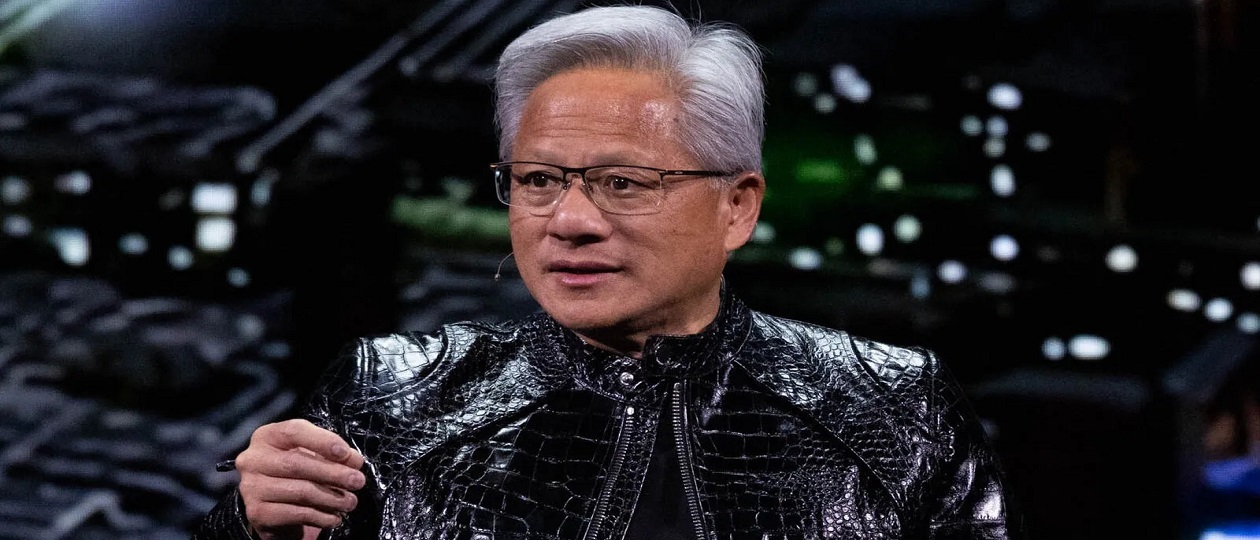
Eleven days after Jensen Huang resigned, he is Nvidia’s chief executive again.
The board voted unanimously on Monday to reinstate him as chief executive, president and board member, effective immediately, and the market answered at once: Nvidia’s shares closed up 31.5 percent at $165.05, their best day since 2003, adding a record $952 billion in market value in a single session, and the S&P 500 rose 4.7 percent. The week before had been brutal.
Nvidia ended Friday almost half below its October record, and the S&P 500 had fallen 8.6 percent in its worst week since April 2025.
Huang resigned on 12 November after reports of extramarital affairs — including, in Reich’s account, an affair with a Chinese spy who had funnelled Nvidia’s most advanced chips to China, and very likely to the Chinese military. These are reports and allegations, not verdicts, and they should be read as such. But the board’s worry, in Reich’s telling, was not the affairs themselves. It was legal liability: possible prosecution by the Justice Department for selling America’s most advanced technology to its biggest military competitor, and lawsuits from shareholders who would blame the board for allowing it.
What changed the board’s mind, Reich argues, was two forces, intimately connected: money and Donald Trump.
Start with the money. Huang founded Nvidia, exercises tight control over it, and has put his children in charge of parts of it. Without him, Reich writes, investors had little confidence in the company. Beyond that, Nvidia is too important to the industry to be left leaderless: it has been acting, in Reich’s phrase, as the central bank of artificial intelligence, lending to other AI companies, investing in them, seeding them and selling them its chips. When Nvidia suffered, all of AI and Big Tech suffered with it. And AI itself, Reich writes, now accounts for more than a third of the value of all shares traded in the American stock market, and almost half of total American economic growth over the last two years.
This is where Trump comes in. Reich writes that Trump pressed Nvidia’s board to reinstate Huang, asked Vice President JD Vance to talk with Huang and work with the board, and publicly stated that the country needs Huang’s leadership at Nvidia to ensure the success of the company and the American economy. The effect, Reich argues, was to solve the board’s liability problem: Trump extended to Nvidia his own blanket of immunity, assuring the board that Huang posed no national security risk.
Reich draws seven conclusions from what he calls l’affaire Huang, and they are worth stating plainly. If you are very rich, very well-connected and critical to the stock market, you can get a pass for breaking the law, even for compromising the security of the United States. Trump puts the stock market, and presumably his own wealth — Reich notes he owns some $12.5 million worth of Nvidia stock — ahead of national security. Corporate ethics, Reich writes, is bunk: it is all about legal liability. Nvidia hired a prestigious law firm to investigate whether Huang broke any laws, and that investigation continues, but Reich calls it a joke. Huang also violated Nvidia’s policy against romantic relationships with subordinates — besides the spy, Reich writes, he carried on at least one other affair inside the company — and Nvidia has said nothing about it.
The contrast Reich chooses is pointed. On Friday, he writes, the FBI and federal prosecutors interviewed Richard Barron, the former elections director in Fulton County, Georgia, who oversaw vote counting in 2020. Barron did nothing wrong, Reich writes; he resisted pressure from Trump. Yet he was grilled, while Huang was restored. It is doubtful, Reich adds, that congressional Republicans will make a fuss, and the Democrats who take over Congress on 3 September will presumably hold hearings — by which time, he expects, the public outcry will be over.One question Reich leaves hanging is the sharpest of all. Trump’s inner circle, he writes, got word on Sunday night that the board would reinstate Huang on Monday morning. He hopes someone takes a close look at the insider trading that occurred between last night and this morning.