 Alexey Savvateev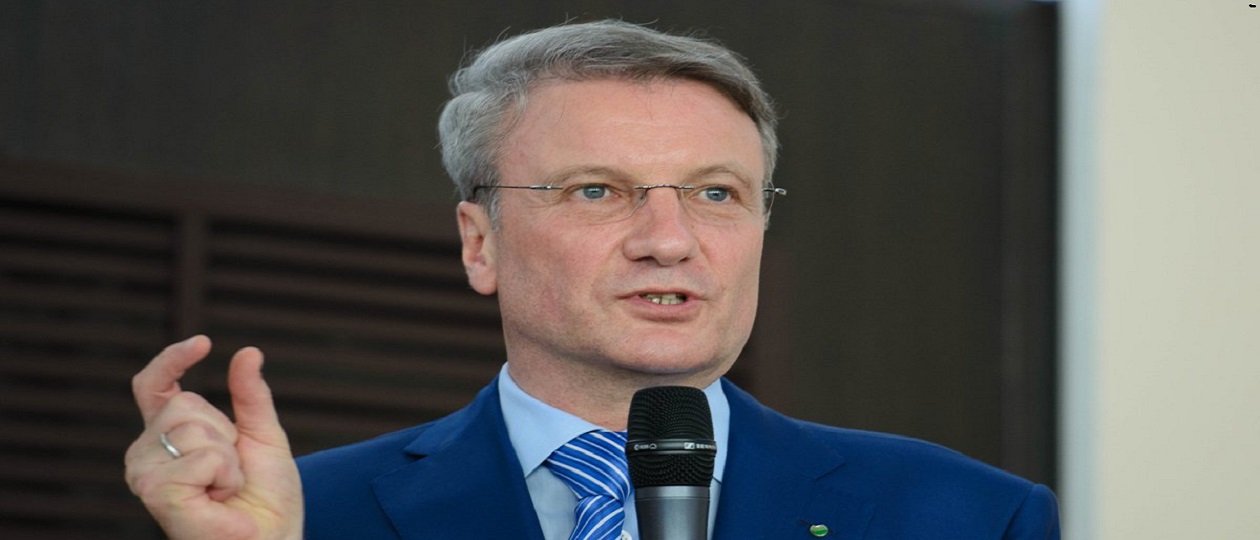
At one point, Lenin wrote that the state could not be run “right away” by cooks or unskilled laborers — they had to be taught how to do it. At the same time, he argued against the idea that governing the state could be the exclusive preserve of a narrow circle of the chosen few.
More than a hundred years have passed, and history has performed a remarkable somersault. Today, to manage virtually any sphere of activity, one apparently does not need to study at all — it is enough to be a media personality, a government official, or an oligarch.
And the management of education in our country has truly become “mass participation.”
This time, German Gref, the head of Sberbank, has once again expressed his views on the country’s education policy. Some of his observations, to be fair, are not without common sense — the Unified State Exam (USE) really does require reconsideration, and that is beyond dispute. But then comes something that can only be described as complete nonsense.
Mr. Gref tried to solve USE problems himself, failed, and immediately came to the conclusion that children today need to be taught something fundamentally different. Namely, “soft skills.” The connection between his own failure and his proposed educational reform is striking in its simplicity: he couldn’t pass it — therefore, there is no need to teach this. One might also note that hundreds of thousands of schoolchildren successfully pass this exam every year, and many of them receive the maximum score. Does that mean children are smarter than the head of Sberbank? Let us take that as a compliment to the children.
Now, about soft skills. Communication skills, time management, emotional intelligence — all of these are wonderful, and there is no point arguing otherwise. There is only one small detail: soft skills exist together with the actual content a person communicates. If someone’s head is empty, communication skills will simply allow them to explain to others very effectively that it is empty. If a person knows how to organize their time but does not know how to do anything, they will simply become very organized at doing nothing.
The idea of efficiency based primarily on soft skills is actively exploited by coaches, online business gurus, and other self-development prophets, to whom adults come seeking to urgently develop creativity and flexible thinking while avoiding the tedious process of acquiring real knowledge. We have all recently seen in the crime news how some of the stories involving such gurus end.
Gref also mentioned that school kills creativity: supposedly, children enter first grade with absolute levels of creative thinking, and by the time they graduate in the eleventh grade, this creativity has been destroyed. This claim appears so frequently in the speeches of people far removed from pedagogy that it has acquired the aura of an unquestionable axiom.
Meanwhile, no one seems to ask what exactly was measured when those “absolute levels” of creativity were recorded among first-graders, or how exactly the “destroyed” creativity of graduates was assessed. A beautiful (not really) statement lives on independently of any evidence.
Why is educational policy in our country constantly interfered with by bankers, businessmen, politicians, governors, officials — by almost anyone except education specialists? Where are the studies of Russian pedagogical institutes? Where are the experts in developmental psychology? Where are the people who, by virtue of their profession, have spent decades studying the processes of learning? Where is the academic debate?
The impression is that Russia has simply lost the institution of professional educational expertise.
The vacant space was immediately occupied by people who, for some reason, decided that success in banking or any other field automatically makes someone an expert in pedagogy as well.
One would very much like, finally, to see a simple division of competencies. The banking system should be handled by bankers, medicine by scientists and doctors, aviation by engineers and pilots.
And education policy should be determined by specialists who have spent many years studying pedagogy, developmental psychology, children’s age-related characteristics, and the real processes involved in learning. Not only theorists, but also practitioners — people who are deeply immersed in the field and understand firsthand what a real school and a real classroom with real, living children actually represent.
As for the head of Sberbank, we would be genuinely interested in hearing his thoughts on why interest rates are not being lowered, what is happening in the economy, what its prospects are, and how the government can find an additional 2 trillion rubles per year to financially support the education system. And, for example, where the excess profits of the banking sector are going.
 Yaroslav Listov
 Kamil Askerkhanov