 Dmitri Drobnitsky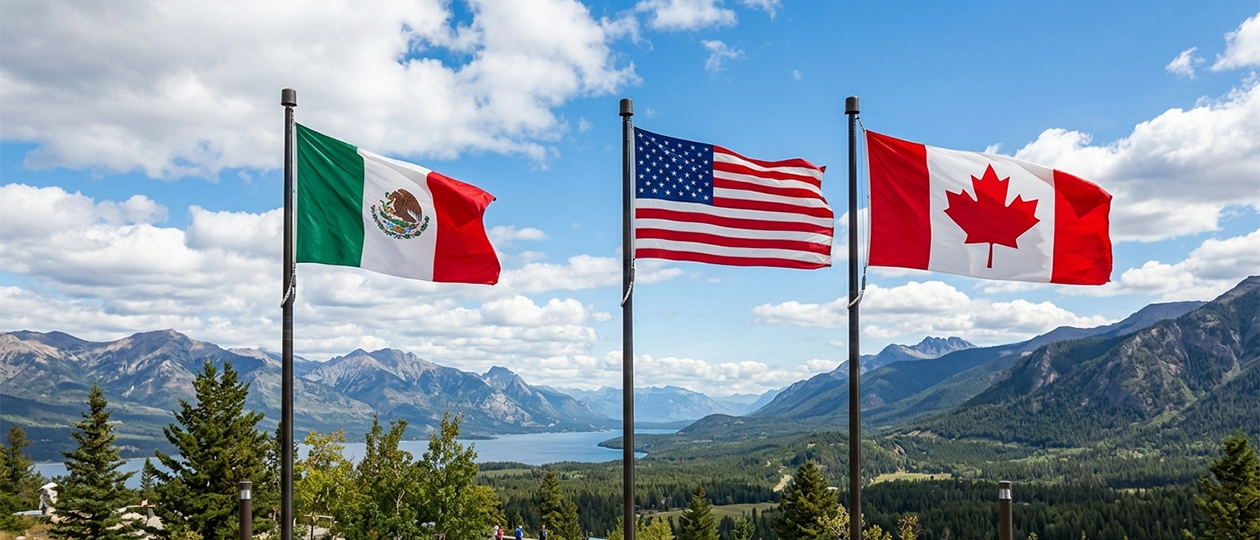
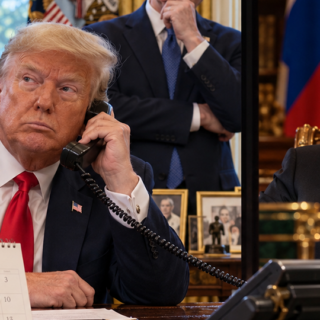
The very USMCA that Trump praised in 2020 is now no longer satisfactory to him.
The United States–Mexico–Canada Agreement (USMCA) replaced NAFTA in 2020. At the time, Trump hailed the new deal as a major achievement.
However, in 2026, when the agreement came up for its scheduled 16-year review and possible extension, the second Trump administration announced that there would be no automatic renewal.
This does not mean the agreement has been terminated, but it does mean lengthy and potentially difficult negotiations lie ahead, and they could easily reach an impasse. Under the terms of the USMCA, any member country may withdraw from the agreement by giving six months’ notice.
For now, U.S. Trade Representative Jamieson Greer has said that Washington will not simply “rubber-stamp” an automatic extension of the agreement for either six or sixteen years. “Adjustments are needed,” he said.
Canada and Mexico have now surpassed China as the United States’ largest trading partners. Combined annual trade between the three countries has reached $1.9 trillion, or roughly $5 billion per day.
Many experts in the United States believe that a significant portion of this trade does not come from Mexican or Canadian manufacturers but instead consists of re-exports from Southeast Asia.
In addition, Washington is dissatisfied with certain trade practices of its partners—for example, Canada’s protectionist measures designed to support its farmers.
According to the article, Trump was also dissatisfied with the figures Greer recently presented to him.
Despite all the tariff wars, the U.S. trade deficit continues to grow. It totaled $904 billion in 2024 and $912 billion in 2025. The only year it was higher was 2022, under Biden, when it reached $924 billion. It then declined slightly before rising again during Trump’s second term. These figures are attributed to the U.S. Bureau of Economic Analysis.
Another source of frustration was the U.S. Supreme Court’s decision to strike down most of Trump’s unilateral tariffs, leaving the federal government owing importers billions of dollars in refunds. According to the article, one way to generate revenue and increase pressure on trading partners would be to negotiate new trade agreements that explicitly incorporate tariffs.
If necessary, such agreements could be ratified by Congress, making them less vulnerable to court challenges.
The article concludes that another round of bargaining over tariffs, investment commitments, and procurement obligations is likely to begin.
However, it argues that the underlying causes of the trade imbalance remain unchanged.
It claims that the United States has not undergone meaningful reindustrialization, while the dollar and the borrowing enabled by its status as the world’s reserve currency continue to underpin both the federal budget and America’s global influence.
The author contends that the Trump administration is unwilling to give up the dollar’s dominant role and that, without doing so, the trade imbalance cannot be fundamentally corrected. In that view, tariff policies remain little more than a negotiating game.
 Yuri Chekalin
 Kamil Askerkhanov
 Kirill Benediktov