 Yuri Chekalin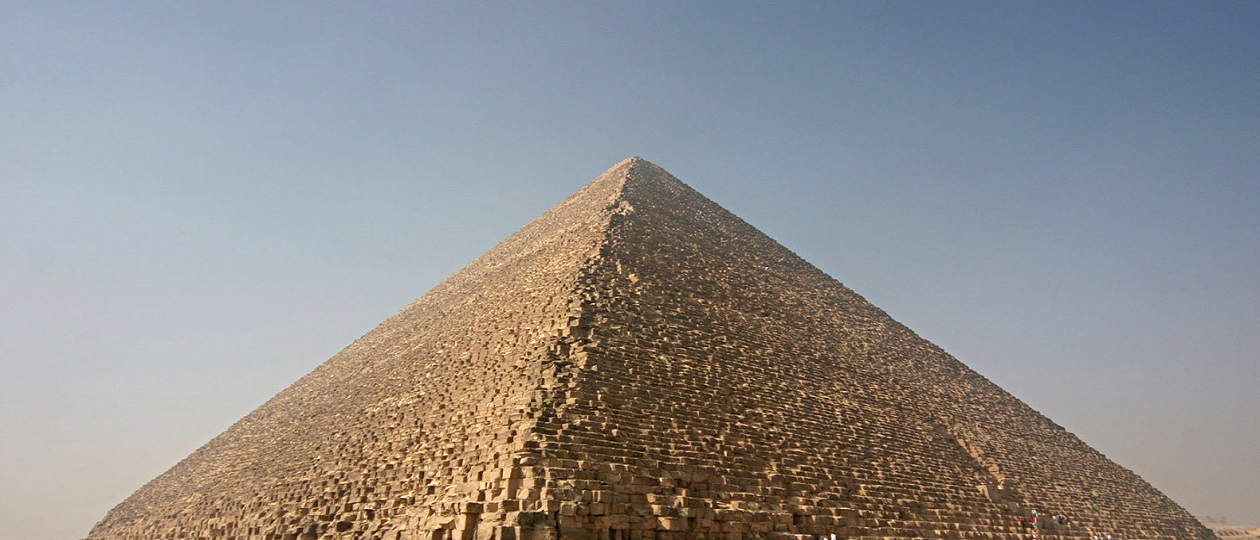
On a dusty plateau on the outskirts of Cairo, Egypt, stands a complex of stone structures that could arguably be called the most famous ancient monuments in the world: the Pyramids of Giza.
They were built to honor kings, to demonstrate power, and to last forever. Indeed, of all the Seven Wonders of the Ancient World, the Pyramids of Giza are the only ones that remain standing. The complex consists of three major pyramids, comprising the Pyramid of Khufu, and two smaller major pyramids, surrounded by numerous minor pyramids, and the structure known as the Sphinx.
The pyramids were erected as monuments to members of the royal families of ancient Egypt, and often serve as tombs as well, with elaborate burial chambers inside.
While the major pyramids as we see them today are indeed impressive, they must have been a truly spectacular sight when they were completed around 2500 B.C. At that time, each one was encased in a smooth layer of polished limestone that shone brilliantly in the sun, so that they must have filled visitors with a sense of the invincible power of the Egyptian rulers.
If you ever get the chance to visit the Pyramids of Giza, try to imagine yourself as someone living at the time when they were built. Think about the inspiration that must have motivated their construction, and the feelings of awe, dread or pride they must have made people feel.
 Alexander Palladin
 Mark Tasker