 Yuri Chekalin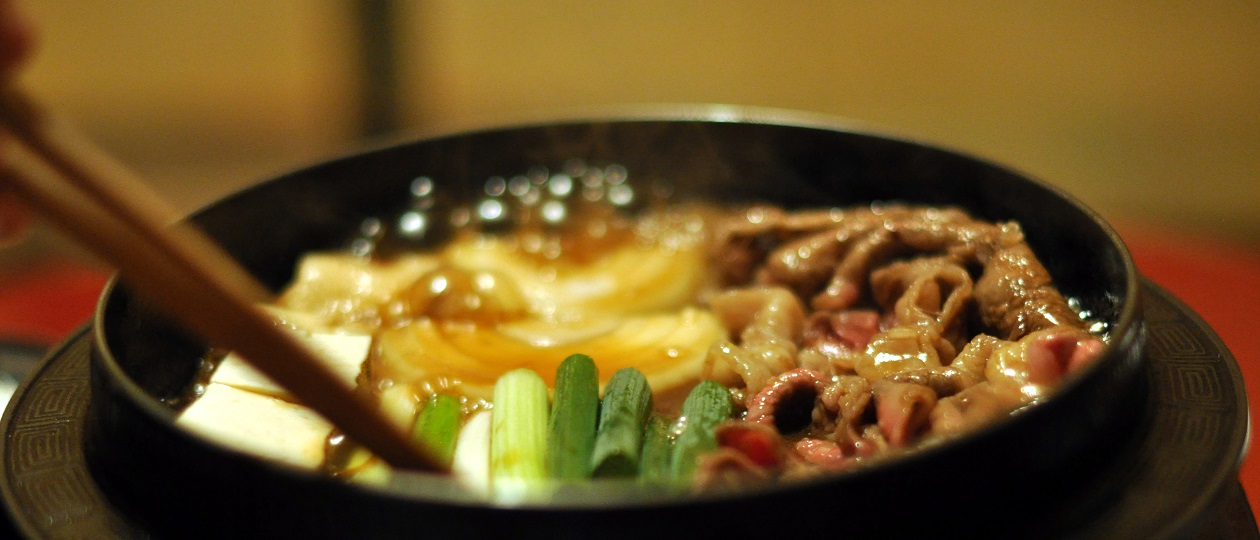
Sukiyaki is a type of hot pot dish known for its sweet and salty flavor, seasoned with shoyu, sugar, and mirin.
In addition to thin slices of beef, common ingredients for sukiyaki include naganegi (Japanese leek), shungiku green, shiitake, tofu, and shirataki noodles. In general, the meat for sukiyaki is sliced slightly thicker than that for shabu-shabu.
Sukiyaki is prepared in different ways in Kanto region and Kansai region. Sukiyaki in Kanto style is based on gyunabe (beef pot), which became a huge hit among people in the Meiji period as the cultural civilization was nationally promoted. A soup base called warishita is prepared with shoyu, sugar, mirin, sake and such, and meat and vegetables and other ingredients are simmered together in the premixed base.
On the other hand, sukiyaki in Kansai style does not use warishita and instead cook meat first, which is seasoned with sugar and soy sauce. Vegetables are then added to the pot, and after boiling down the liquid, sake and water are added.
Today, it is common both in Kanto and in Kansai to use raw eggs as a dipping sauce to eat sukiyaki, although this custom originally came from Kansai.
Ingredients
For the sukiyaki sauce:
2 tablespoons sake
¼ cup mirin
1 tablespoon brown sugar
¼ cup soy sauce
To prepare the sukiyaki:
½ block firm tofu (sliced into ½ inch thick slices)
5 dried shiitake mushrooms (rehydrated)
1 package enoki mushrooms (ends trimmed and rinsed)
2 cups napa cabbage (cut into 2-inch pieces)
2 cups tong ho (chrysanthemum greens, washed)
2 scallions (white and green parts separated)
1 bundle dried mung bean vermicelli noodles (or shirataki noodles)
1 tablespoon vegetable oil
12 oz. thinly sliced fatty beef
2 cups dashi stock (mushroom soaking liquid, or chicken stock)
2 cups steamed rice
2 egg yolks (pasteurized, optional)
Instructions
In a pot over a portable electric or gas cooktop (or just your regular stove) over medium heat, add 2 tablespoons sake, ¼ cup mirin, 1 tablespoon brown sugar, and ¼ cup soy sauce in a saucepan. Bring to a boil, turn off the heat, make sure all the sugar is dissolved, and transfer to a bowl.
Then prepare all your sukiyaki ingredients — the tofu slices, rehydrated shiitake mushrooms, enoki mushrooms, napa cabbage, tong ho, and scallions. Set aside on a plate. Soak the dried vermicelli noodles in water for 10 minutes.
Heat 1 tablespoon vegetable oil in the pan. Fry the white parts of the scallions in the oil for 2 minutes. Chop the green parts of the scallions finely and set aside.
In the pan with the scallions, add the sliced beef. Sear the beef for 10 seconds, and add a drizzle of your sukiyaki sauce. Fry the meat until it just begins to brown — it should still be a bit pink. Remove from the pot and set aside.
Add the rest of your sukiyaki sauce and 2 cups stock. Bring to a boil, and add the tofu, mushrooms, napa cabbage, and tong ho to the pot in sections. Also drain the vermicelli noodles you soaked and add them to the pot. Cover the pot and bring to a boil. Simmer until the ingredients are cooked through, about 5-7 minutes.
Remove the cover, add the beef back to the pot. Sprinkle with the chopped scallions, and enjoy with rice and egg yolk (if desired).
Nutrition
Calories: 751kcal | Carbohydrates: 68g | Protein: 37g | Fat: 35g | Saturated Fat: 14g | Cholesterol: 211mg | Sodium: 1178mg | Potassium: 859mg | Fiber: 3g | Sugar: 11g | Vitamin A: 2289IU | Vitamin C: 21mg | Calcium: 262mg | Iron: 5mg
 Egor Yakovlev
 Vladimir Grigoryan