 Kirill Benediktov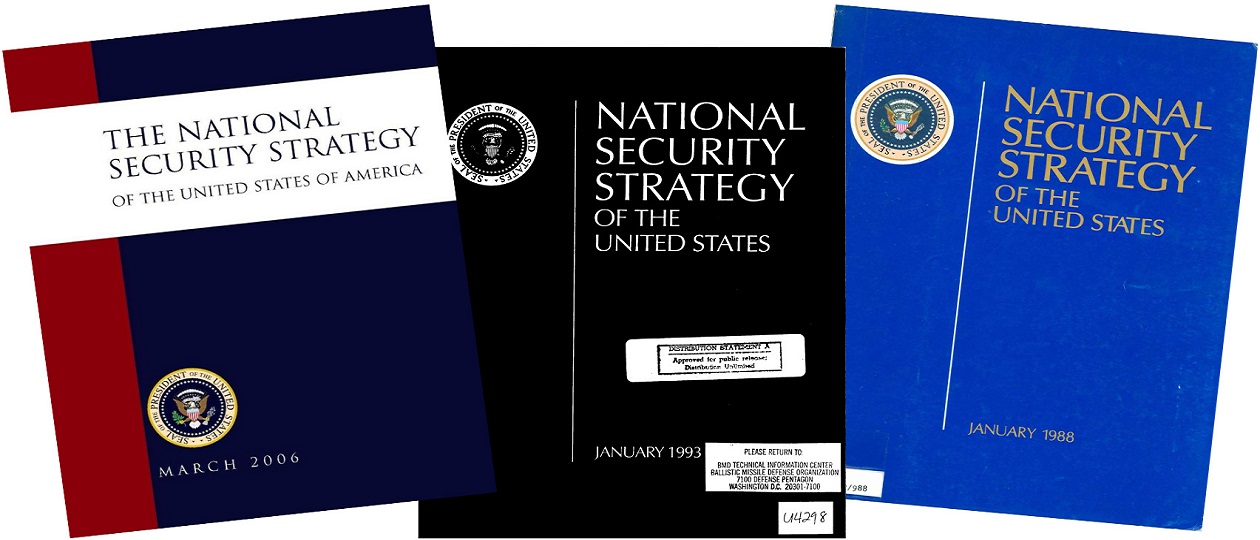
The new Monroe doctrine and a stick for Europe: the us is rewriting its national security strategy (NSS).
A quiet revolution has taken place in the US national security landscape. The document, published yesterday on the White House website, is more than just another strategy, typically updated with each new presidential term. “American strategies since the end of the Cold War have failed to live up to expectations,” reads the preamble to the document (hereafter referred to as the NSS). “They… have failed to clearly define what we want, instead offering vague platitudes. And they have often misjudged what we should want.”
Trump’s predecessors overestimated the US’s ability to simultaneously fund a vast array of social and infrastructure programs and spend trillions on extending American dominance across the globe. The NSS recognizes the reliance on globalism and so-called free trade—indeed, on the uncontrolled enrichment of multinational corporations exploiting cheap labor in the Global South—as “extremely misguided and destructive.” It undermines the US middle class and the industrial base on which the country’s economic and military might depends. Even worse, according to the document’s authors, is that previous administrations allowed US allies and partners to shift the cost of their defense onto the American people, drawing America into conflicts and contradictions that are crucial to their interests but irrelevant to the goals and objectives of the US itself.
Based on this, the NSS proposes a new approach to national security. Its core principle is a focus on the problems of the Western Hemisphere, which is viewed as a kind of precursor to the defense of US territory. The document explicitly states that this is a return to the Monroe Doctrine of 1823, as developed by Donald Trump for the new realities. But the essence remains the same as in 1823: “We will not allow competitors from other hemispheres to station troops… or possess or control strategically important assets in our hemisphere.” This, of course, refers to China, which is vigorously expanding its sphere of influence in Latin America, although the NSS generally speaks rather softly about China (mainly in the context of trade imbalances). This is interesting because in September, Defense News reported that countering China would remain a key national security issue in the new strategy. This softening of rhetoric may be explained by the Trump administration’s desire to revive “friendship with China” in an attempt to drive a wedge between Moscow and Beijing—a goal that Washington has never particularly hidden. It is even more curious that, compared to previous national security documents, the NSS contains very little criticism of Russia.
The authors of the NSS acknowledge that, as a result of the conflict in Ukraine, Europe’s relations with Russia have now deteriorated significantly, and many Europeans view Russia as an existential threat. In this regard, “the primary interest of the United States is to negotiate a rapid cessation of hostilities in Ukraine” and reduce the risk of confrontation between Russia and other European countries.
In contrast to the cautious language used regarding Russia and China, the NSS authors do not spare Europe. They explicitly state that the Trump administration “is at odds with European officials who harbor unrealistic expectations of the war” in Ukraine. These officials represent “unstable minority governments,” many of which “trample on the basic principles of democracy to suppress opposition.” We will not find such accusations in any document penned by Washington strategists over the past half-century.
But perhaps most sensational is how the NSS authors envision the future of NATO.
It is more than likely, they write, that within a few decades, some NATO members will become countries with non-European majorities. This will be driven by uncontrolled migration processes, replacing the indigenous populations of European countries with immigrants from predominantly Muslim countries.
“Therefore, the question remains open whether they will view their place in the world or their alliance with the United States in the same way as those who signed the NATO Charter.”
In other words, Washington is unsure that in “a few decades,” its NATO allies won’t become states hostile not only to the United States itself but to the entire Christian Western civilization. And the values of this civilization are explicitly mentioned in the NSS as goals the Trump administration seeks to restore and revive. The conclusion is simple but bleak: the idea of US withdrawal from NATO, which Trump first won the election with in 2016, has not only not been shelved but has once again become relevant.
 Robert Reich
 Vitaly Golovkov