

 Alexander Rimov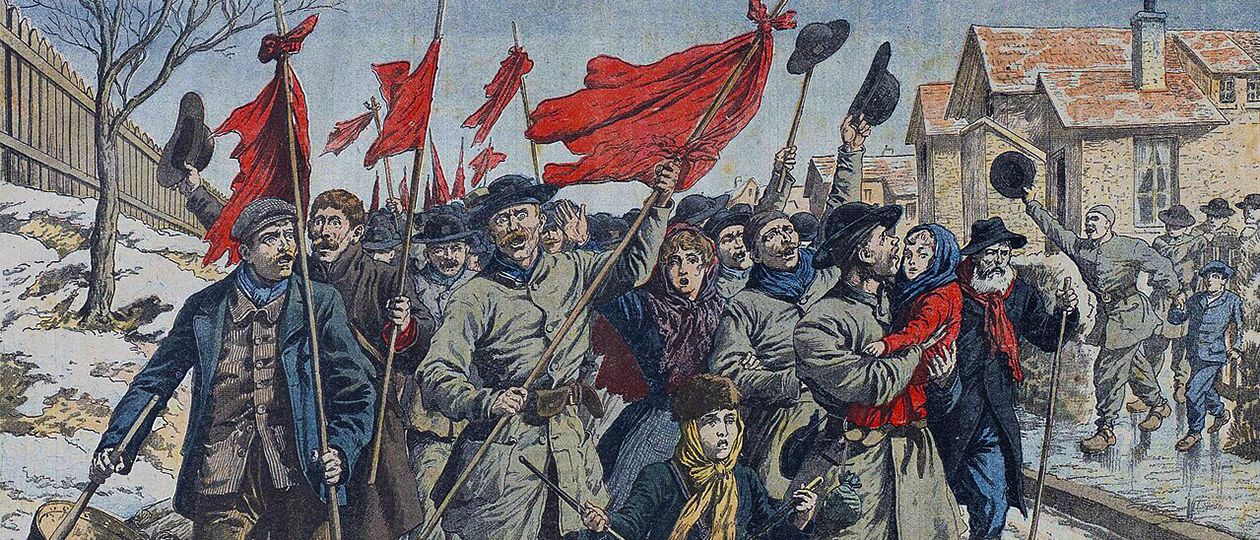
For a century and a half, the image of a trade union has been inextricably linked to that of struggle. Red flags, strikes, wage-indexation negotiations, and ironclad protection against layoffs.
This toolkit was created for the industrial era, where humans operated machines.
Today, this model is not only bursting at the seams — it is critically outdated, because it protects the “workplace” rather than the “working person.”
The old concept of trade unions, built on the principle of “us versus them” (employees versus employers), is becoming toxic for both business and workers in the age of artificial intelligence. While a union demands the preservation of a position that an algorithm can perform ten times faster, it is selling air.
The new mission of trade unions is not barricades, but career guidance and total control of the labor market through the capitalization of skills.
The root of the problem with traditional unions is that they are trying to preserve the past.
They’re fighting to preserve a function that’s disappearing. It’s like a cabbie union demanding a ban on cars. The market is relentless: robots don’t strike, they don’t ask for bonuses, and they don’t take vacations. The only way to make humans indispensable isn’t to ban robots, but to raise the value of human capital to a level that machines can’t reach.
The mission of the new union is not to be a “collective complainer,” but an operator of human capital. This is a structure that takes on a function traditionally neglected by government employment centers and corporate HR departments: career guidance, continuous training, and career navigation.
Career Guidance 2.0: A Navigator in a World of Algorithms
The old career guidance was static: “You’re a humanities major, go into law.”
The new career guidance is a dynamic, real-time market analysis. Imagine a union as a powerful analytics hub that, using big data, predicts that the job of “primary documentation accountant” will die out in 18 months, while demand for “AI model validation specialist” will skyrocket by 300%.
The union’s job is not to pity someone losing their job due to digitalization, but to catch them red-handed in advance, six months to a year in advance, and say, “We’re leading you off this sinking ship.”
The union must have an exclusive map of the professions of the future and the right to veto the professional deficiencies of its members.
Labor Capitalization through AI Upgrades
The core of the new model is labor capitalization through training. In the old world, workers sold their time. In the new world, they must sell their unique expertise, enhanced by artificial intelligence.
Herein lies the main paradox: the average person fears being replaced by AI. The union of the future explains that humans will not be replaced by AI, but by another human who knows how to use AI.
Therefore, the main function of the union becomes the “incubation of competitive professionals.” Union dues should go not to a strike fund, but to a fund for the technological re-equipment of the mind. In-house neural network labs, industrial engineering courses, training in predictive model analysis, and the development of “soft” skills—empathy, negotiation, creative synthesis — in other words, everything that constitutes the “human monopoly” zone.
The union, in essence, becomes a non-profit EdTech corporation. If a union’s strength was once measured by the number of bayonets ready to stop the assembly line, it is now measured by the employability of its members. If a union guarantees a business that its specialist base undergoes skills refreshing every six months, such a union becomes not an enemy of the employer, but its main partner.
Labor Market Control Through a “Quality Seal”
A new form of labor market control is control of “entry” into a profession by the community itself.
Today, diplomas have become worthless. Tomorrow, the main marker for employers will be membership in an advanced trade union.
If a union certifies a specialist as an “AI-augmented expert,” capable of managing digital assistants and making strategic decisions where algorithms fail, that person becomes immune to layoffs. Such a union doesn’t beg for wage indexation to match inflation—it guarantees a manifold increase in income for its members because they cease being “cogs” and become “operators of complex systems.”
When robotics sweeps the economy, traditional unions suffer because they protect a vacuum. New unions win because they supply the market with “indispensable” workers.
Selfish Collectivism
It sounds harsh, but the old solidarity of “everyone with everyone” will be replaced by the solidarity of “rapid learners.”
The trade union of the future is a union of competitive individuals. Its mission is not equalization, but the personal capitalization of each team member.
If you’re ready to learn, the union will give you the best tools and make your profession eternal. If you cling to routine, even the loudest slogans won’t protect you.
The future belongs to those associations that will cease to be a first aid for the weak (that’s the function of the welfare state) and become a catalyst for strength. Control over the labor market today doesn’t look like blocking a factory gate, but like holding the key to unique software inside a specialist’s head.
The trade union must become the fastest and most pragmatic educational platform on the planet. He who controls knowledge and skills controls the work.
The strike as a genre is dying. The era of a quiet technological revolution is beginning, where the main weapon is not a hammer, but a neural network mastered by humans.
 Robert Reich
 Vladimir Golstein




4 comments
Dominick Ulberg
14.06.2026 at 05:44
Hello! I will immediately take hold of your rss feed as I can’t in finding your e-mail subscription hyperlink or newsletter service. Do you have any? Please permit me know in order that I may just subscribe.
Thanks.
Patrick Lowrie
14.06.2026 at 14:09
Hey! I pay a visit everyday some web pages and websites to read posts, however this blog offers feature based writing. I recommend it for the thoughtful reader.
Yuri Chekalin
15.06.2026 at 14:46
I don’t agree with the opinion of the author of this article and I have a different opinion on this issue.
Strikes are another important mechanism used by workers when negotiations with employers fail. A strike involves employees temporarily stopping work to draw attention to their concerns and encourage employers to address them. Although strikes may cause disruptions, they are often a peaceful and lawful way for workers to express dissatisfaction and seek change. Historically, strikes have been instrumental in securing higher wages, safer workplaces, and stronger labor protections.
Trade unions and strikes also contribute to a more balanced relationship between employers and employees. They encourage dialogue and negotiation, helping to resolve conflicts through collective action rather than individual disputes. In many cases, the possibility of a strike motivates both sides to reach agreements through compromise and discussion.
However, trade unions and strikes must be used responsibly. Unions should represent workers fairly and pursue realistic goals, while strikes should be conducted legally and peacefully. Employers, in turn, should be willing to engage in constructive negotiations and respect workers’ rights.
In conclusion, trade unions and strikes are essential components of modern labor relations. They help protect workers, improve working conditions, and promote fairness in the workplace. By providing employees with a collective voice and a means of advocating for their interests, trade unions and strikes continue to play an important role in building more equitable and productive societies.
You can read my full opinion on this topic here.
Eric Lockyer
16.06.2026 at 00:11
Hi, dear friends, how is the whole thing, and what you would like to say concerning this piece of writing, in my view its truly amazing in favor of me.